Sectional Sofas on Area Rugs: Where Should the L-Shape Chaise Rest?
Placing sectional sofas on area rugs requires a precise balance between comfort and visual structure. Many homeowners struggle with the L-shaped configuration because the chaise extension often disrupts standard rug dimensions. If you are currently arranging your living room layout, you likely want to know if the chaise should sit entirely on the rug or hover off the edge.
Getting this placement right defines traffic flow in your home and creates a more cohesive look. This guide addresses the common dilemmas surrounding furniture anchoring and provides clear, actionable advice for your space.
The Core Placement Rule
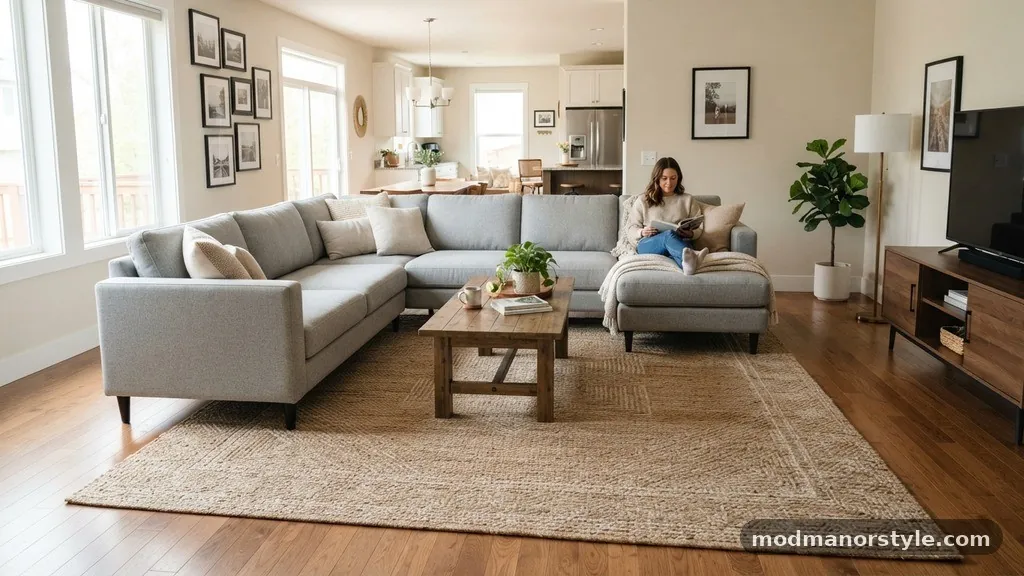
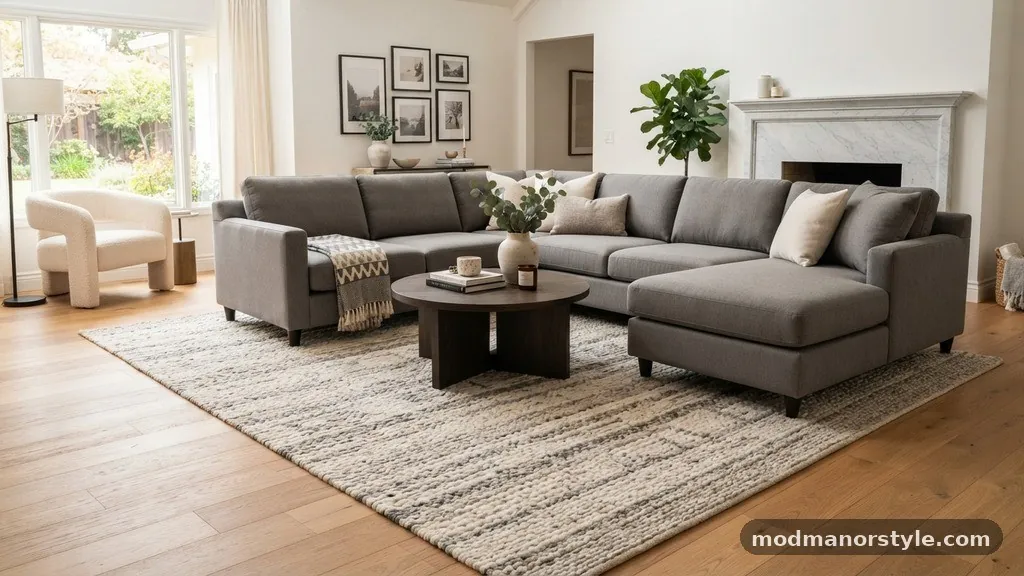
When you are positioning an L-shaped sectional on a rug, the most important guideline is the front-leg rule. This principle suggests that at least the front two legs of every piece of furniture should rest on the rug.
By securing the sofa, you create a unified aesthetic that anchors the entire seating zone. If the chaise is part of a modular or fixed sectional, it should be treated as an extension of that primary seating unit.
Ideally, the rug should extend far enough beneath the chaise to prevent the legs from wobbling on uneven floor transitions. You want your feet to land on the rug rather than the cold floor when you sit down.
If your rug is too small, the chaise will look like it is floating aimlessly in the room. Always prioritize a size that allows the entire depth of the chaise to sit comfortably within the rug’s borders.
Addressing the Chaise Extension
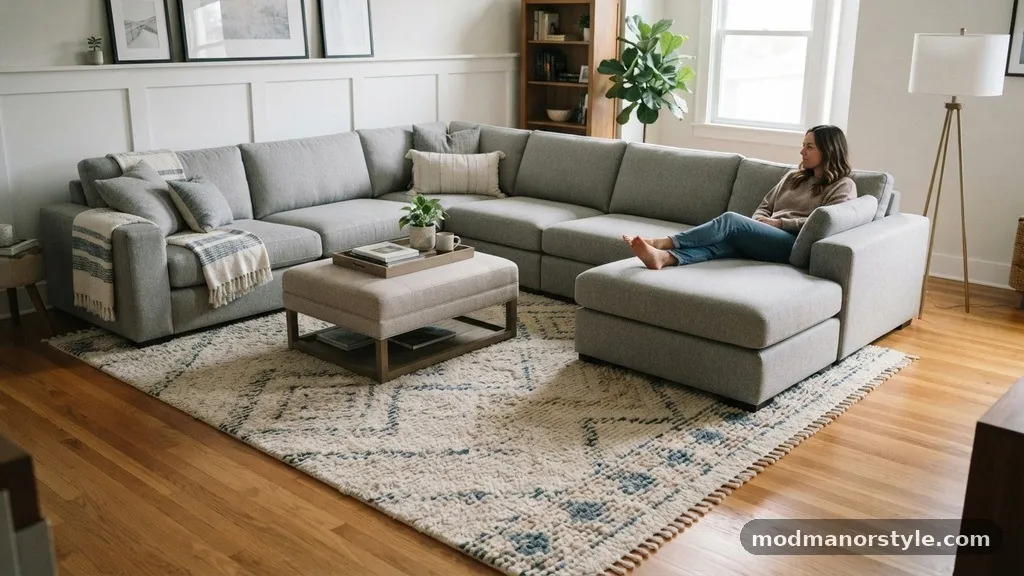
The chaise extension often creates a challenge because it adds significant depth compared to the rest of the sofa. Many standard rug sizes, such as 5×7 or 8×10, might not accommodate this extra length without looking awkward.
If you find that your rug is slightly too short, you have two distinct options to maintain a polished appearance. You can pull the rug further under the chaise, even if it leaves the back legs of the main sofa off the floor.
Alternatively, you can shift the entire rug arrangement to center the chaise within the room’s focal point. While symmetry is often desired in interior design, sometimes the L-shape requires an asymmetrical rug placement to feel grounded.
If your chaise rests partially off the rug, ensure the rug pad underneath provides enough grip to prevent sliding. This is especially critical on hardwood or tile floors where furniture legs can easily shift.
Evaluating Room Proportions
Your room proportions dictate how much rug you actually need to fill the space. A massive sectional in a small room can quickly overwhelm the floor covering, making the area feel cramped.
Conversely, a tiny rug in a large room makes the sectional look like a stranded island. To determine the right scale, measure your furniture footprint before purchasing any floor covering.
In open-concept living, the rug acts as a visual divider that separates the lounge from the dining or kitchen areas. You should aim for a rug that defines the boundaries of the seating zone without cutting off the natural traffic flow.
If you have a large L-shaped piece, a 9×12 or even a 10×14 rug is often necessary to avoid the “postage stamp” effect. Remember that the rug should always be wider than the sofa itself to maintain visual balance.
Strategic Traffic Flow
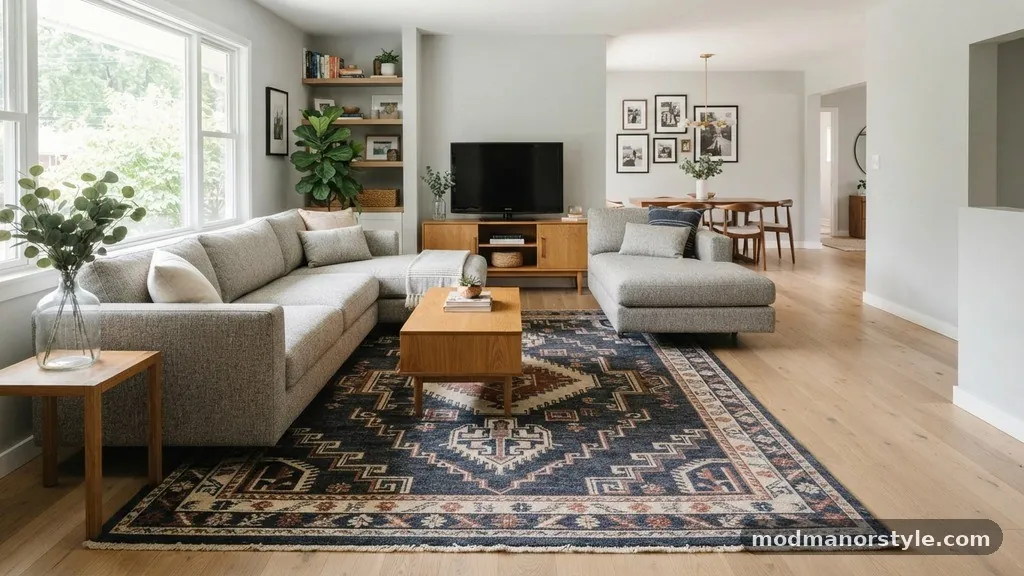
How people move through your space is just as important as how the furniture looks. If your L-shaped chaise blocks a primary walkway, you are creating a bottleneck that will frustrate guests.
Positioning the chaise against a wall or in a corner can free up floor space for movement. If the chaise is floating in the middle of a room, ensure there is at least 30 inches of clearance around it.
You should also consider the orientation of your television or fireplace. The chaise is typically the most comfortable spot, so it should face the room’s main feature.
When placing the rug, ensure it doesn’t create a tripping hazard in high-traffic areas. If the edge of the rug sits exactly where people walk, consider using a low-profile rug to minimize the risk of catching a foot.
Material and Maintenance Considerations
Selecting the right material for your area rug depends on your lifestyle and the level of traffic the space receives. Wool rugs are highly durable and offer a luxurious feel, making them ideal for high-use seating zones.
Synthetic fibers like nylon or polypropylene are better if you have pets or children who might cause spills. Since the chaise is a high-traffic area, you want a material that resists crushing and pilling over time.
You can find more detailed information on fiber types and care through the Carpet and Rug Institute, which provides industry standards for floor covering maintenance. Always check the backing of the rug to ensure it won’t damage your specific flooring type.
If the rug is placed over wall-to-wall carpeting, use a specialized rug pad designed to prevent bunching. Regular rotation of the rug can also help distribute wear evenly across the surface.
Comparison of Rug Placement Strategies
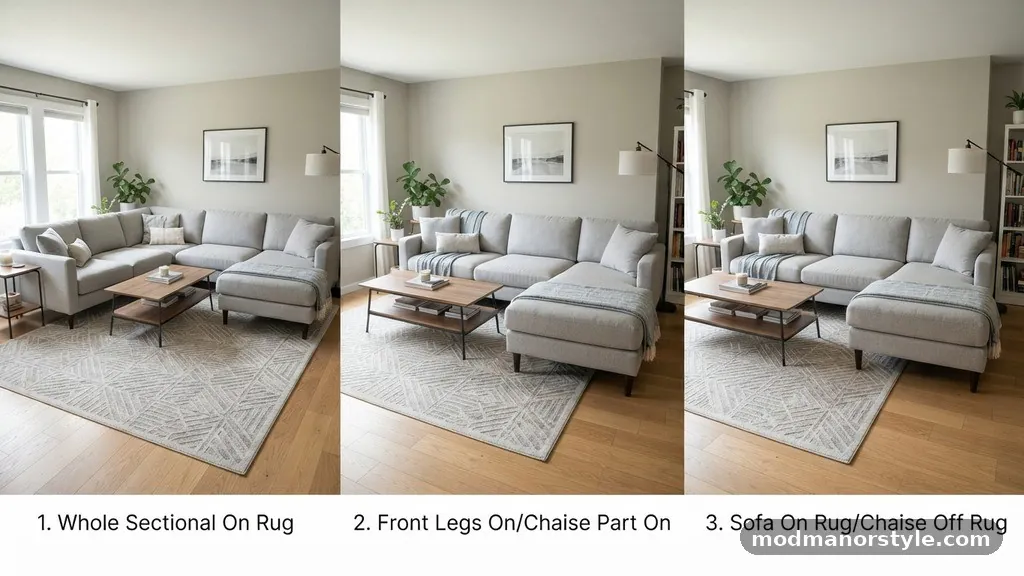
Selecting the right rug size and placement method is often a trade-off between style and practicality. The following table illustrates how different approaches affect the feel of your living room.
| Placement Strategy | Visual Impact | Practicality |
|---|---|---|
| All Legs On | High luxury, defines space | Requires a very large, expensive rug |
| Front Legs Only | Balanced, standard design choice | Fits most medium-sized living rooms |
| Floating (No Legs) | Casual, minimalist | Risk of rug sliding; feels disconnected |
| Chaise-Focused | Functional, cozy | Can look asymmetrical but works for long chaises |
Key Factors for Longevity
To keep your sectional and rug looking fresh, you must invest in quality rug pads. A thick, high-quality pad prevents the rug from stretching and protects the fibers from being crushed against a hard floor.
It also adds a layer of cushioning that makes the chaise even more comfortable to lounge on. Without a pad, the constant pressure of a heavy sectional will cause the rug to wear out in specific patterns.
Vacuuming is another essential aspect of maintenance that many people overlook. You should vacuum the area around the chaise at least once a week to prevent dirt from grinding into the fibers.
If your sectional has a removable cover, wash it according to the manufacturer’s instructions. Keeping both the upholstery and the rug clean will extend the life of your furniture investment significantly.
Common Mistakes to Avoid
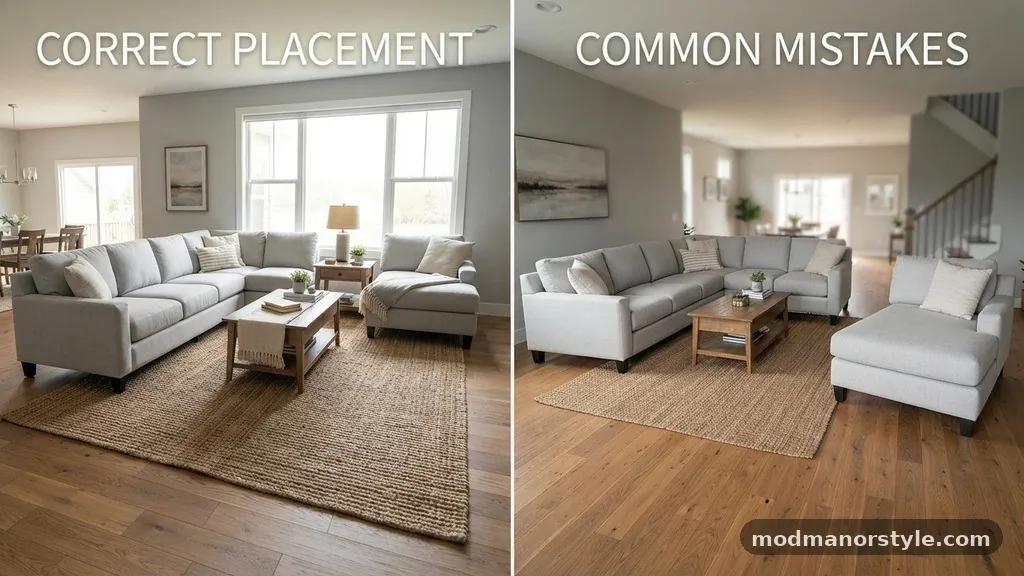
Many design enthusiasts make the mistake of choosing a rug based solely on aesthetics without considering the furniture’s physical footprint. A beautiful, intricate rug that is too small for your L-shaped sectional will always look like a mistake.
Another common error is failing to align the rug with the room’s architectural lines. Your rug should generally follow the orientation of the walls or the main focal point, such as a fireplace.
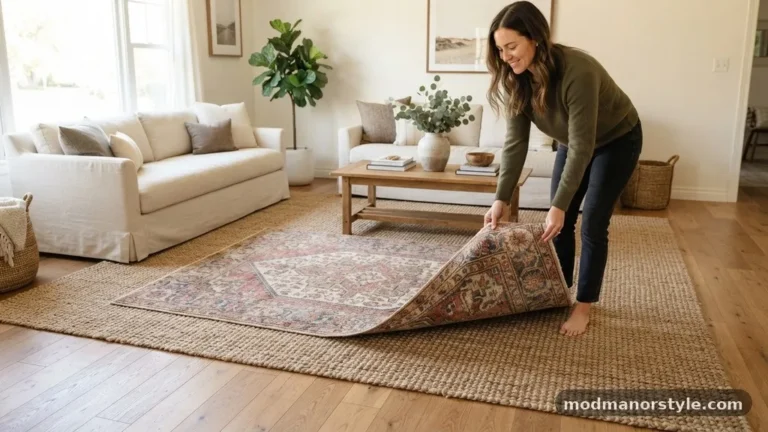
Do not be afraid to layer rugs if you have a favorite smaller piece that doesn’t quite cover the area. A larger, neutral sisal or jute rug can serve as a base, with a more decorative rug layered on top.
This technique adds depth and texture while ensuring your sectional is properly anchored. Always avoid placing a rug that is so large it runs under heavy furniture like bookcases or media consoles, as this can make the room feel cluttered.
Essential Checklist for Rug Selection
When you are ready to shop for a new rug to sit under your sectional, keep these criteria in mind to ensure you make the right choice.
- Measure your total sofa footprint, including the full length of the chaise extension.
- Add at least 6 to 12 inches to each side of the sectional for a balanced frame.
- Choose a material based on your household’s traffic levels and cleaning capabilities.
- Select a rug pad that is slightly smaller than the rug to keep it hidden.
- Ensure the rug color complements your sofa fabric without being an exact match.
- Test the placement to ensure the chaise does not cause the rug to bunch or slide.
Frequently Asked Questions
Should the entire L-shaped sectional be on the rug?
While it is ideal for the entire piece to sit on the rug, it is not strictly necessary. As long as the front legs of the sofa and the entire footprint of the chaise are supported, the arrangement will look intentional and anchored.
What is the minimum rug size for an L-shaped sofa?
The minimum size depends on the sofa, but an 8×10 rug is typically the smallest size that can accommodate a standard-sized sectional. For larger sectionals, a 9×12 or 10×14 rug is usually required to prevent the furniture from feeling disconnected.
Can I use a round rug with an L-shaped sectional?
Using a round rug with an L-shaped sectional is generally discouraged because it creates conflicting geometric lines. The sharp angles of the sectional usually require a rectangular or square rug to mirror the room’s structure and provide a stable foundation.
How do I stop my rug from sliding under the chaise?
The best way to prevent sliding is to use a high-quality, non-slip rug pad. If the rug is large enough, the weight of the sectional should also help keep it in place, but a pad is necessary for safety and to prevent floor damage.
Does the rug have to be larger than the sofa?
Yes, the rug should extend beyond the edges of the sofa on at least two or three sides. This creates a frame for your furniture and prevents the room from looking like the sofa is simply sitting on a small mat.
Conclusion
Arranging your home involves thoughtful choices that marry form with function. When positioning sectional sofas on area rugs, the goal is to create a cohesive environment where the chaise feels like a deliberate part of the design rather than an afterthought. By following the front-leg rule and ensuring your rug dimensions accommodate the full depth of your furniture, you can achieve a balanced, professional look.
Take the time to measure your space accurately and invest in a quality rug pad to protect your floors and your investment. Whether you prefer a clean, symmetrical layout or a more relaxed, layered approach, these foundational tips will help you create a comfortable and stylish living room. Start by assessing your current furniture footprint today and adjust your rug placement for an immediate improvement in your home’s overall flow and comfort.