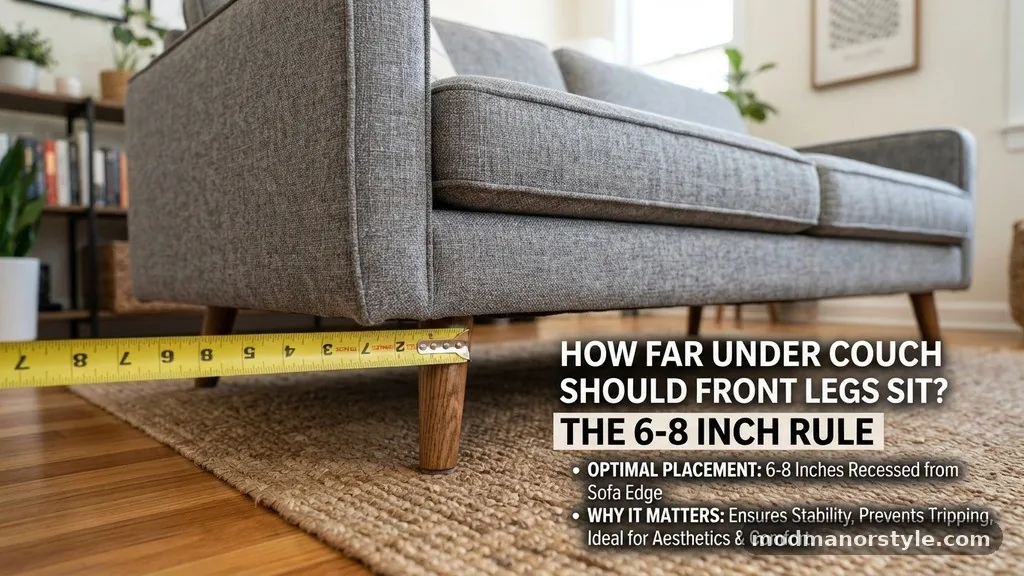
How Far Under the Couch Should the Front Legs Sit (6″ to 8″ Rule)?
“How Far Under the Couch Should the Front Legs Sit (6\” to 8\” Rule)?
Figuring out how far under the couch should the front legs sit (6″ to 8″ rule) is a common dilemma when styling a living room. Achieving the right balance between comfort and visual appeal often hinges on these specific measurements. By tucking the front legs of your sofa onto an area rug, you create a cohesive look that anchors the entire seating area.
This simple adjustment improves furniture stability while defining the boundaries of your floor space. Whether you are dealing with a small apartment or a spacious open-plan home, understanding these proportions ensures your furniture arrangement looks intentional rather than chaotic. Getting this detail right will transform your living room styling instantly.
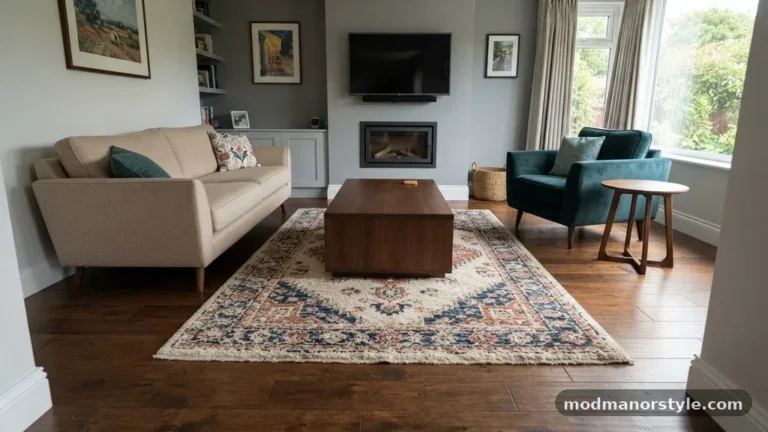
When designers discuss how far under the couch should the front legs sit (6″ to 8″ rule), they are referring to the overlap between your sofa and the rug. Placing the front legs of your sofa firmly on the rug helps to tie the room together visually.
This technique prevents the furniture from appearing as if it is floating in the middle of the room. A measurement of six to eight inches provides enough overlap to ensure the sofa feels connected to the rug without requiring you to sacrifice too much floor space.
If you place the sofa too far forward, the rug might slide or look like a small island. Conversely, if the legs barely touch the edge, the sofa may feel disconnected, leading to a disjointed room aesthetic. The 6″ to 8″ range acts as a sweet spot for most standard-sized living room furniture.
It offers a balanced look that is both functional and aesthetically pleasing. You gain the benefit of a grounded seating area while maintaining clear walkways around the perimeter of your rug.
Why the 6 to 8 Inch Rule Matters
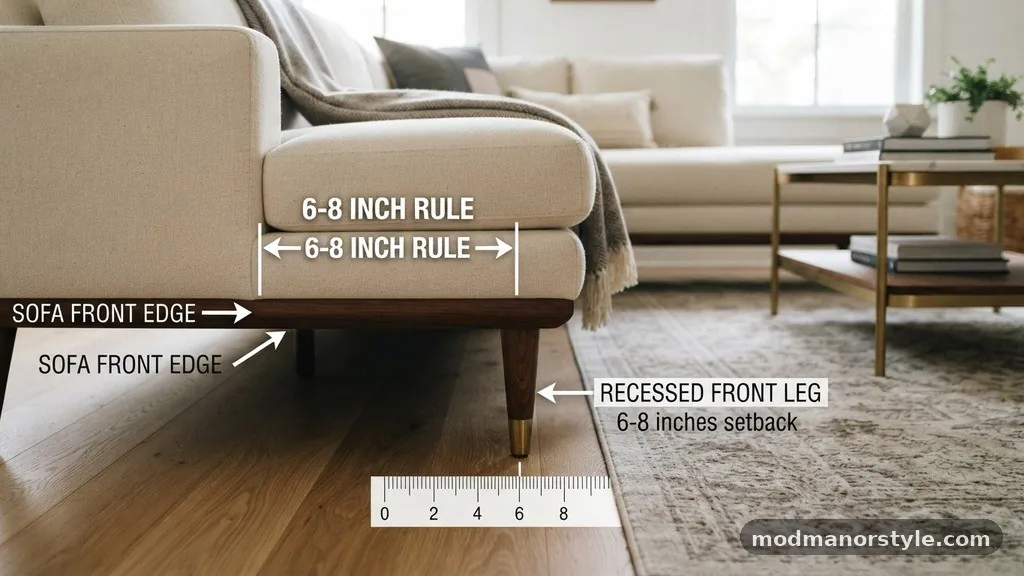
The primary reason to follow this rule is to establish a sense of unity in your living room layout. When furniture is arranged with intentional overlap, it signals to the eye that the sofa and rug belong together.
This creates a cozy, enclosed feeling that defines the conversation area. Without this anchoring, a living room can feel sterile or poorly planned, with furniture pieces scattered across the floor surface.
Beyond aesthetics, this placement significantly enhances furniture stability. Placing the front legs on the rug prevents the couch from shifting during daily use, especially on hardwood or tile floors. The rug acts as a friction layer, keeping the sofa securely in place.
This also provides subtle floor protection, as the legs are not resting directly on sensitive materials that might scratch or dent over time. You are essentially creating a dedicated zone for relaxation that feels physically and visually secure.
Measuring Your Space and Rug Size
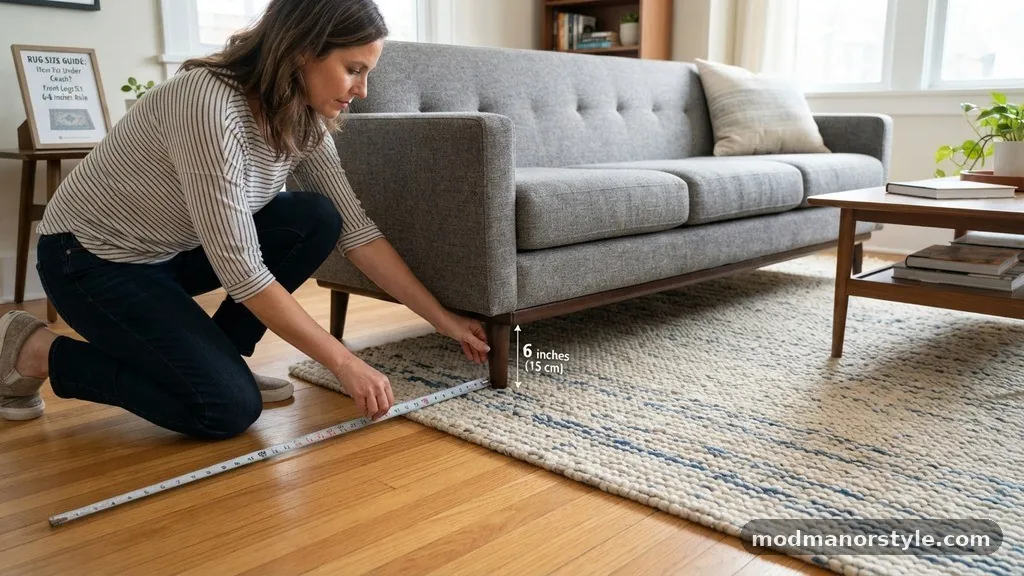
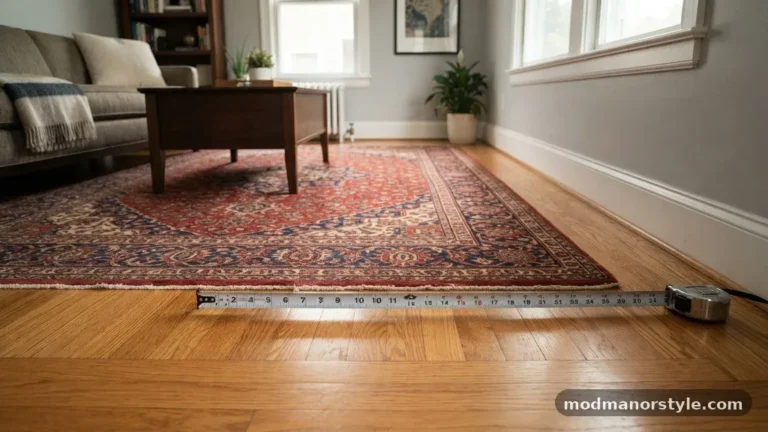
Before buying a rug, you must measure your living room to see how it will accommodate the sofa. If your sofa is 84 inches long, you should look for a rug that extends at least six inches beyond the sofa on both sides.
This ensures that the rug looks substantial enough to support the furniture. If the rug is too small, the sofa will dominate the space and make the room feel cramped.
Consider your total available floor space when calculating the rug dimensions. You want enough clearance so that the rug doesn’t hit the walls or block high-traffic pathways. A common mistake is choosing a rug that is too narrow, which forces you to place the sofa entirely off the rug or too far on it.
Using painter’s tape to map out the 6-inch to 8-inch overlap on your floor can help you visualize the final result before making a purchase. This preparation prevents expensive errors and ensures your room aesthetics remain balanced.
Furniture Anchoring and Visual Balance
Furniture anchoring is a foundational principle of interior design that relies heavily on how items interact with their surroundings. When you place the front legs of a sofa onto a rug, you effectively “anchor” the piece to the floor.
This creates a visual weight that grounds the room, making the seating area the natural focal point. If the sofa is left off the rug, it often looks like an afterthought or a temporary placement.
Visual balance is achieved by distributing the weight of the furniture across the rug. A large, plush sofa paired with a thin or small rug creates an imbalance that can make a room feel off-kilter. Aiming for that 6″ to 8″ overlap ensures that the sofa doesn’t look like it’s about to slide off the rug.
This level of coverage provides a sense of symmetry that is essential for a polished look. You should always aim for a consistent border around the rest of the furniture pieces in the group to maintain this harmony.
Practical Considerations for Different Floor Surfaces
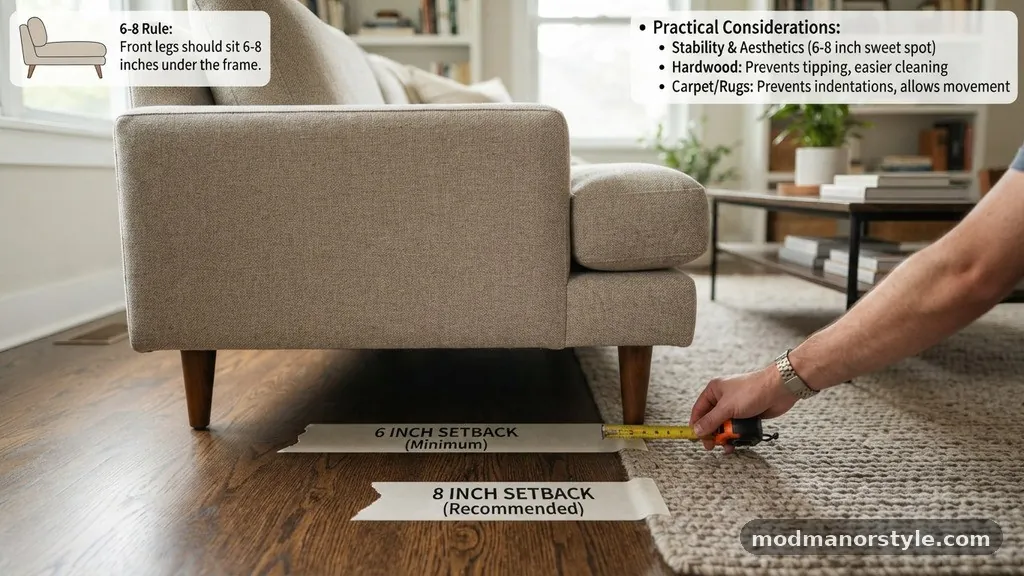
The surface beneath your rug influences how well your furniture stays put. Hardwood, laminate, and tile floors are slippery, meaning that even with the front legs of the sofa on the rug, the entire assembly could shift.
You should always use a high-quality rug pad to keep the rug from sliding. This adds an extra layer of security and prevents the rug from bunching up under the weight of the sofa legs.
Carpeting presents a different challenge because the rug may tend to “walk” or ripple over time. Placing the front legs of the sofa on the rug helps weigh it down and keep it flat.
If your carpet is very thick or plush, you might need a firmer rug pad to ensure the sofa legs don’t sink and cause the rug to buckle. Always check the furniture feet for sharp edges that might damage the rug over years of use.
Comparing Rug Placement Options
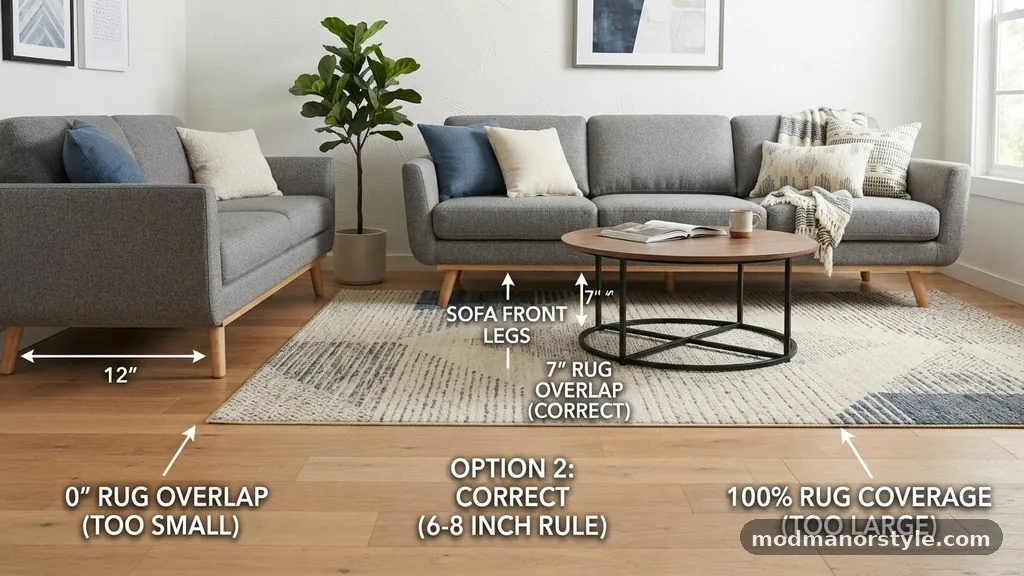
Different layouts offer different benefits depending on the size of your room and your personal style. While the 6″ to 8″ rule is the gold standard for many, other methods exist for specific needs. The following table compares common approaches to sofa and rug placement.
| Placement Method | Description | Best For |
|---|---|---|
| Front Legs Only | 6″ to 8″ overlap on the rug | Standard living rooms |
| All Legs On | Entire sofa rests on the rug | Large, open-plan spaces |
| Floating (No Rug) | Sofa sits entirely off the rug | Very small or minimalist rooms |
| Rug Border Only | Rug frames the room perimeter | Large rugs in grand spaces |
Common Mistakes to Avoid
Many homeowners fall into the trap of buying a rug that is far too small for their sofa. A rug that only sits in the middle of the room, leaving the sofa completely off the rug, makes the furniture look lonely.
This lack of connection creates a disjointed feeling that is hard to fix with decor alone. Always prioritize the size of the rug over the pattern or color when you are in the planning phase.
Another mistake is ignoring the rug edge as it relates to traffic flow. If the edge of the rug is positioned in a way that catches your foot, you are likely to trip or cause the rug to fray.
Ensure that the rug extends far enough into the seating area that people naturally walk on the center of the rug, not the edge. Proper rug placement is as much about safety as it is about style.
Tips for Better Living Room Styling
Achieving a professional look involves more than just placing the legs correctly. Consider the texture and pile of the rug in relation to your sofa fabric.
A sleek, modern sofa often pairs well with a low-pile or flat-weave rug, while a chunky knit or velvet sofa can handle a thicker, more textured piece. These details add depth to your room without requiring major changes to your layout.
Think about the overall room aesthetics and how the colors interact. If you have a neutral sofa, use the rug to introduce a pop of color or a geometric pattern.
If your sofa is a statement piece, choose a more understated rug that complements rather than competes with the furniture. You can learn more about selecting the right area rug by consulting professional design resources that break down material and size requirements.
Essential Items for Your Living Room Arrangement
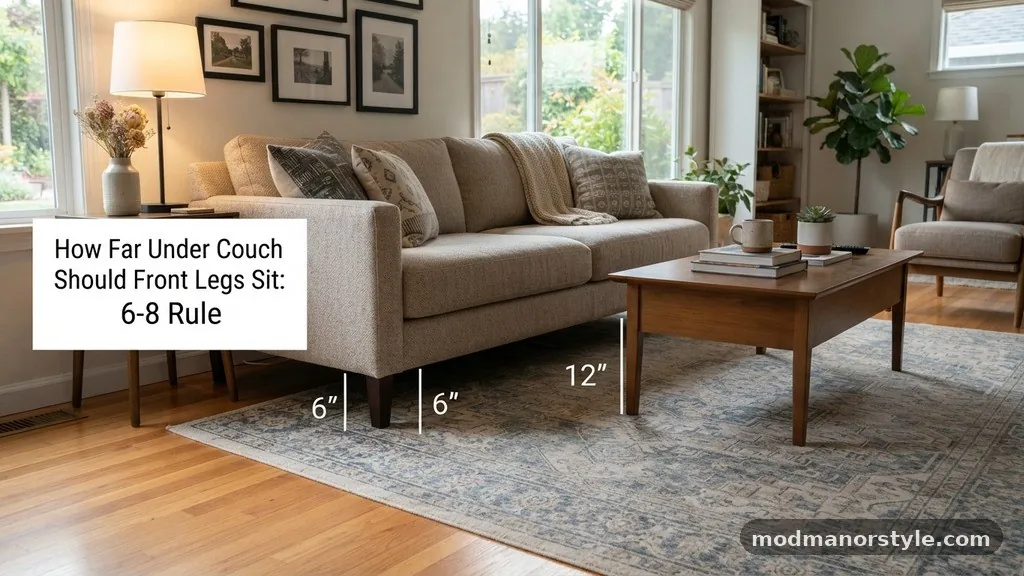
To successfully implement the 6″ to 8″ rule, you need to be prepared with the right accessories. A good rug pad is non-negotiable for safety and longevity.
You should also consider furniture glides if your couch is particularly heavy or if you have delicate flooring. These small additions make a massive difference in how your room functions day-to-day.
- High-quality rug pad for grip and cushioning
- Furniture glides to protect hardwood floors
- Measuring tape to verify the 6″ to 8″ overlap
- Painter’s tape for testing the layout before heavy lifting
- Rug corner grippers for low-profile rugs
Frequently Asked Questions
Does the 6 to 8 inch rule apply to sectional sofas?
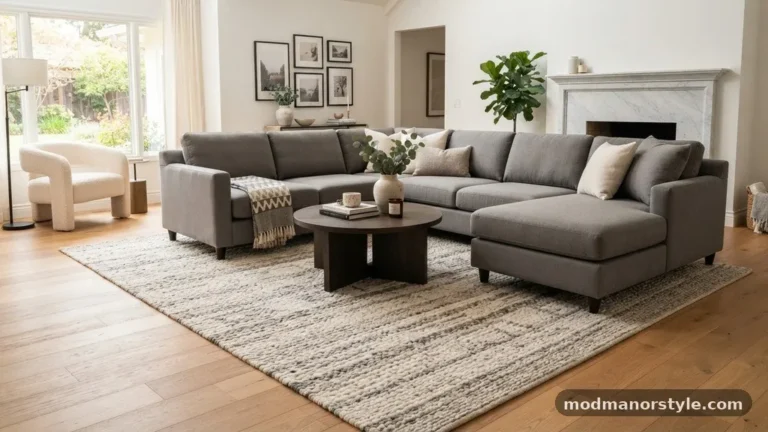
Yes, the rule is highly effective for sectionals. Because sectionals are large, they benefit even more from being anchored to a rug. You should aim for the front legs of all exposed sections to rest on the rug to maintain a cohesive look.
What if my sofa has a skirt instead of visible legs?
If your sofa has a skirt, the rule still applies, but you measure from the edge of the fabric base. You want about 6 to 8 inches of the base to overlap onto the rug. This provides the same visual grounding as it would for a sofa with exposed legs.
Can I place the sofa legs entirely on the rug?
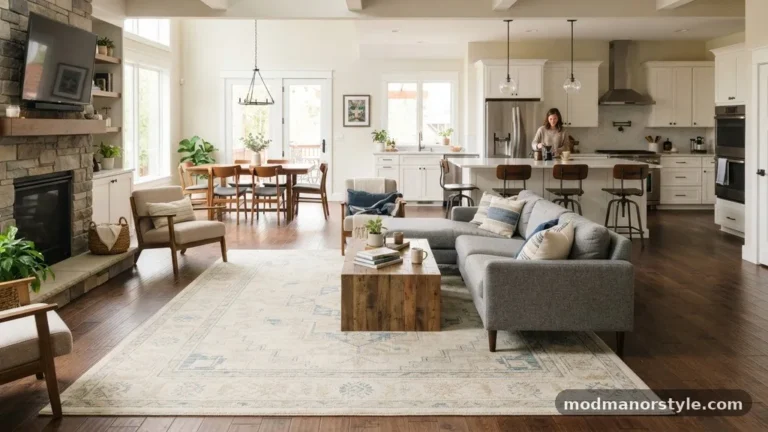
You certainly can, and many designers prefer this for large rooms. Placing all legs on the rug is a great way to define a “room within a room” in open-concept floor plans. Just ensure the rug is large enough so that there is still a border of rug visible around the sofa.
What should I do if my rug is too small to reach the 6-inch mark?
If your rug is too small, you have two options: either pull the rug out from under the couch to create a “floating” look or move it to a different area. A rug that is slightly too small often looks like a mistake. It is usually better to have a larger, correctly sized rug that fulfills the 6″ to 8″ rule.
Is it okay to have no rug at all?
It is perfectly acceptable to have no rug, especially if you have beautiful hardwood floors you want to showcase. However, without a rug, you lose the ability to define the seating area. If you go this route, ensure your furniture arrangement is tight and intentional to avoid a sparse, empty feeling.
Refining Your Living Room Layout
Understanding how far under the couch should the front legs sit (6″ to 8″ rule) provides a clear path to a more polished and professional home interior. By following this simple guideline, you create a sense of cohesion that makes your furniture feel like a unified set rather than individual pieces. This approach to rug positioning and furniture anchoring helps you define your space, protect your floors, and improve the overall comfort of your living room.
Take the time to measure your space carefully before making your next furniture or rug purchase. Using the techniques discussed, you can confidently arrange your room to maximize both style and function.
Experiment with the placement to see how it changes the flow of your home. Whether you are refreshing your current setup or starting from scratch, these small details make a significant impact on your daily living experience.