
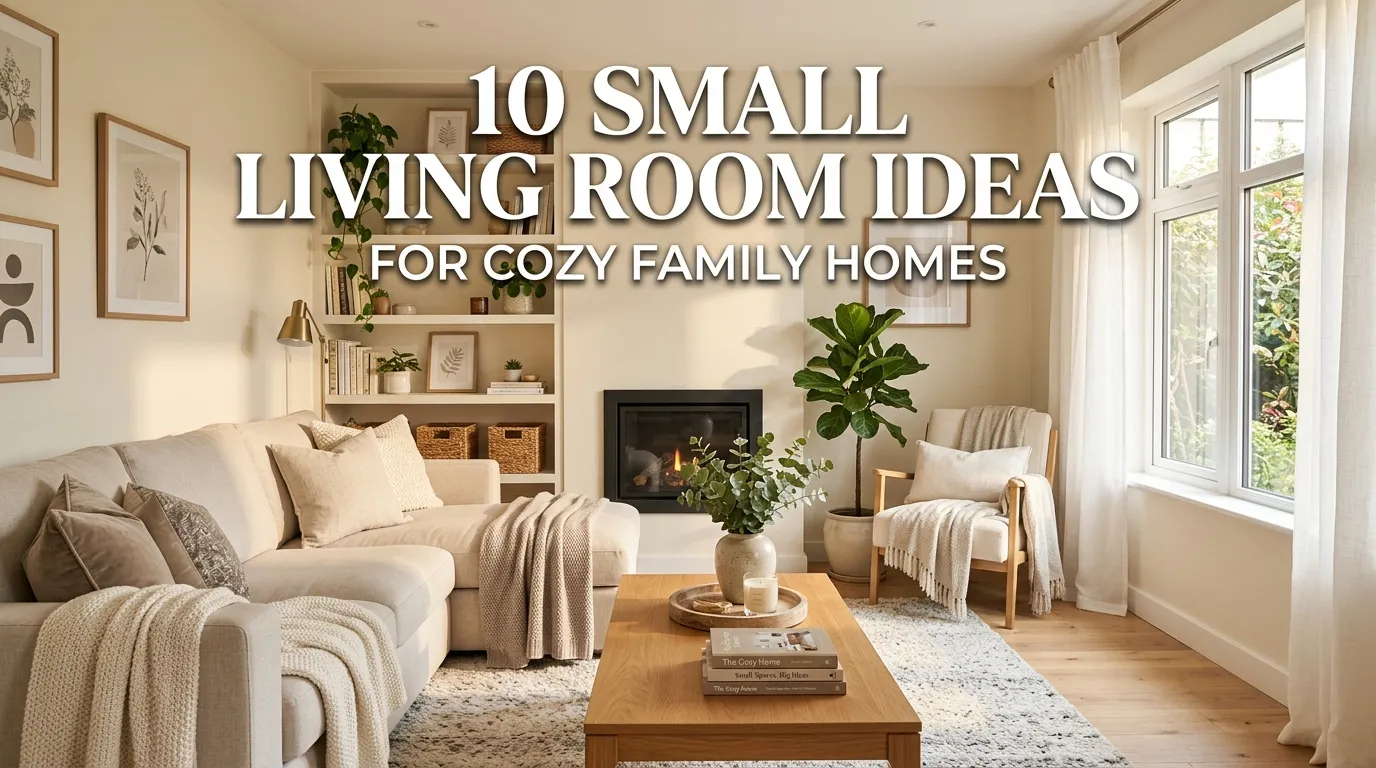
10 Small Living Room Ideas for Cozy Family Homes
A small living room doesn’t have to feel cramped or limiting. In fact, some of the most welcoming homes I’ve visited had compact living spaces that felt incredibly warm, functional, and full of personality. The secret isn’t having more square footage—it’s making thoughtful design choices that maximize comfort while creating a space where everyone naturally wants to gather.
Whether your living room is the heart of a busy family home, a cozy apartment, or a charming cottage, every design decision plays a role in how the room feels. From choosing the right furniture scale to layering soft textures and using light strategically, even simple updates can completely transform the atmosphere without requiring a full renovation.
I’ve noticed that many homeowners focus only on making a small room look bigger, but comfort is just as important. A family living room should invite conversation, movie nights, weekend reading sessions, and everyday relaxation. That’s why the best designs strike a balance between openness and coziness, creating an environment that feels both spacious and lived-in.
In this guide, you’ll discover practical decorating ideas that combine style with everyday functionality. Each idea is easy to adapt to different home styles, whether you love modern, farmhouse, Scandinavian, traditional, or transitional interiors. You’ll also find simple styling tips, layout suggestions, and design principles that help every inch of your living room work harder while still feeling beautiful.
If you’re looking for inspiration that feels timeless rather than trendy, these ideas will help you create a welcoming space your family can enjoy for years to come.
Table of Contents
1. Neutral Color Palette
Learn how soft, light colors make compact living rooms feel brighter and more inviting.
2. Layered Textures
Discover how mixing fabrics and natural materials instantly adds warmth and depth.
3. Multifunctional Furniture
Choose versatile furniture pieces that maximize comfort while saving valuable floor space.
4. Floating Storage
Use vertical space to reduce clutter without overwhelming the room.
5. Cozy Lighting
Create a relaxing atmosphere with layered lighting throughout the space.
6. Thoughtful Layout
Arrange furniture for better conversation, movement, and everyday living.
7. Natural Accents
Bring warmth indoors with wood finishes, greenery, and organic textures.
8. Statement Rug
Anchor your seating area while making the room feel larger.
9. Personal Touches
Decorate with meaningful artwork and accessories that reflect your family’s personality.
10. Window Styling
Maximize natural light while maintaining privacy and softness.
1. Neutral Palette
Quick Benefits
- Makes the room appear larger
- Reflects more natural light
- Creates a calm atmosphere
- Works with every decorating style
- Easy to refresh with seasonal accents
Why It Works
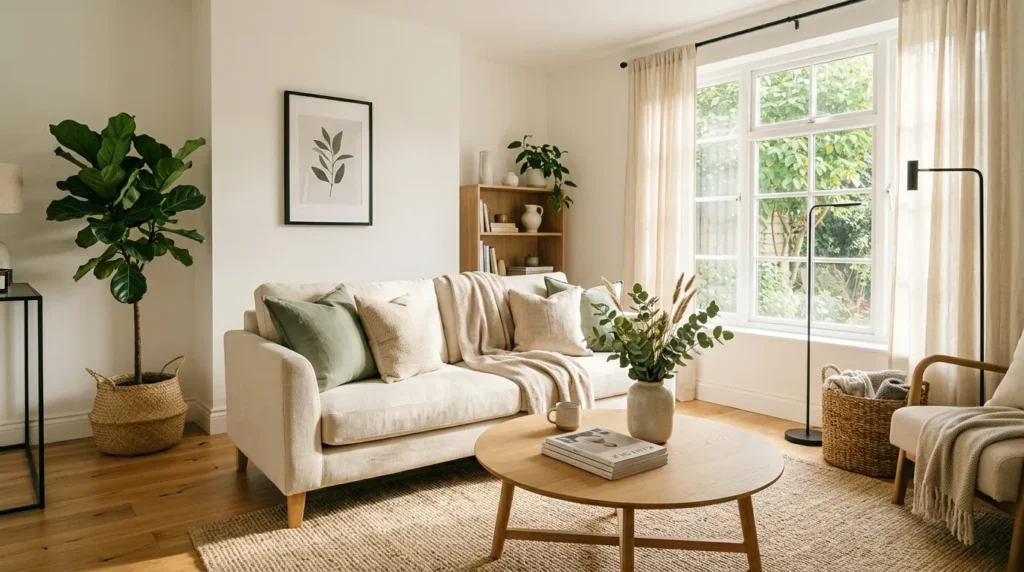
One of the simplest ways to make a compact living room feel more welcoming is by building your design around a soft, neutral color palette. Shades like warm white, creamy beige, soft greige, and light taupe naturally reflect sunlight, helping the room feel brighter throughout the day. Instead of drawing attention to the room’s size, these colors create visual continuity that makes walls seem farther apart.
In my experience, neutral rooms also provide incredible flexibility. Whether you prefer modern minimalism or cozy farmhouse style, a neutral foundation allows you to swap pillows, throws, artwork, and seasonal decorations without repainting. That’s why many designers recommend starting with timeless colors before introducing accent shades through accessories.
How To Style It
Begin with light-colored walls in a warm white or soft greige finish. Pair them with a comfortable sofa upholstered in cream, oatmeal, or light gray fabric to create an airy focal point. Add natural wood coffee tables, woven baskets, linen curtains, and textured throw blankets to keep the space from feeling flat.
Layer in subtle contrast using charcoal picture frames, black metal lighting fixtures, or muted sage green accent pillows. If your living room receives plenty of daylight, these gentle contrasts add depth while maintaining a soft and inviting appearance. Finish the look with simple artwork that complements the neutral palette without overwhelming the walls.
2. Layered Textures
Quick Benefits
- Adds visual interest
- Creates warmth year-round
- Makes the room feel luxurious
- Softens modern furniture
- Increases overall comfort
Why It Works
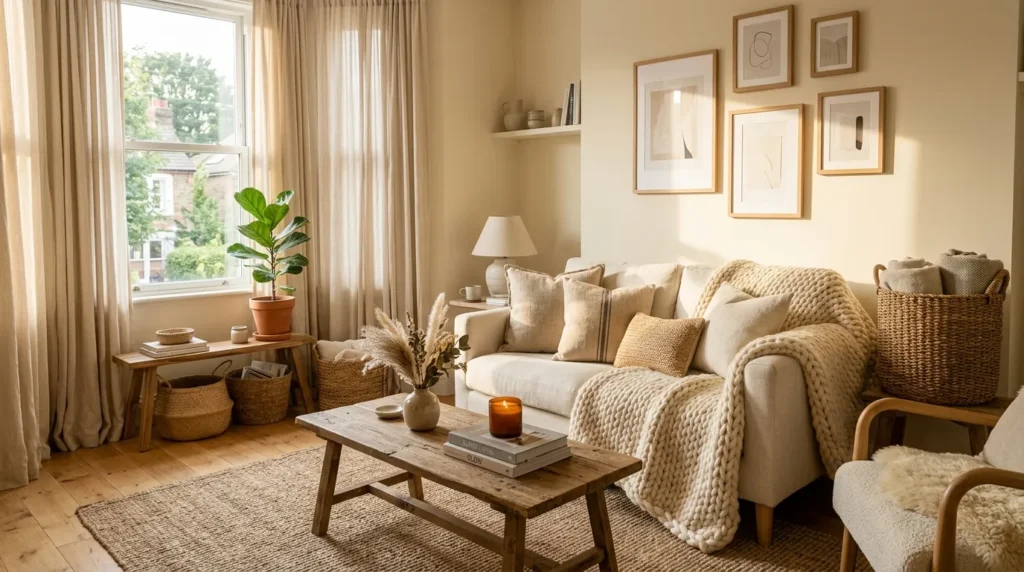
Texture often matters more than color when decorating a cozy family room. Even a monochromatic space can feel rich and welcoming when different materials work together. Soft fabrics, woven fibers, wood grains, ceramics, and natural textiles all contribute to a layered appearance that feels thoughtfully collected rather than overly decorated.
I’ve seen this idea transform spaces that initially felt cold and unfinished. Mixing textures encourages the eye to move around the room while making every seating area feel more inviting. Instead of relying on bold colors, texture creates warmth through subtle variation, giving even the smallest living room a comfortable, lived-in atmosphere.
How To Style It
Start with a plush area rug beneath your seating arrangement to establish a cozy foundation. Add linen or cotton throw pillows in varying weaves alongside chunky knit blankets for seasonal comfort. Incorporate woven baskets for storage, reclaimed wood side tables, ceramic vases, and natural jute accessories to introduce additional layers.
Balance soft elements with smooth finishes like glass lamps or metal candle holders to prevent the room from feeling overly rustic. One simple trick I always suggest is limiting your color palette while increasing material variety. This keeps the design cohesive while adding plenty of visual richness.
3. Multifunctional Furniture
Quick Benefits
- Saves valuable floor space
- Reduces clutter
- Improves organization
- Supports everyday family life
- Increases flexibility
Why It Works
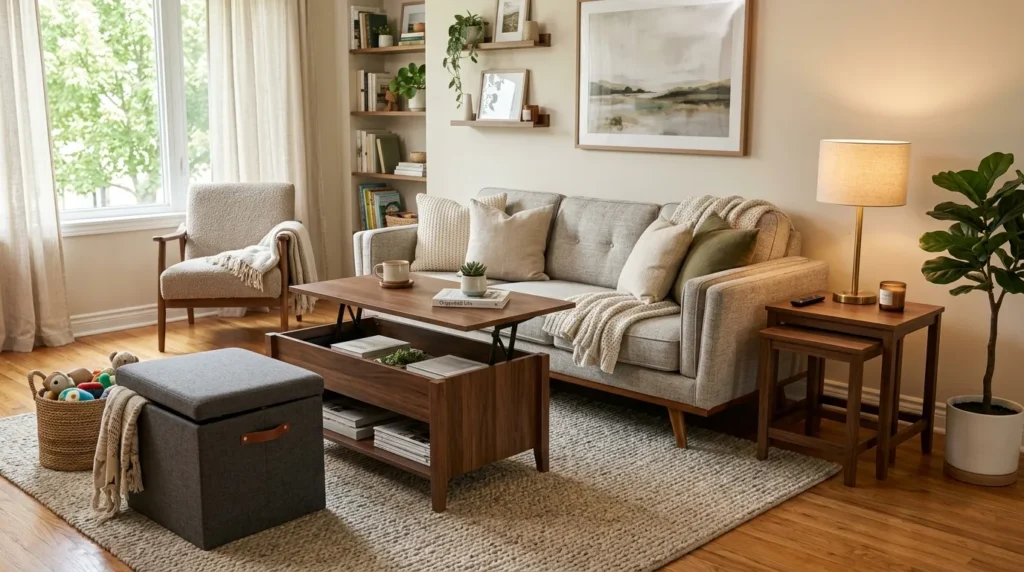
Every piece of furniture should serve a purpose in a smaller living room, and ideally, more than one. Choosing multifunctional furniture helps maximize your available space without sacrificing comfort or style. Storage ottomans, lift-top coffee tables, nesting side tables, and sleeper sofas all work harder than traditional furniture while maintaining a polished appearance.
A mistake many homeowners make is filling a compact room with numerous small pieces instead of investing in versatile furniture. Too many individual items can interrupt traffic flow and make the room feel crowded. Well-designed multifunctional furniture simplifies the layout while giving you extra storage for blankets, board games, books, or children’s toys.
How To Style It
Select a coffee table with hidden storage where everyday essentials can stay neatly tucked away. Pair it with nesting tables that expand when guests visit but store compactly when not in use. If your family frequently entertains overnight visitors, a stylish sleeper sofa provides additional functionality without requiring a dedicated guest room.
Choose furniture with exposed legs whenever possible to create the illusion of more visible floor space. Combine practical storage with decorative accents like stacked coffee table books, a small tray with candles, or a ceramic vase filled with fresh greenery. The goal is to create a room that feels organized, comfortable, and effortlessly functional for everyday living.
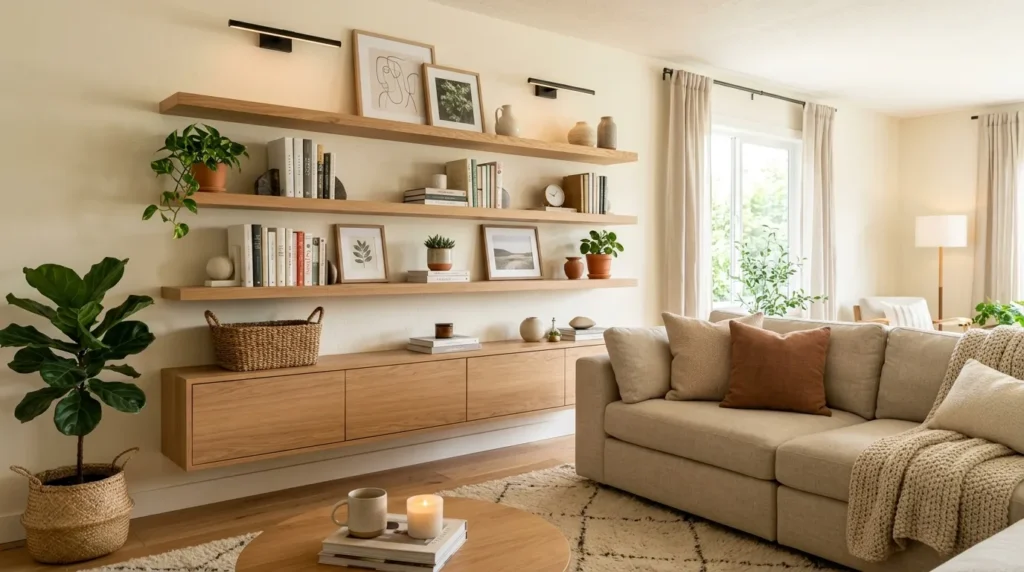
4. Floating Storage
Quick Benefits
- Keeps floors open and uncluttered
- Maximizes unused wall space
- Makes the room feel larger
- Displays decorative accents beautifully
- Adds practical storage without bulky furniture
Why It Works
When floor space is limited, the walls become one of your greatest design assets. Floating shelves and wall-mounted cabinets provide valuable storage while preserving an open, airy feel. Because they don’t extend all the way to the floor, they create the illusion of more space and make cleaning underneath much easier.
I’ve noticed that rooms often feel crowded because everything sits at ground level. Raising storage upward naturally draws the eye higher, making ceilings appear taller and the room feel more spacious. Floating storage also allows you to combine function and style by displaying books, framed family photos, plants, and decorative objects without overwhelming the space.
How To Style It
Install two or three floating wood shelves above a console table or sofa for a balanced look. Style them with a mix of stacked books, ceramic vases, woven baskets, small potted plants, and framed artwork. Leave some empty space between items so the shelves feel curated instead of cluttered.
If you need concealed storage, choose sleek wall-mounted cabinets in a finish that complements your wall color. Pair them with simple brass or matte black hardware for a modern touch. Finish the arrangement with a nearby floor lamp or wall sconce to highlight your decorative display and create a cozy evening ambiance.
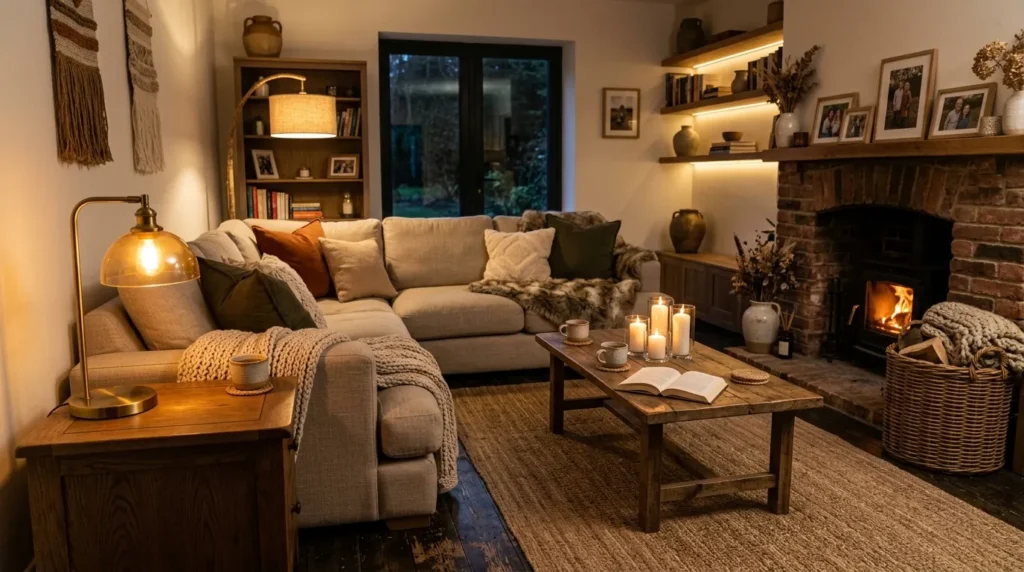
5. Cozy Lighting
Quick Benefits
- Creates a warm and welcoming atmosphere
- Makes the room feel more relaxing
- Highlights architectural features
- Improves functionality throughout the day
- Adds depth and dimension
Why It Works
Lighting has the power to completely transform how a living room feels, regardless of its size. A single overhead fixture often creates harsh shadows and leaves corners feeling dark. Layering different light sources instead produces a softer glow that instantly makes the room more comfortable for family gatherings and quiet evenings alike.
One thing that works especially well is combining ambient, task, and accent lighting. This layered approach allows you to adjust the mood depending on the time of day or activity. Warm lighting also enhances natural wood finishes, soft fabrics, and neutral color palettes, making the room feel richer and more inviting.
How To Style It
Start with a ceiling fixture that provides even illumination across the room. Add a tall floor lamp beside the sofa for reading and a pair of table lamps on side tables to create balanced pools of light. Choose warm white LED bulbs in the 2700K–3000K range to achieve a cozy, residential glow.
For added character, incorporate candles, battery-operated lanterns, or subtle LED strip lighting beneath floating shelves. Linen or woven lamp shades diffuse light beautifully, softening the room and enhancing its inviting atmosphere. The result is a space that feels equally comfortable during sunny afternoons and quiet evenings.
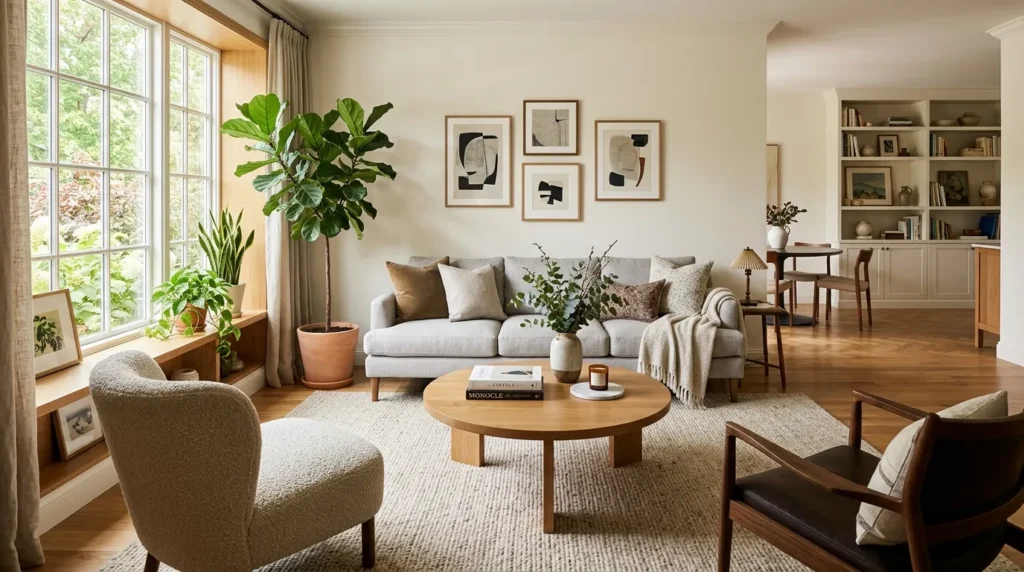
6. Thoughtful Layout
Quick Benefits
- Improves traffic flow
- Encourages conversation
- Maximizes available seating
- Makes the room feel larger
- Creates a balanced, functional design
Why It Works
A well-planned furniture arrangement often has a greater impact than buying new decor. Even beautifully designed furniture can make a room feel cramped if it’s placed without considering movement and everyday use. The most successful layouts create clear walking paths while keeping seating close enough for comfortable conversation.
In my experience, homeowners often push every piece of furniture against the walls, assuming it will make the room feel bigger. Surprisingly, leaving a little breathing room behind a sofa or accent chair can create a more open and intentional layout. This subtle adjustment adds depth while making the room feel professionally designed.
How To Style It
Anchor your seating area with a generously sized area rug that extends beneath the front legs of your sofa and chairs. Position the coffee table within easy reach of each seat while maintaining enough space for comfortable movement. Arrange furniture around a focal point, such as a fireplace, television, or large window, to create visual harmony.
If space allows, include one accent chair instead of several smaller pieces to avoid overcrowding. Keep walkways at least 30 to 36 inches wide whenever possible, ensuring family members and guests can move comfortably throughout the room. Finish the layout with a few thoughtfully placed side tables that provide convenience without adding unnecessary bulk.
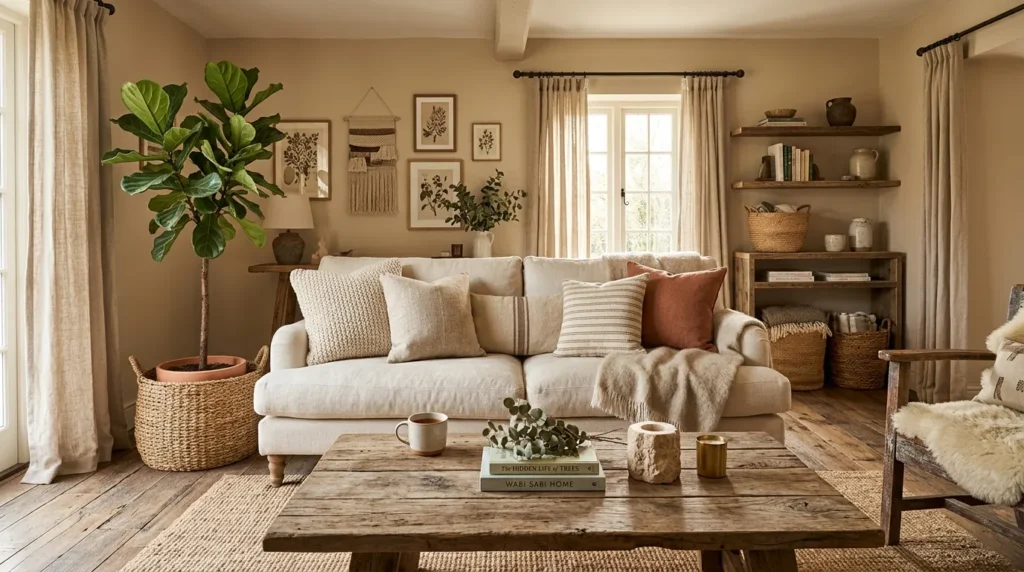
7. Natural Accents
Quick Benefits
- Brings warmth and character
- Softens modern interiors
- Adds timeless appeal
- Connects indoor and outdoor spaces
- Complements every decorating style
Why It Works
Natural materials introduce an effortless sense of comfort that never goes out of style. Wood, stone, woven fibers, linen, cotton, and greenery create an organic look that feels grounded and welcoming. Even in a modern living room, these elements prevent the space from feeling sterile or overly polished.
I’ve seen this idea transform spaces by making them feel more relaxed and inviting almost instantly. Houseplants improve visual freshness, while wood furniture and handcrafted accessories add personality through natural grain and texture. That’s why many designers recommend incorporating organic materials into every room, regardless of the overall decorating style.
How To Style It
Choose a reclaimed wood coffee table or media console as the room’s centerpiece, then layer in woven baskets for stylish storage. Decorate with leafy indoor plants such as a fiddle-leaf fig, snake plant, or pothos to introduce vibrant greenery without overwhelming the space. Natural linen curtains and cotton throw pillows enhance softness while maintaining a light, airy feel.
Complete the room with handcrafted pottery, stone coasters, rattan trays, and textured woven wall art for subtle visual interest. Keep the palette inspired by nature using warm wood tones, creamy whites, muted greens, sandy beiges, and soft earthy browns. Together, these elements create a cozy family living room that feels timeless, calming, and effortlessly beautiful.
8. Statement Rug
Quick Benefits
- Defines the seating area
- Makes the room feel larger
- Adds warmth underfoot
- Introduces color and texture
- Ties the entire design together
Why It Works
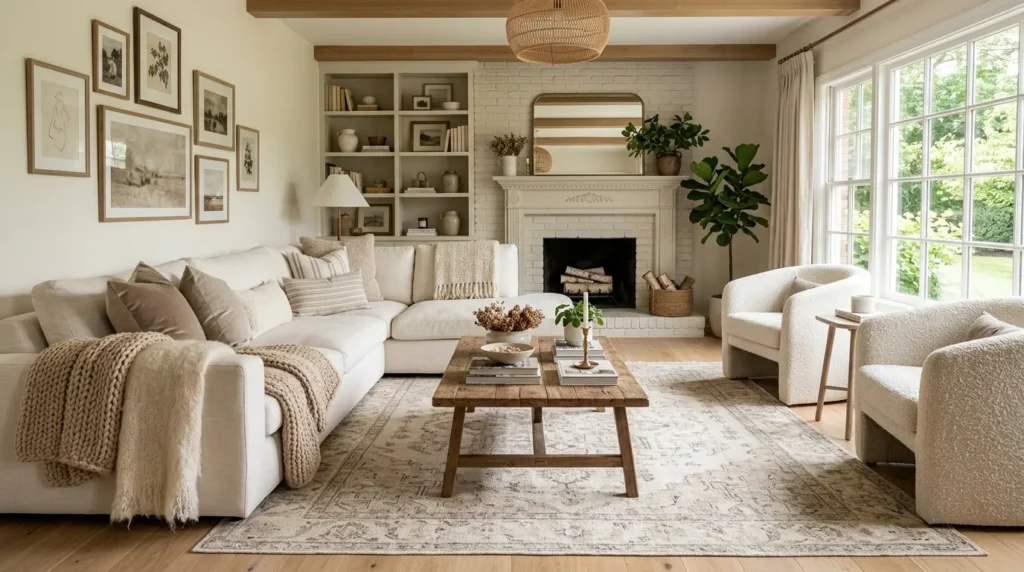
A thoughtfully chosen area rug does much more than protect your floors—it visually anchors the entire living room. In smaller spaces, an undersized rug can actually make the room feel choppy and confined. A larger rug, however, creates a unified foundation that connects the sofa, chairs, and coffee table into one cohesive arrangement.
I’ve noticed that homeowners are often hesitant to go bigger with a rug, but it’s one of the easiest ways to make a compact room feel more spacious. Soft textures also make family spaces more comfortable for children playing on the floor, pets relaxing nearby, or adults gathering for movie nights. That’s why many designers recommend treating the rug as one of the most important design elements rather than an afterthought.
How To Style It
Choose a rug large enough for at least the front legs of your sofa and accent chairs to rest comfortably on it. Neutral rugs with subtle geometric patterns, vintage-inspired designs, or soft stripes work beautifully because they add visual interest without overwhelming the room. If your furniture is mostly neutral, consider a rug with muted blues, warm terracotta, or sage green accents for a gentle pop of color.
Layer the rug with a wooden coffee table, cozy knit throws, and textured pillows to create an inviting seating area. Finish the space with woven baskets and greenery to reinforce the warm, lived-in feeling that makes a family room so welcoming.
9. Personal Touches
Quick Benefits
- Makes the room feel unique
- Creates a welcoming atmosphere
- Sparks conversation
- Reflects your family’s personality
- Adds warmth without clutter
Why It Works
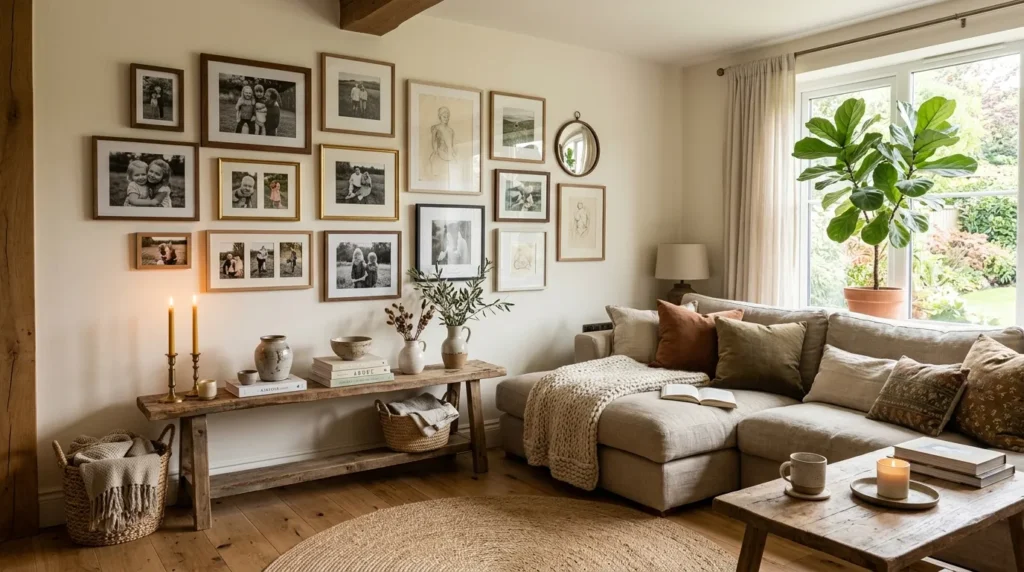
Beautiful living rooms aren’t memorable because they’re perfectly styled—they’re memorable because they tell a story. Personal touches bring warmth and authenticity that no showroom can replicate. Whether it’s family photographs, travel souvenirs, handmade pottery, or meaningful artwork, these details create emotional connections and make your house truly feel like home.
One thing that works especially well is balancing decorative accessories with meaningful keepsakes. Instead of filling every shelf, display a carefully chosen collection that reflects your family’s interests and experiences. This approach keeps the room organized while adding character that guests naturally notice and appreciate.
How To Style It
Create a gallery wall using coordinated frames in black, natural oak, or white finishes for a polished look. Mix family photos with landscape prints, abstract artwork, or botanical illustrations to create depth and visual variety. On shelves, combine decorative objects with books, candles, and small heirloom pieces to achieve a collected rather than cluttered appearance.
Refresh accessories seasonally with cozy throws, fresh flowers, or holiday-inspired accents while keeping your core decor timeless. This simple habit allows your living room to feel fresh throughout the year without requiring a complete redesign every season.
10. Window Styling
Quick Benefits
- Maximizes natural light
- Enhances privacy
- Makes ceilings appear taller
- Softens the room
- Completes the overall design
Why It Works
Windows are one of the most valuable features in any small living room because they influence both light and the perception of space. Heavy, dark curtains can make a room feel enclosed, while light, airy window treatments allow sunlight to brighten every corner. Natural light reflects off walls and furnishings, making the entire space appear larger and more inviting.
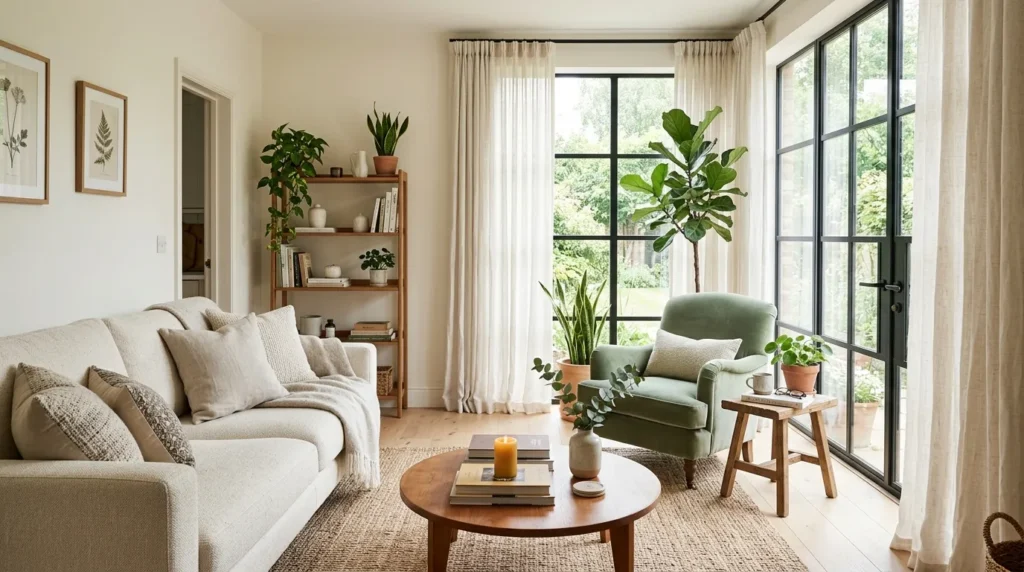
A mistake many homeowners make is hanging curtain rods directly above the window frame. Mounting rods several inches higher and extending them beyond the window width creates the illusion of taller ceilings and larger windows. It’s a simple design trick that delivers a surprisingly dramatic impact.
How To Style It
Choose linen or light-filtering cotton curtains in warm white, ivory, or soft beige to maintain brightness while adding texture. Hang curtain rods close to the ceiling and let the panels lightly touch the floor for an elegant, elongated appearance. If privacy is a concern, layer sheer curtains with neutral blackout panels so you can easily adjust the amount of light throughout the day.
Complete the window area with a nearby floor plant, a comfortable reading chair, or a slim side table to create a cozy nook that feels intentional rather than overlooked. Even a compact corner can become a favorite place to enjoy morning coffee or unwind with a good book.
Frequently Asked Questions
1. How can I make a small living room feel bigger without remodeling?
Focus on using light, neutral colors, multifunctional furniture, and layered lighting. Choosing appropriately scaled furniture, keeping walkways open, and incorporating mirrors or reflective surfaces can also create the illusion of more space. Decluttering regularly and using vertical storage help maintain an open, airy feel without expensive renovations.
2. What colors work best for a cozy family living room?
Warm neutrals such as cream, soft white, greige, taupe, and light beige are timeless choices. You can add personality with muted accent colors like sage green, dusty blue, terracotta, or warm caramel through pillows, artwork, and decorative accessories. These combinations create a welcoming atmosphere without overwhelming a smaller room.
3. What size rug should I choose for a small living room?
A larger rug generally works better than a smaller one. Ideally, the front legs of your sofa and chairs should sit on the rug to visually connect the furniture. This creates a cohesive seating area that makes the room feel larger and more balanced while adding warmth and comfort.
4. How do I keep a family living room organized every day?
Invest in furniture with built-in storage, such as ottomans, lift-top coffee tables, or media consoles with cabinets. Decorative baskets are perfect for storing blankets, toys, and magazines while keeping essentials within easy reach. Regularly editing decorative accessories also prevents the room from feeling cluttered.
5. Can a small living room still have a cozy atmosphere?
Absolutely. Comfort comes from thoughtful layering rather than square footage. Soft rugs, textured throw blankets, warm lighting, comfortable seating, and natural materials all contribute to a cozy environment. A well-designed small living room often feels more intimate and inviting than a larger, sparsely decorated space.
6. What is the biggest decorating mistake in a small living room?
One of the most common mistakes is overcrowding the room with too many furniture pieces or decorative accessories. Instead, choose a few well-proportioned furnishings, maintain clear walking paths, and leave some open space around furniture. This creates better balance and allows each design element to stand out.
Conclusion
Creating a cozy family living room isn’t about having more square footage—it’s about making every inch work beautifully. Thoughtful choices like a soft neutral palette, layered textures, multifunctional furniture, floating storage, and warm lighting can dramatically improve both the look and feel of a compact space. By focusing on comfort, functionality, and timeless design, you can create a room that supports everyday living while reflecting your family’s unique personality.
Remember that the most inviting homes evolve over time. You don’t need to complete every update at once. Start with one or two ideas that fit your budget and lifestyle, then build on them as your needs change. Even small improvements, such as adding a larger rug, rearranging furniture, or incorporating natural textures, can make a noticeable difference.
The best living rooms encourage connection, relaxation, and lasting memories. Whether you’re hosting friends, enjoying a movie night, or simply unwinding after a busy day, these decorating ideas will help you create a space that feels both stylish and genuinely welcoming. Take inspiration from these ideas, personalize them to suit your home, and enjoy a living room that your family will love for years to come.
Related Articles
- 10 Cozy Bedroom Ideas for a Relaxing Retreat
- 10 Small Living Room Layout Ideas That Maximize Space
- 10 Modern Farmhouse Living Room Ideas You’ll Love
- 10 Neutral Home Decor Ideas for Every Season
- 10 DIY Wall Decor Ideas to Personalize Your Home