How to Make a Small Bedroom Feel Open Without Remodeling
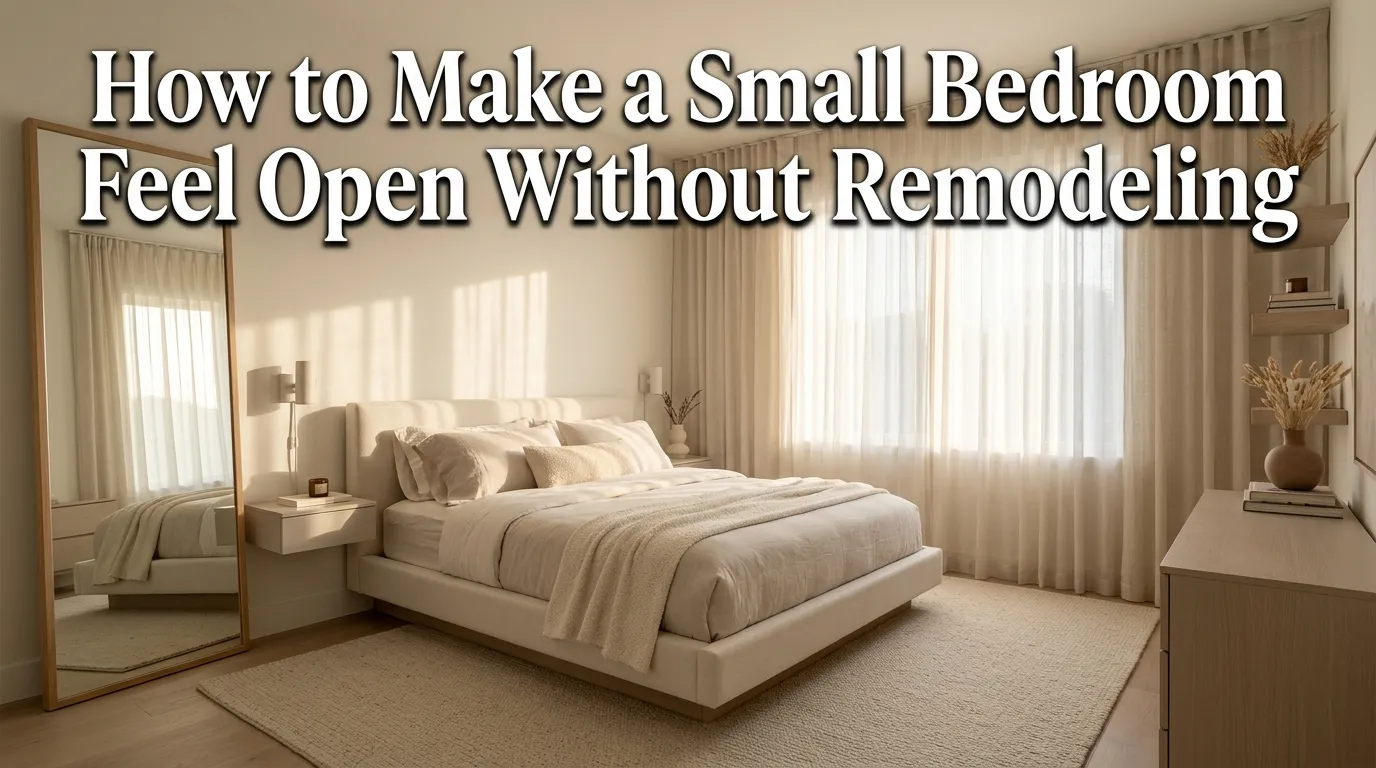
A small bedroom doesn’t have to feel cramped, dark, or difficult to decorate. You can often make a compact room feel noticeably more open without removing walls, changing the flooring, or starting an expensive renovation.
The biggest difference usually comes from visual decisions. Furniture placement, color, lighting, window treatments, mirrors, and clutter all influence how spacious a bedroom feels.
When a room has too many large pieces or too many contrasting colors, the eye stops moving easily through the space. By simplifying the layout and creating visual continuity, you can make the same square footage feel calmer and more spacious.
In my experience, the most effective small-bedroom updates are often surprisingly simple. Raising curtains closer to the ceiling can make windows appear taller, while a large mirror can reflect natural light and create the impression of additional depth. Choosing furniture with visible legs can also keep more of the floor visible.
You don’t need to replace everything. Start by identifying what’s making the room feel crowded, then make a few targeted changes.
These practical ideas can help you create a bedroom that feels brighter, lighter, and more open while keeping your existing walls and layout intact.
Table of Contents
- Simplify the Furniture Layout
- Use Light Wall Colors
- Add a Large Mirror
- Choose Low-Profile Furniture
- Keep Windows Uncovered
- Layer Soft Lighting
- Match Furniture Colors
- Use One Large Rug
- Keep Surfaces Clear
- Emphasize Vertical Space
1. Simplify the Furniture Layout
Quick Benefits
- Opens walking paths
- Reduces visual clutter
- Improves functionality
- Makes furniture feel intentional
- Costs nothing
Why It Works
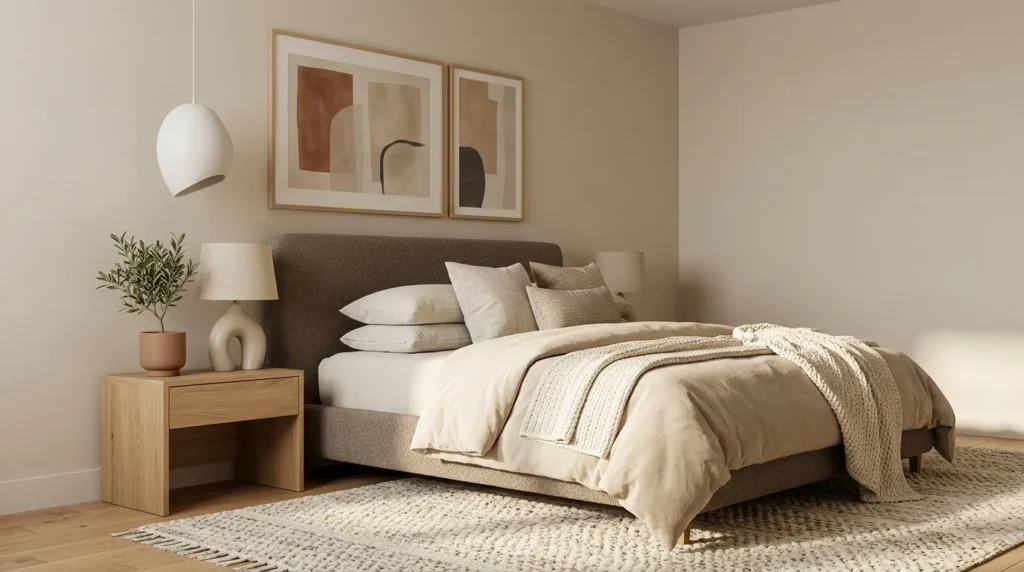
Furniture placement can dramatically change how spacious a bedroom feels. Even a relatively small room can feel comfortable when there are clear pathways and enough breathing room around major pieces.
Start by identifying which furniture you actually use. Removing or relocating unnecessary pieces can immediately make the room easier to navigate.
I’ve found that leaving some open floor space around the bed creates a stronger sense of openness than filling every available corner.
How To Style It
Position the bed where it allows the easiest movement through the room. Avoid blocking doors, windows, or natural pathways.
If possible, remove small pieces that don’t serve an important function and keep the main furniture visually balanced.
2. Use Light Wall Colors
Quick Benefits
- Reflects light
- Creates visual continuity
- Makes rooms feel brighter
- Provides a calm backdrop
- Works with many styles
Why It Works
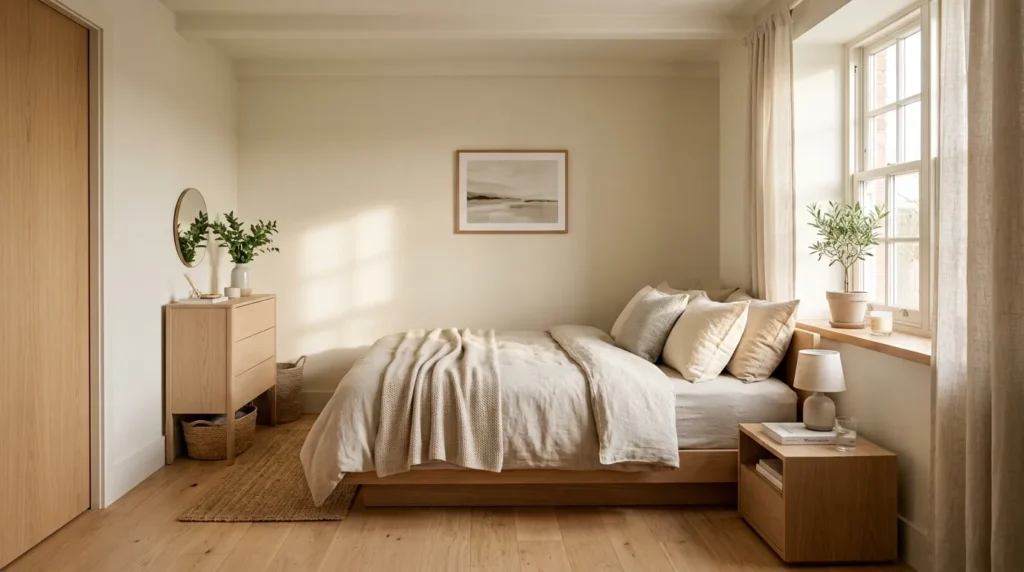
Light colors can help a small bedroom feel brighter and more expansive because they reflect available light and reduce visual boundaries.
Warm white, cream, soft beige, pale gray, and muted pastel shades can all work beautifully.
You don’t necessarily need to repaint the entire room. Coordinating existing walls with lighter bedding, curtains, and larger furniture pieces can create a similar visual effect.
I’ve found warm off-whites especially useful because they feel spacious without looking stark.
How To Style It
Choose one dominant light neutral and repeat it across larger surfaces. Keep strong contrasts limited to smaller accessories.
If your walls are already light, use similarly toned bedding and curtains to maintain visual continuity.
3. Add a Large Mirror
Quick Benefits
- Reflects natural light
- Creates visual depth
- Makes walls feel larger
- Adds decorative interest
- Brightens dark corners
Why It Works
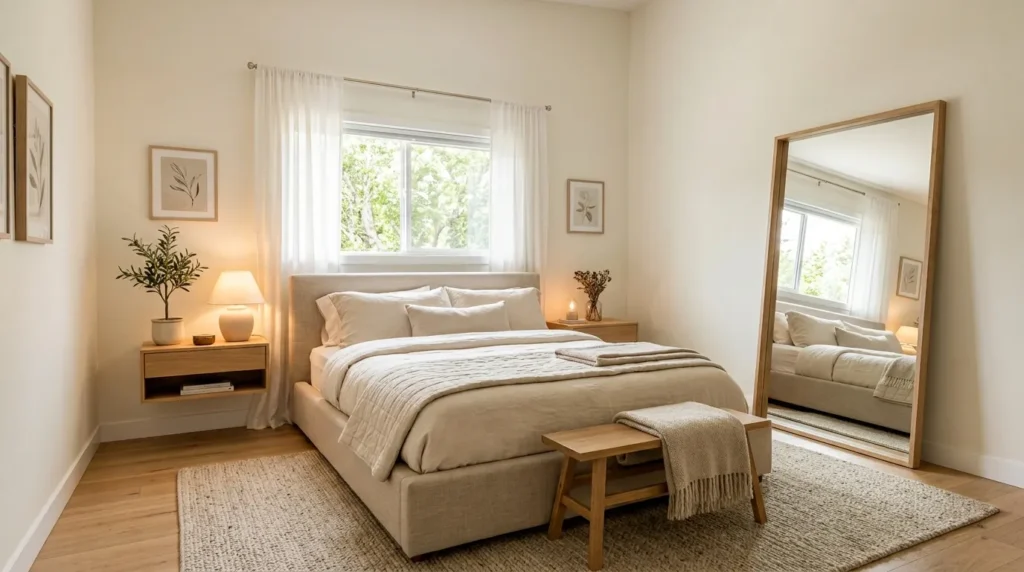
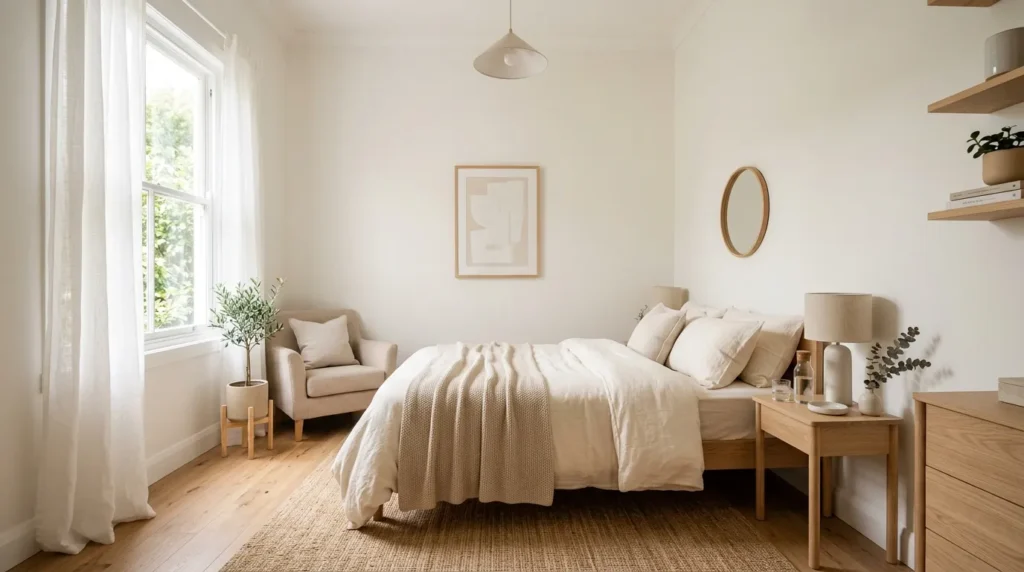
Mirrors can create the illusion of additional space by reflecting light and portions of the room. A larger mirror often has more impact than several small decorative mirrors.
Placement matters just as much as size. A mirror positioned opposite or near a window can reflect daylight deeper into the room.
I’ve found oversized mirrors particularly effective in bedrooms with limited natural light.
How To Style It
Lean a large floor mirror against an appropriate wall or hang a substantial mirror above a dresser.
Choose a simple frame that complements your furniture rather than one with excessive visual detail.
4. Choose Low-Profile Furniture
Quick Benefits
- Creates more visual space
- Keeps sightlines open
- Makes ceilings feel higher
- Reduces bulk
- Supports modern styling
Why It Works
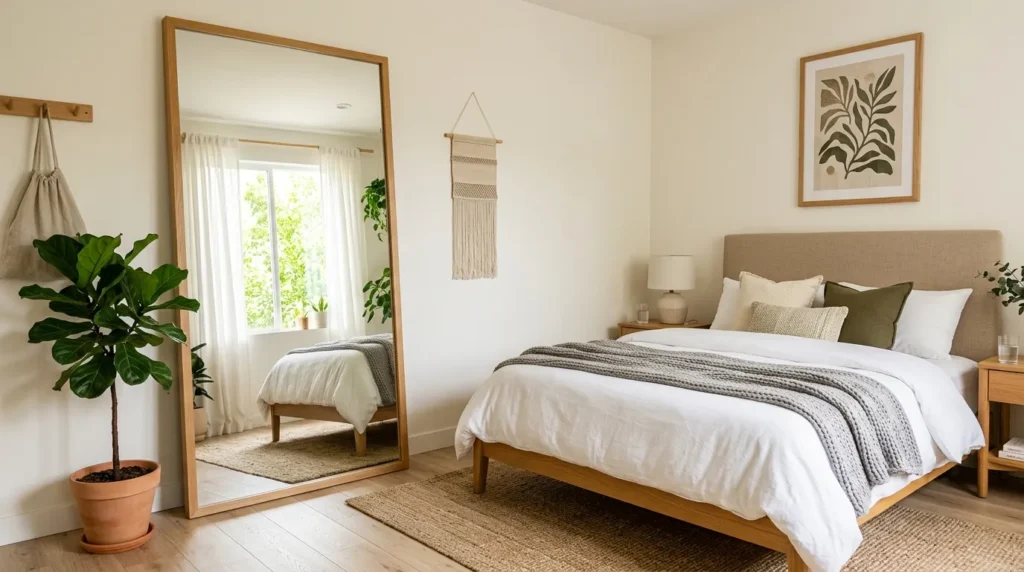
Furniture that sits lower to the floor can create a stronger sense of openness by keeping more of the wall and surrounding space visible.
Pieces with slim frames or raised legs can also allow you to see more flooring underneath them.
I’ve found that visually lightweight furniture can make a bigger difference than simply choosing smaller dimensions.
How To Style It
Look for beds, nightstands, benches, and dressers with clean lines and minimal visual bulk.
Avoid overly deep furniture when possible, especially along narrow walkways.
5. Keep Windows Uncovered
Quick Benefits
- Maximizes daylight
- Makes the room brighter
- Creates visual depth
- Highlights windows
- Makes walls feel less crowded
Why It Works
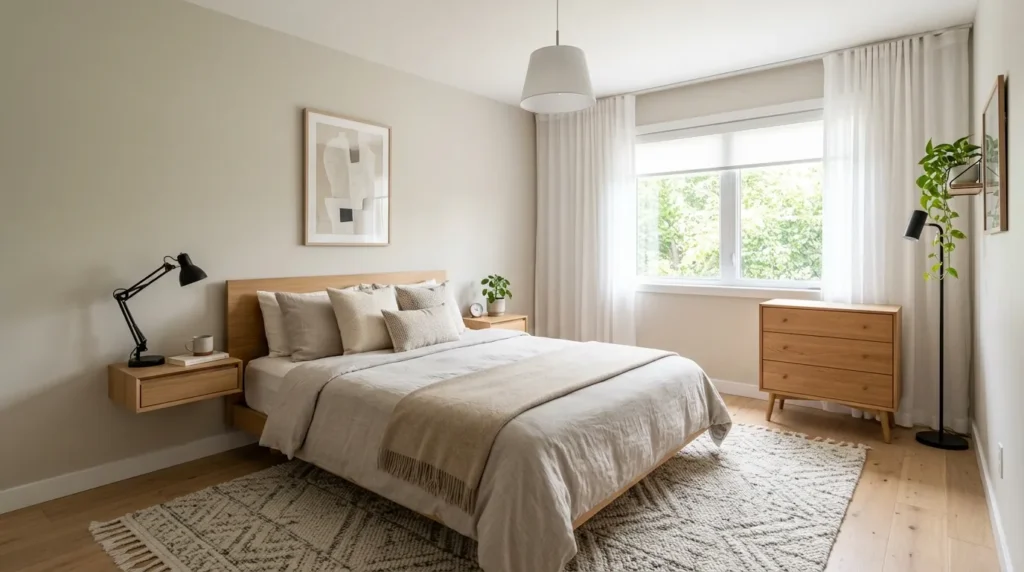
Natural light is one of the most effective ways to make a small bedroom feel open. Heavy curtains or bulky window treatments can block light and make the room feel enclosed.
Light-filtering fabrics can provide privacy while still allowing daylight into the room.
I’ve found that simply replacing heavy curtains with lightweight panels can noticeably change a bedroom’s atmosphere.
How To Style It
Use sheer or lightweight curtains in a color close to the walls. Hang them higher and wider than the window frame when practical to create the impression of a larger window.
Keep the area around the window relatively uncluttered.
6. Layer Soft Lighting
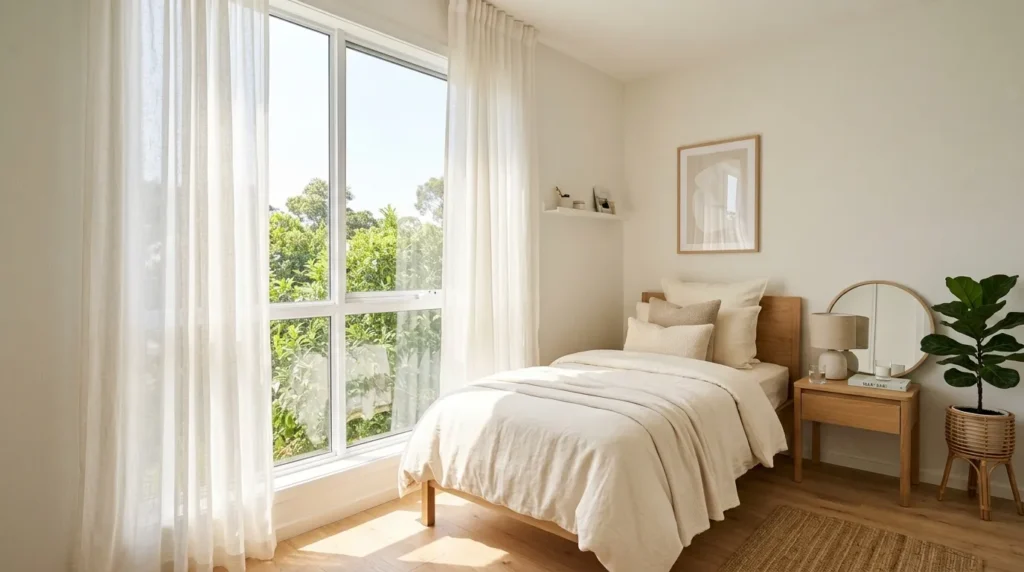
Quick Benefits
- Brightens dark areas
- Creates depth
- Makes the room cozy
- Reduces harsh shadows
- Enhances the open feeling
Why It Works
A small bedroom can feel even smaller when it relies on one overhead light. Layered lighting distributes illumination throughout the room and prevents dark corners from visually closing in the space.
Bedside lamps, wall sconces, floor lamps, and subtle accent lighting can each serve a different purpose while creating a warmer atmosphere.
I’ve found that soft, evenly distributed lighting can make a compact bedroom feel considerably more inviting.
How To Style It
Combine overhead lighting with bedside lamps or wall sconces. If floor space is limited, use wall-mounted fixtures instead of standing lamps.
Choose warm bulbs and position lights so they illuminate darker corners without creating harsh glare.
7. Match Furniture Colors
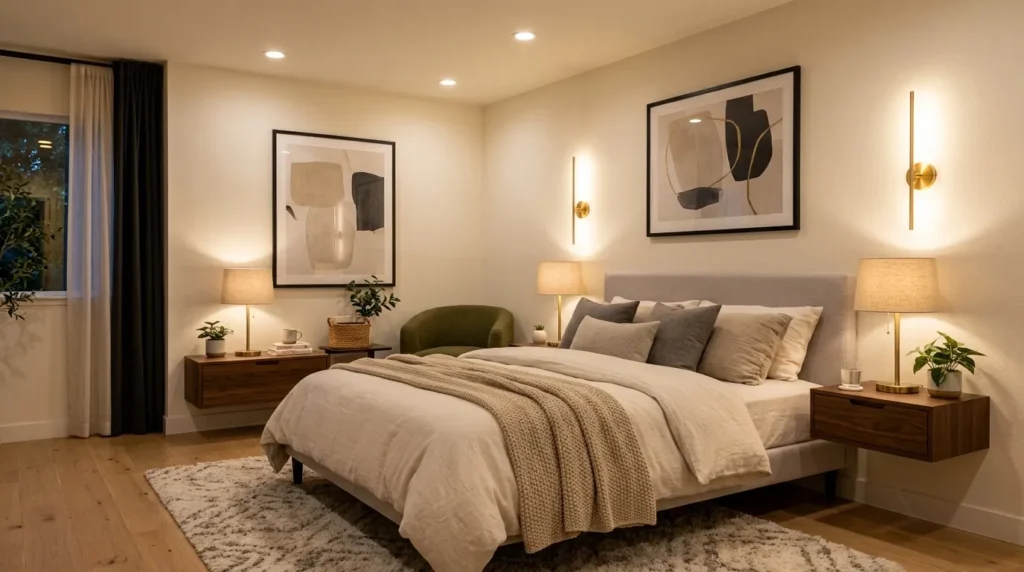
Quick Benefits
- Creates visual continuity
- Reduces contrast
- Makes furniture feel lighter
- Creates a cohesive look
- Simplifies decorating
Why It Works
When every piece of furniture has a dramatically different color or finish, a small bedroom can feel visually fragmented. Coordinating major furniture pieces helps the eye move more easily around the room.
This doesn’t mean everything needs to be identical. Similar tones can create the same effect.
I’ve found that matching or closely coordinating the bed, nightstands, dresser, and larger textiles creates a much calmer appearance.
How To Style It
Choose one dominant furniture finish and repeat it throughout the room. Natural wood, white, cream, or light oak can work particularly well.
Introduce contrast through smaller accessories rather than large furniture pieces.
8. Use One Large Rug
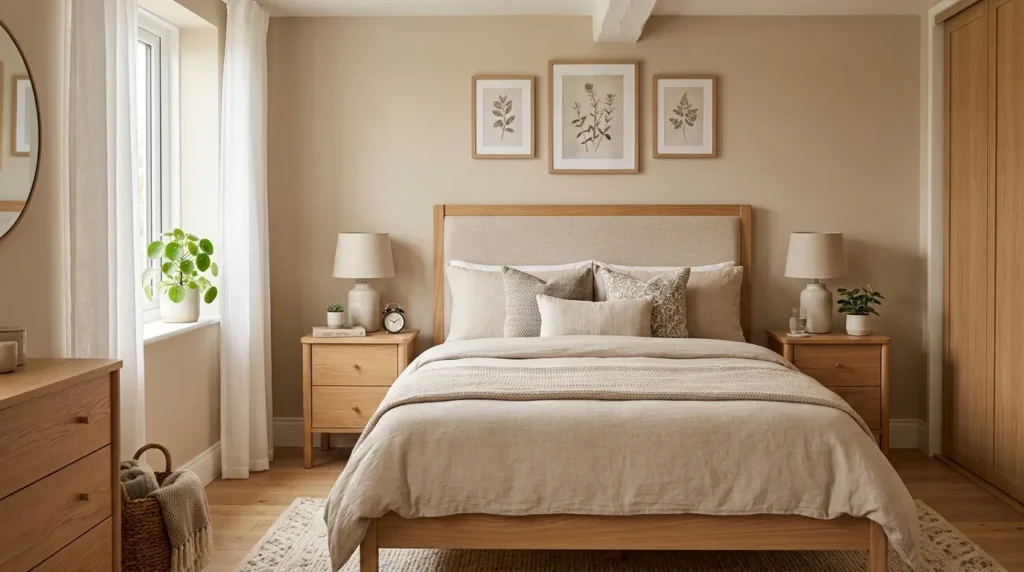
Quick Benefits
- Anchors the room
- Creates visual continuity
- Adds softness
- Reduces visual fragmentation
- Makes the bedroom feel finished
Why It Works
Several small rugs can visually divide a compact bedroom into separate sections. One larger rug creates a unified foundation beneath the main furniture.
It also adds warmth and texture without introducing another strong visual boundary.
I’ve found that a properly sized rug often makes a small bedroom feel more cohesive.
How To Style It
Place a large rug beneath the bed so it extends beyond the sides and lower portion. Choose a subtle pattern or solid neutral tone.
Coordinate its color with the bedding and curtains for a seamless appearance.
9. Keep Surfaces Clear
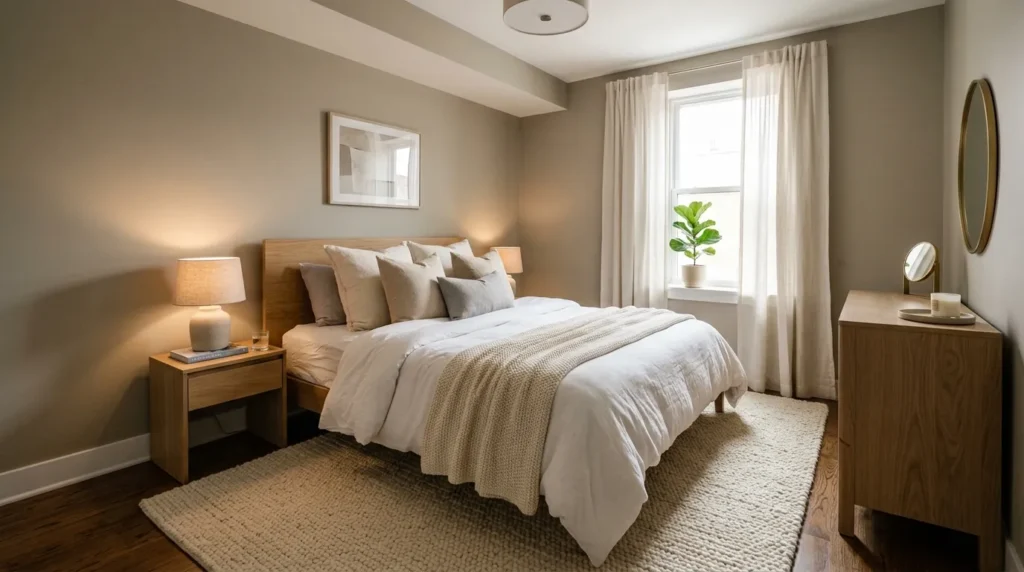
Quick Benefits
- Reduces visual clutter
- Creates calm
- Makes cleaning easier
- Highlights furniture
- Improves organization
Why It Works
Clutter makes small rooms feel smaller because the eye has more objects to process. Keeping nightstands, dressers, and shelves relatively clear creates visual breathing room.
You don’t need completely empty surfaces. The goal is simply to make every displayed item feel intentional.
I’ve found that removing just a few unnecessary objects can make a surprisingly noticeable difference.
How To Style It
Keep only the essentials and a few decorative pieces visible. Use drawers, baskets, and closed storage for everyday items.
Group small accessories together on a tray instead of spreading them across multiple surfaces.
10. Emphasize Vertical Space
Quick Benefits
- Draws the eye upward
- Makes ceilings feel taller
- Adds storage
- Uses unused wall area
- Creates visual height
Why It Works
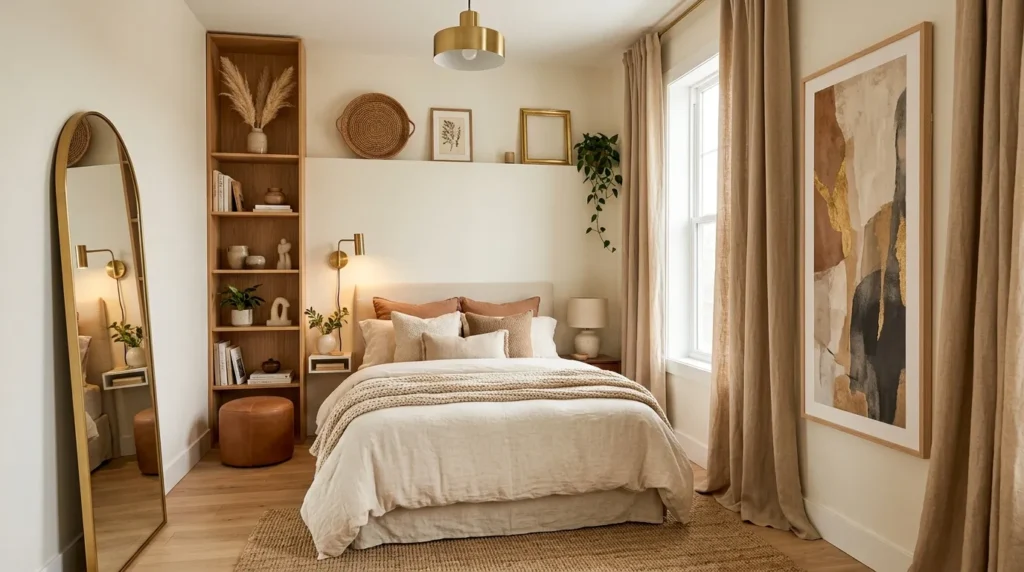
When floor space is limited, vertical design helps shift attention upward. Tall curtains, vertical artwork, narrow shelving, and tall plants can make the room feel taller and more spacious.
This also allows you to add storage without taking up much additional floor area.
I’ve found vertical elements are particularly useful in rooms with low or average-height furniture.
How To Style It
Hang curtains closer to the ceiling, use tall mirrors, install vertical shelves, or display artwork in a vertically oriented arrangement.
Keep the lower portion of the room relatively open so the eye naturally travels upward.
Frequently Asked Questions
How can I make my small bedroom look bigger without remodeling?
Simplify the furniture layout, use light colors, add mirrors, maximize natural light, reduce clutter, and choose visually lightweight furniture.
What color makes a small bedroom feel bigger?
Light warm neutrals such as cream, warm white, beige, and soft gray can help create a brighter and more open appearance.
Do mirrors really make a small bedroom look bigger?
A strategically positioned large mirror can reflect light and create visual depth, helping the room appear more spacious.
Should I use a large rug in a small bedroom?
Yes. A properly sized rug can visually connect the main furniture and make the room feel more cohesive.
How can I make a small bedroom feel brighter?
Maximize natural light, use light-colored textiles, add layered lighting, and place mirrors where they can reflect available daylight.
What furniture should I avoid in a small bedroom?
Avoid unnecessarily deep, bulky, or oversized pieces that block pathways and consume valuable floor space.
Conclusion
Making a small bedroom feel open doesn’t require knocking down walls or investing in a major renovation. Simple changes to furniture placement, color, lighting, mirrors, textiles, and organization can dramatically improve the way the room feels.
Start by creating clear pathways and removing unnecessary visual clutter. Then introduce light colors, a large mirror, layered lighting, and furniture with a lighter visual footprint.
The most important principle is to preserve breathing room. A small bedroom doesn’t need to be completely empty—it simply needs enough open space for the eye and body to move comfortably.
With a few intentional updates, you can make your bedroom feel brighter, calmer, and surprisingly spacious without changing its structure.