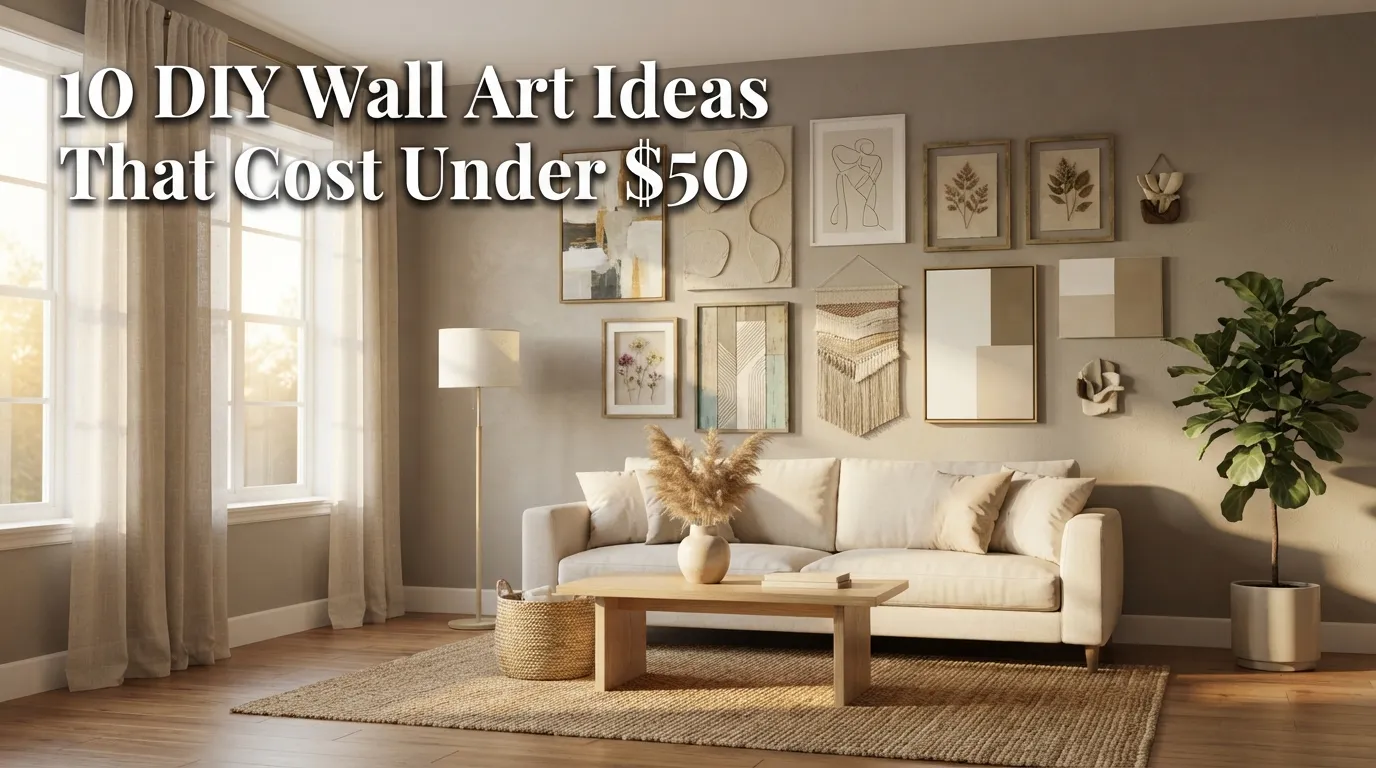
10 DIY Wall Art Ideas That Cost Under $50
Decorating empty walls doesn’t have to mean spending hundreds of dollars on artwork. With a few affordable supplies, a little creativity, and some basic DIY skills, you can create wall art that looks surprisingly polished without stretching your decorating budget.
One of the biggest advantages of making your own artwork is flexibility. You can choose colors that match your furniture, create pieces in exactly the right size, and experiment with textures or patterns that aren’t always available in stores. Even simple materials such as canvas, paint, fabric, paper, wood, and thrifted frames can become beautiful decorative pieces.
The trick is to focus on presentation. A simple DIY can look much more expensive when the colors are coordinated, the proportions are right, and the finished piece is displayed in an attractive frame.
In my experience, the best budget-friendly wall art doesn’t try too hard to look expensive. Instead, it focuses on texture, simplicity, and a cohesive color palette. Neutral artwork can create a sophisticated appearance, while colorful pieces can bring personality to an otherwise simple room.
These DIY wall art ideas are designed for beginners and use accessible materials that you can often find at craft stores, discount retailers, or even around your home. Whether you’re decorating a bedroom, living room, hallway, office, or rental, there is an idea here that can give your walls a fresh new look for less.
Table of Contents
- Paint an Abstract Canvas
- Create a Textured Art Piece
- Frame Decorative Fabric
- Make a Botanical Print
- Create a Paper Collage
- Paint Wooden Panels
- Design a Minimalist Line Drawing
- Repurpose a Thrifted Frame
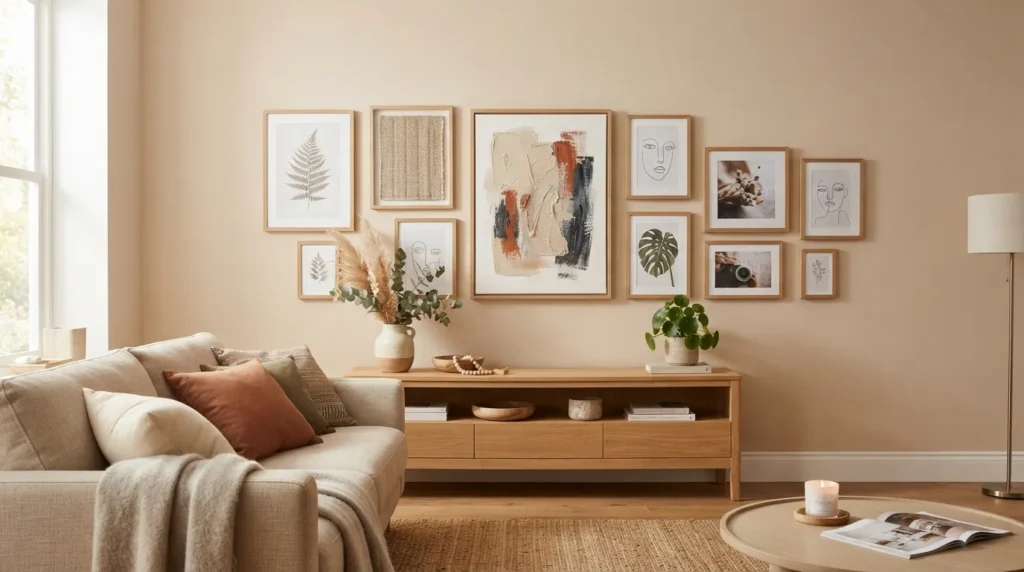
- Make a Gallery Wall
- Create a Pressed Flower Display
1. Paint an Abstract Canvas
Quick Benefits
- Beginner-friendly
- Easy to customize
- Affordable materials
- Works with many styles
- Creates a statement piece
Why It Works
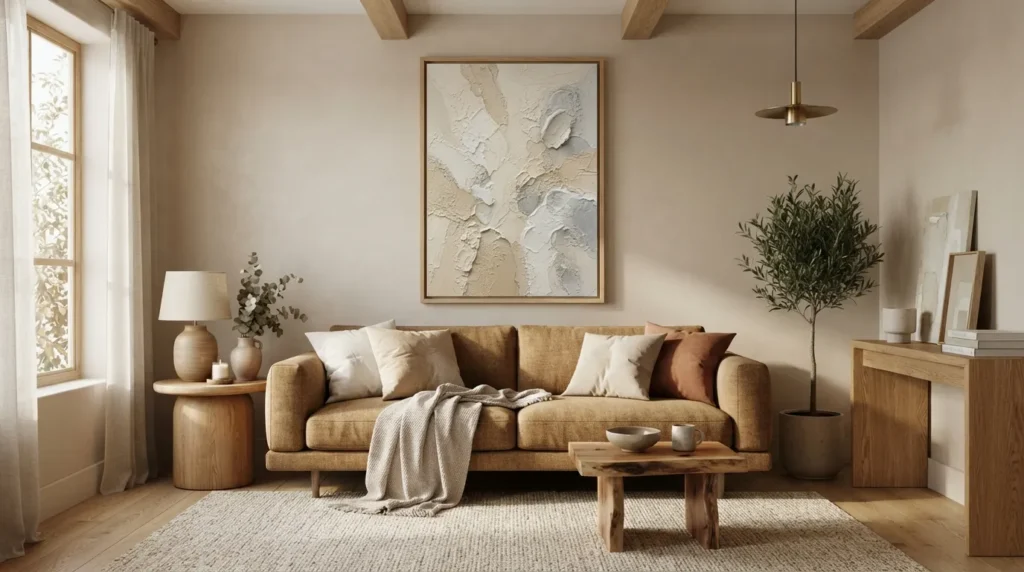
Abstract artwork is one of the easiest DIY projects because it doesn’t require perfect drawing skills. Shapes, brushstrokes, color blocks, and subtle imperfections can actually make the finished piece feel more artistic.
A blank canvas gives you complete control over the size and color palette. You can also create several pieces that coordinate with the colors already used in your room.
I’ve found that neutral abstract artwork is especially forgiving for beginners because soft beige, cream, gray, taupe, and muted brown tones naturally blend together.
How To Style It
Start with a canvas, acrylic paint, and a few different brushes. Choose three to five complementary colors and create broad shapes or loose brushstrokes.
For a sophisticated appearance, use a neutral base with one darker accent shade. Once dry, place the artwork in a simple frame or hang the canvas directly above a console, sofa, or bed.
2. Create a Textured Art Piece
Quick Benefits
- Adds dimension
- Looks artistic
- Uses simple supplies
- Creates visual interest
- Works beautifully in neutral rooms
Why It Works
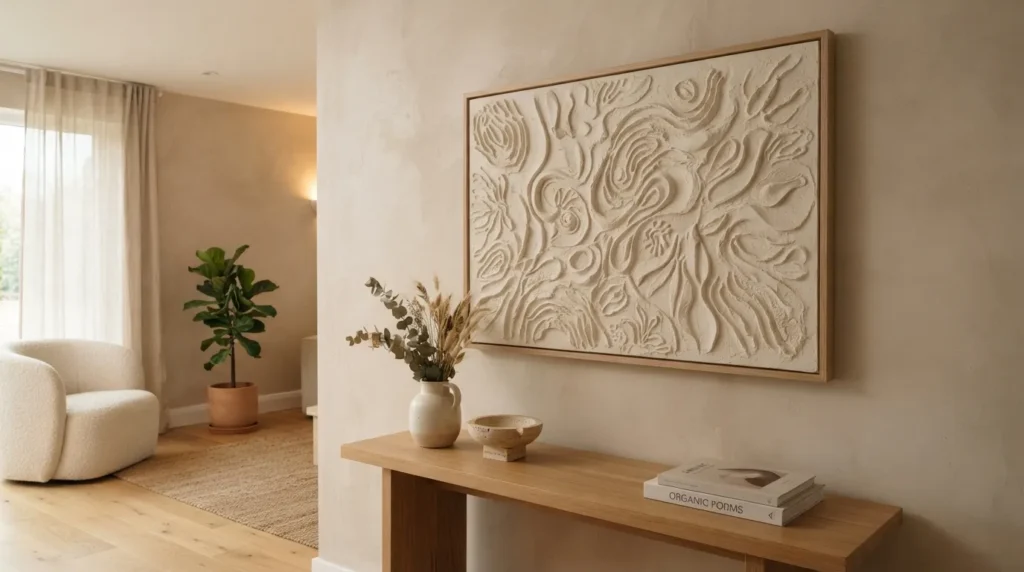
Texture can make inexpensive materials look much more substantial. Adding raised patterns to a canvas creates shadows and dimension that change throughout the day as the light moves across the surface.
This is especially effective for minimalist interiors where subtle texture can provide interest without introducing bold colors.
In my experience, textured artwork is one of the easiest ways to create a designer-inspired appearance on a small budget.
How To Style It
Use a canvas and a suitable modeling or texture medium to create organic arches, curves, waves, or abstract shapes. Keep the piece monochromatic for a calm, sophisticated result.
Allow the artwork to dry completely before moving it, then place it in a natural wood or neutral frame.
3. Frame Decorative Fabric
Quick Benefits
- Extremely simple
- Adds pattern
- Requires minimal tools
- Creates instant artwork
- Easy to change
Why It Works
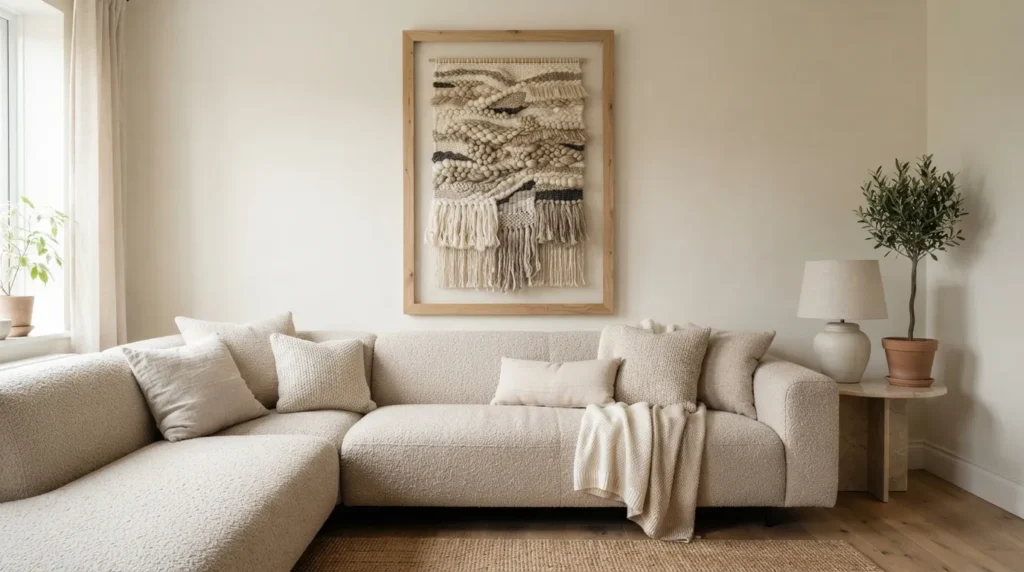
Beautiful fabric can become artwork when displayed properly. This approach is particularly useful when you find a textile with an attractive pattern, embroidery, or unusual texture.
Fabric also adds softness to rooms that contain many hard surfaces, making it especially useful in bedrooms and living spaces.
I’ve found that large fabric pieces can create the appearance of custom artwork without requiring any painting skills.
How To Style It
Stretch fabric over a canvas frame or place it inside a large thrifted frame. Choose linen, cotton, woven textiles, or decorative fabric that complements your room.
For a modern look, select a simple neutral pattern. For a more eclectic room, consider a colorful textile with a distinctive design.
4. Make a Botanical Print
Quick Benefits
- Brings nature indoors
- Easy to personalize
- Creates a calming look
- Works in many rooms
- Affordable to reproduce
Why It Works
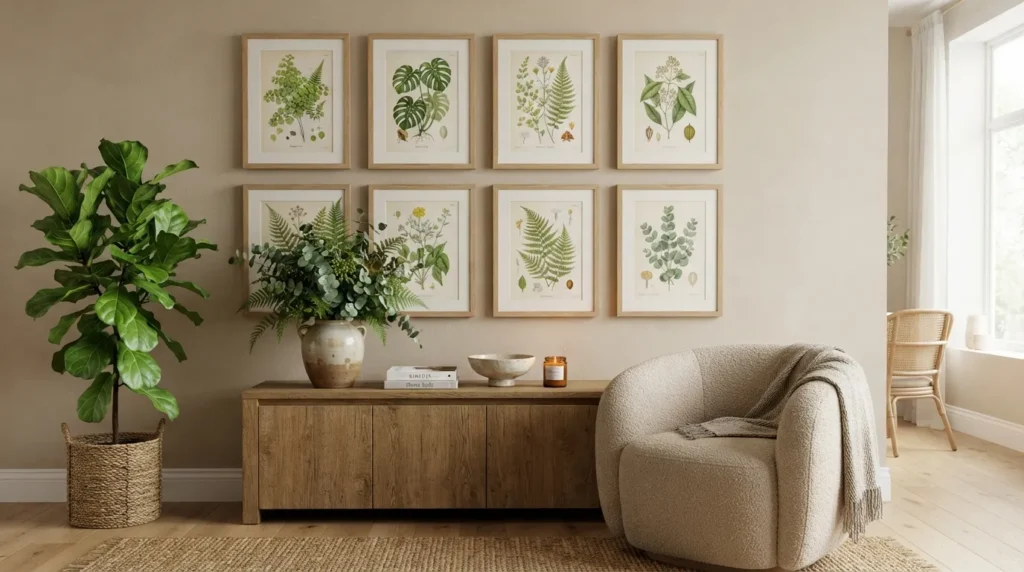
Botanical artwork creates an organic feeling that works beautifully with neutral and natural interiors. You can use real pressed leaves, simple illustrations, or printed botanical images.
The repetitive shapes of leaves and stems create visual interest without making the wall feel overly busy.
I’ve found botanical artwork pairs particularly well with natural wood frames and warm neutral walls.
How To Style It
Create several botanical prints using inexpensive paper and frames. Keep the artwork in a similar color palette and arrange the pieces in a balanced grid.
For an organic modern appearance, choose simple green, beige, or black botanical designs.
5. Create a Paper Collage
Quick Benefits
- Very inexpensive
- Great for beginners
- Highly customizable
- Creates unique patterns
- Uses simple materials
Why It Works
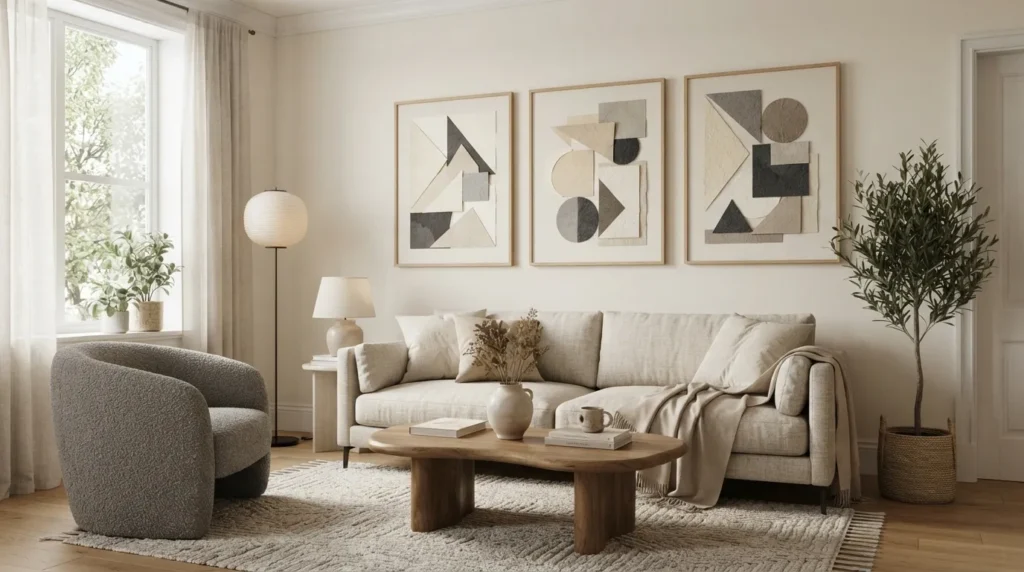
Paper provides almost endless possibilities for DIY artwork. You can combine torn pieces, geometric shapes, printed patterns, or painted paper to create an original composition.
This project is particularly useful when you want custom artwork in very specific colors.
I’ve found monochromatic paper collages can look surprisingly sophisticated when the composition remains simple.
How To Style It
Choose heavyweight paper in three to five complementary colors. Cut or tear the pieces into different shapes and arrange them on a large sheet before gluing.
Frame the finished collage behind glass for a polished presentation.
6. Paint Wooden Panels
Quick Benefits
- Adds natural texture
- Easy to customize
- Creates a statement
- Works with rustic décor
- Budget-friendly
Why It Works
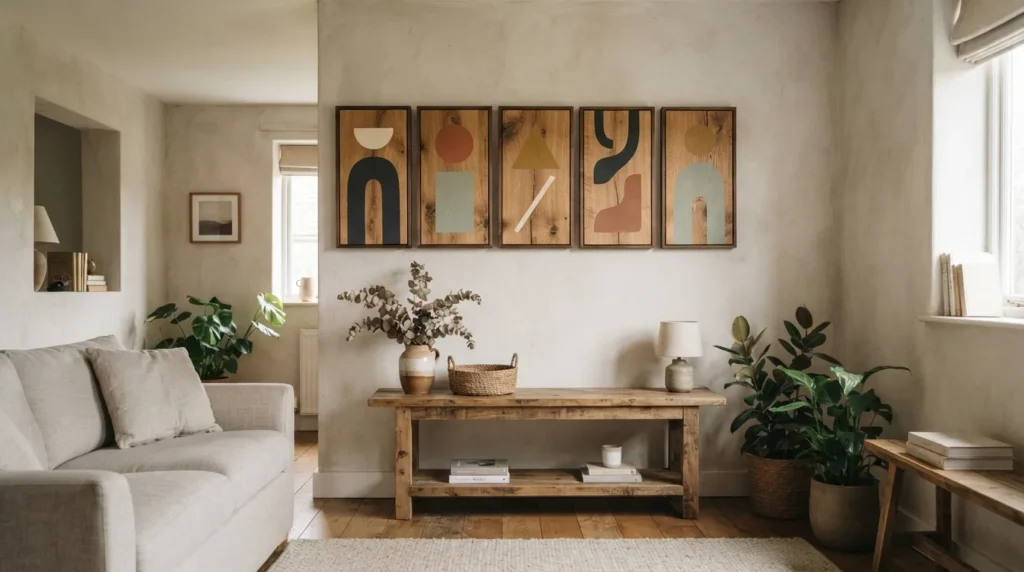
Wooden panels can create artwork with a little more architectural presence than a traditional canvas. The natural grain adds texture, while paint allows you to introduce color or simple patterns.
This idea works especially well in farmhouse, rustic, Scandinavian, and organic-modern interiors.
I’ve found that leaving portions of the wood visible can make inexpensive materials look much more intentional and handcrafted.
How To Style It
Use lightweight wood panels or unfinished boards. Sand them, then apply paint in simple geometric shapes, stripes, arches, or abstract forms.
For a softer appearance, use warm white, beige, sage, muted blue, or terracotta. Mount several narrow panels together for a larger wall statement.
7. Design a Minimalist Line Drawing
Quick Benefits
- Extremely affordable
- Simple appearance
- Beginner-friendly
- Works in modern spaces
- Easy to personalize
Why It Works
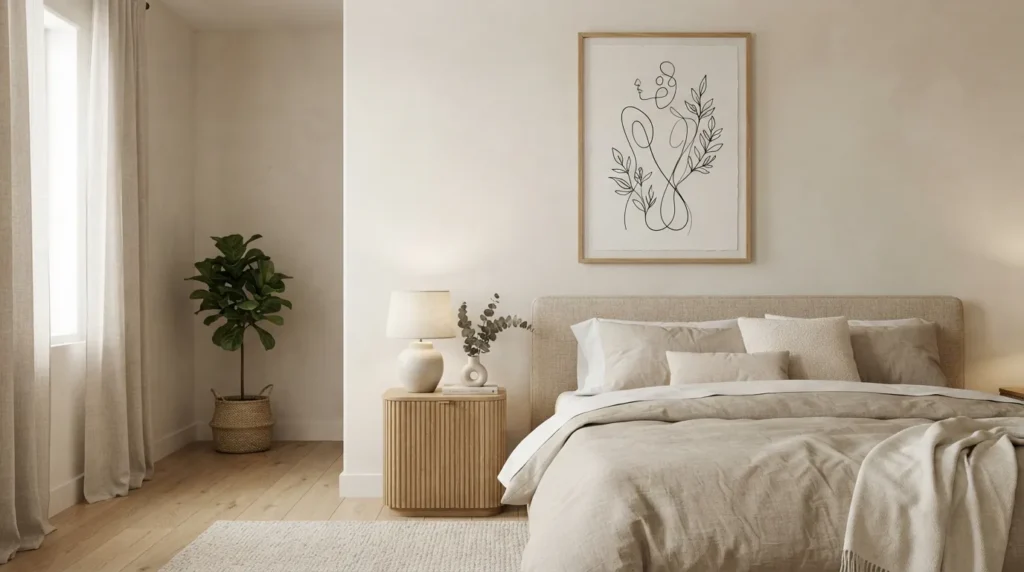
Minimalist line art proves that wall décor doesn’t need complicated details to make an impact. A few carefully drawn lines can create a sophisticated focal point while keeping the room visually calm.
This style works particularly well in modern bedrooms, offices, entryways, and neutral living rooms.
I’ve found simple black line drawings look especially polished when paired with plenty of white space.
How To Style It
Use heavyweight art paper and a black fine-tip pen or marker. Create simple faces, botanical shapes, abstract figures, or continuous-line drawings.
Place the finished piece inside a thin black, white, or natural wood frame.
8. Repurpose a Thrifted Frame
Quick Benefits
- Saves money
- Reduces waste
- Adds character
- Creates one-of-a-kind décor
- Easy to customize
Why It Works
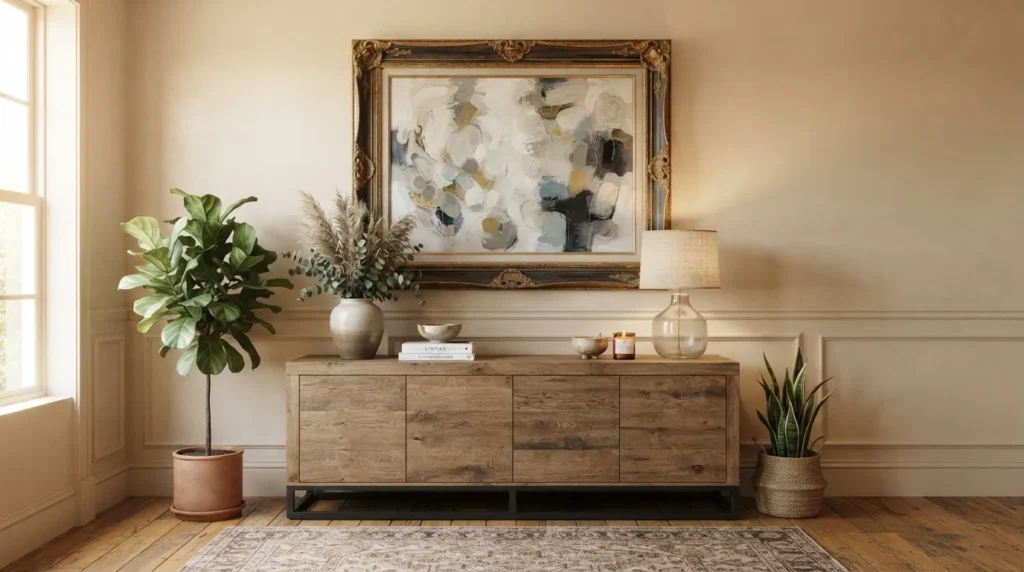
An inexpensive secondhand frame can become the foundation for beautiful new artwork. Older frames often have interesting shapes or details that are difficult to find in inexpensive new décor.
Instead of focusing on what the frame currently contains, think about how you can transform it.
I’ve found that repainting an old frame in a consistent neutral color can make it look surprisingly modern.
How To Style It
Look for large frames at thrift stores, flea markets, or resale shops. Remove the existing artwork and clean the frame.
Paint it if necessary, then add your own abstract painting, botanical print, fabric, or textured paper. For a gallery-inspired effect, use several different frames in a coordinated arrangement.
9. Make a Gallery Wall
Quick Benefits
- Fills large walls
- Uses inexpensive pieces
- Highly customizable
- Adds personality
- Creates visual impact
Why It Works
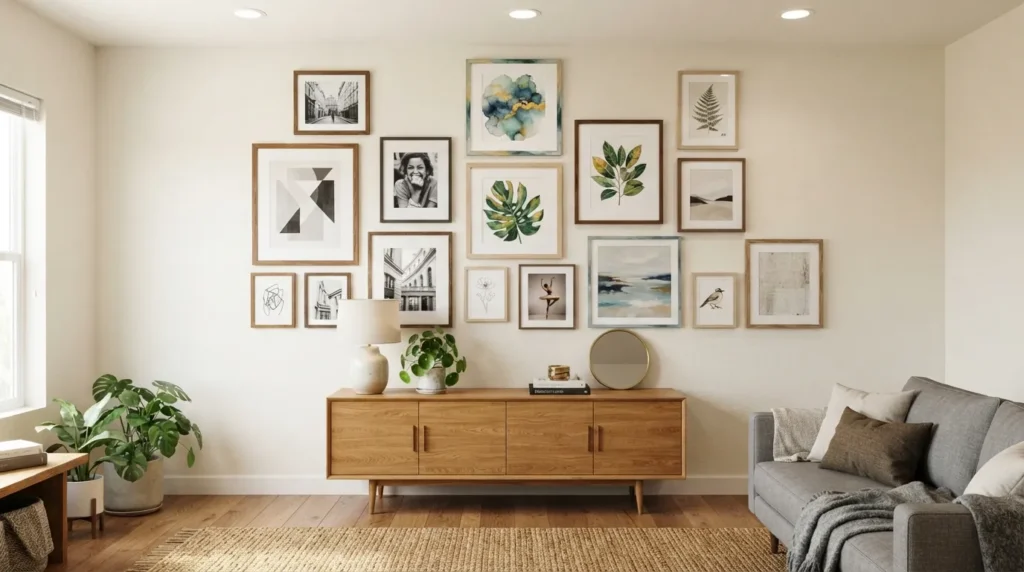
A gallery wall allows several affordable pieces to work together as one larger design. Individual prints don’t have to be expensive when the overall arrangement creates the visual impact.
This is also a great way to combine artwork you’ve created yourself with inexpensive prints, photographs, and meaningful objects.
I’ve found consistency is more important than matching everything exactly.
How To Style It
Choose a limited color palette and mix several types of artwork. Use photographs, line drawings, botanical prints, abstract pieces, and small decorative objects.
Before hanging anything, arrange the pieces on the floor to experiment with spacing and balance.
10. Create a Pressed Flower Display
Quick Benefits
- Natural beauty
- Unique appearance
- Affordable materials
- Adds delicate texture
- Perfect for bedrooms
Why It Works
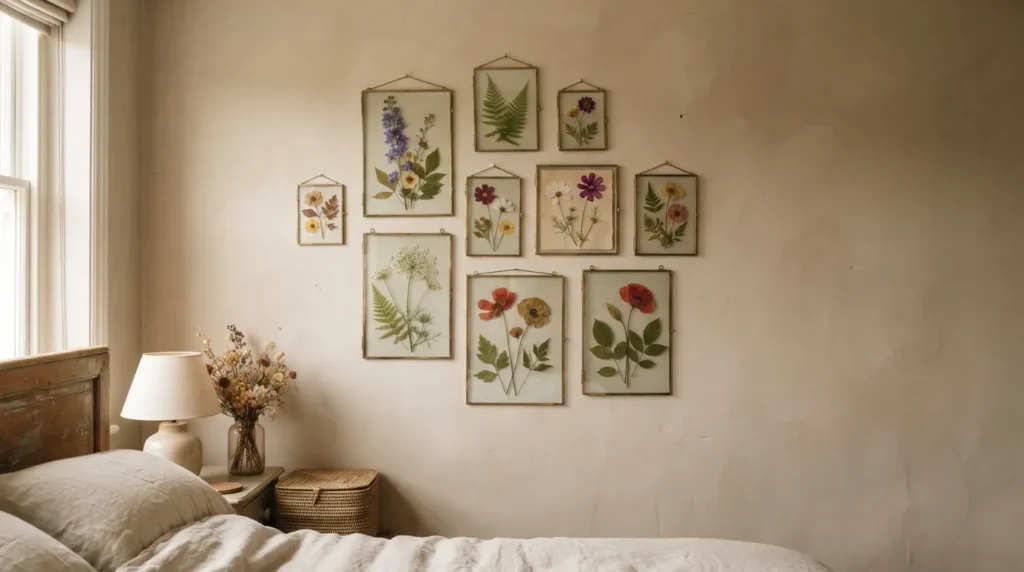
Pressed flowers create artwork that feels personal and connected to nature. Their delicate shapes and subtle colors work beautifully in calm, neutral interiors.
You can use flowers from your garden, inexpensive dried botanicals, or flowers purchased specifically for pressing.
I’ve found simple arrangements often look more elegant than overly crowded compositions.
How To Style It
Arrange dried or pressed flowers on archival paper and place them inside a glass frame. Use a neutral background to keep attention on the botanical details.
For a coordinated display, create two or three smaller pieces using similar flowers and matching frames.
Frequently Asked Questions
What is the easiest DIY wall art for beginners?
Abstract painting, minimalist line drawings, and framed fabric are among the easiest options because they don’t require advanced artistic skills.
How can I make DIY wall art look expensive?
Focus on clean presentation, coordinated colors, quality-looking frames, balanced proportions, and restrained designs. The frame and placement can be just as important as the artwork itself.
What materials are best for inexpensive wall art?
Canvas, acrylic paint, heavyweight paper, fabric, wooden panels, thrifted frames, and dried botanicals are affordable and versatile options.
How much should DIY wall art cost?
Many simple projects can be completed for under $50, particularly when you reuse frames or purchase supplies in larger quantities.
How do I choose colors for DIY artwork?
Pull colors from your existing furniture, rugs, curtains, or accessories. Using two or three established room colors can make handmade artwork feel intentional.
Can DIY wall art work in a modern home?
Absolutely. Minimalist shapes, neutral abstracts, line drawings, textured canvases, and simple botanical prints can all complement modern interiors.
Conclusion
Creating beautiful wall décor doesn’t have to require a large budget. With affordable supplies and a little creativity, you can make artwork that feels personal, stylish, and perfectly suited to your home.
The most successful projects focus on simple design, thoughtful colors, and strong presentation. A basic canvas can become a sophisticated abstract painting, an old frame can become a statement piece, and a few pressed flowers can turn into delicate botanical artwork.
If you’re decorating on a budget, start with the walls that need the most attention and choose one project that matches your existing style. From there, you can build a coordinated collection gradually without spending a fortune.
The result is more than inexpensive décor—it’s artwork that reflects your creativity and makes your home feel uniquely yours.
Related Articles
- 10 DIY Coffee Tables Using Budget Materials
- 10 Blue Gray Kitchen Cabinets That Elevate Your Home
- How to Decorate a Living Room with Affordable Decor
- 10 Modern Aesthetic Bedroom Ideas You’ll Want to Copy
- 10 DIY Garden Projects That Add Instant Charm