
10 DIY Coffee Tables Using Budget Materials
A coffee table can completely change the way a living room looks and functions, but buying a beautiful one can sometimes cost more than expected. The good news is that you don’t need expensive furniture to create a stylish centerpiece. With affordable materials, basic tools, and a little creativity, you can build a coffee table that looks custom-made for your space.
DIY furniture also gives you something store-bought pieces often can’t: flexibility. You can choose the exact dimensions, finish, shape, and storage options to suit your room. A compact table can work beautifully in a small apartment, while a larger reclaimed-wood design can anchor a spacious living room.
The best budget coffee table projects don’t necessarily look like traditional DIY furniture. With thoughtful proportions, simple finishes, and quality-looking hardware, inexpensive materials can become surprisingly sophisticated pieces.
In my experience, the secret is keeping the design intentional. A simple wooden top with clean legs can look more expensive than an overly complicated project. Likewise, choosing a finish that complements your existing furniture can make a handmade piece feel like it was always meant to be there.
These DIY coffee table ideas use approachable materials such as wood boards, crates, plywood, pallets, concrete, and simple hardware. Whether your style is modern, rustic, farmhouse, industrial, or organic, you’ll find plenty of inspiration for creating a practical centerpiece without spending a fortune.
Table of Contents
- Build a Simple Wood Table
- Use Reclaimed Wood
- Create a Crate Coffee Table
- Make a Minimalist Plywood Table
- Build a Pallet Coffee Table
- Try a Concrete Tabletop
- Add Hairpin Legs
- Create a Storage Table
- Make a Round Coffee Table
- Build a Farmhouse Table
1. Build a Simple Wood Table
Quick Benefits
- Beginner-friendly
- Affordable materials
- Easy to customize
- Timeless appearance
- Works with many styles
Why It Works
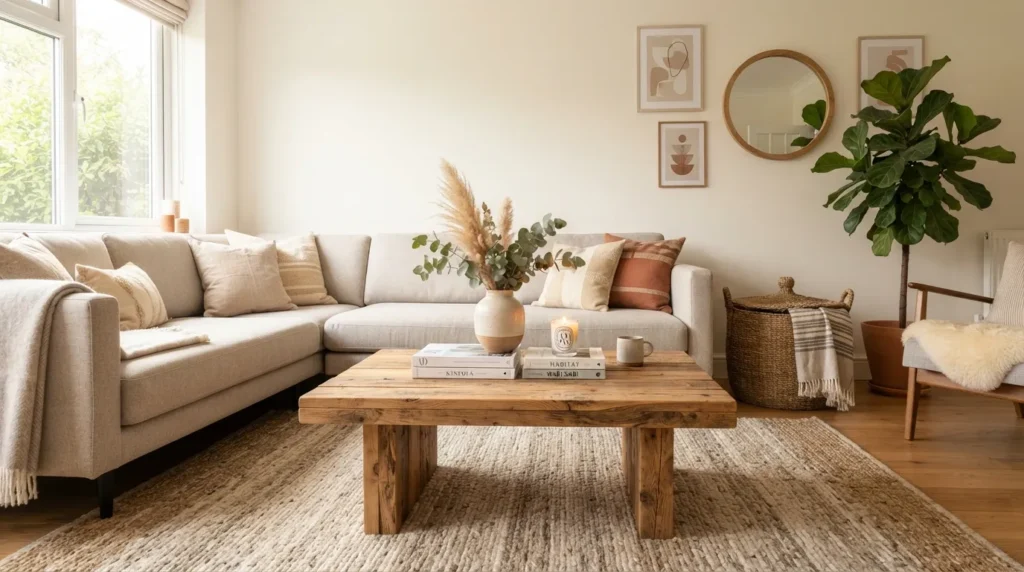
A simple wood coffee table is one of the easiest furniture projects to customize. Instead of complicated joinery or decorative details, the design relies on clean proportions and a good finish.
You can adjust the length and width to fit your seating arrangement, making it particularly useful when standard store-bought tables don’t fit your room.
I’ve found that a straightforward rectangular design often looks more sophisticated than an overly complicated DIY project.
How To Style It
Use affordable pine or another accessible wood, then sand the surface carefully before staining or painting it.
Pair the finished table with a neutral sofa, woven basket, coffee-table books, and a small ceramic vase for a relaxed, designer-inspired appearance.
2. Use Reclaimed Wood
Quick Benefits
- Adds character
- Creates texture
- Reuses materials
- Looks unique
- Works with rustic styles
Why It Works
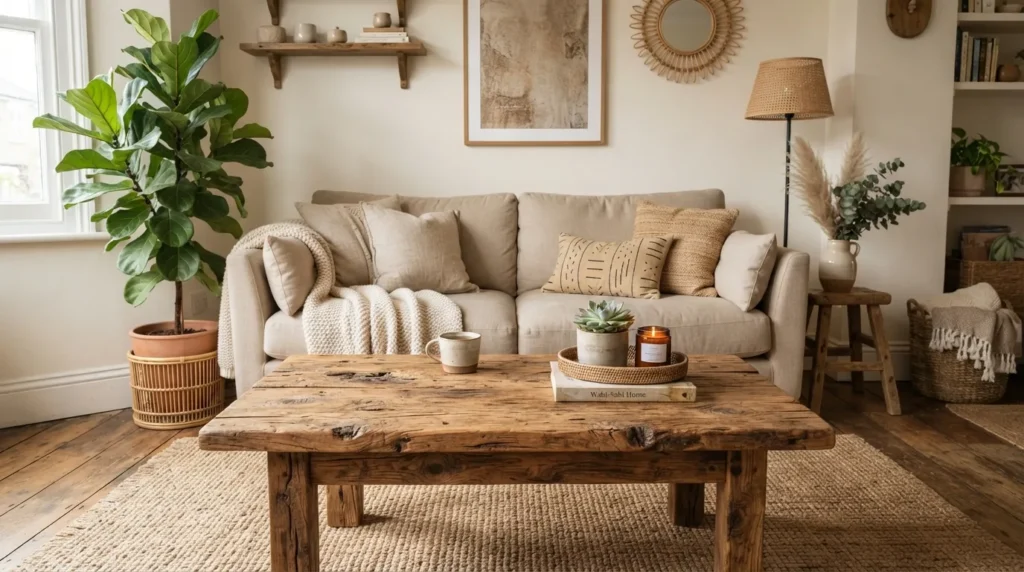
Reclaimed wood brings natural imperfections, grain variation, and history to a piece of furniture. Every board can have slightly different coloring, knots, or markings, making the finished table feel one of a kind.
This material works especially well when you want a coffee table that feels warm rather than overly polished.
In my experience, reclaimed wood can instantly give a living room more personality.
How To Style It
Combine reclaimed boards with simple metal or wooden legs. Keep the finish relatively natural so the wood remains the focal point.
Add neutral textiles and greenery around the table to create an organic, relaxed atmosphere.
3. Create a Crate Coffee Table
Quick Benefits
- Very affordable
- Provides storage
- Easy to assemble
- Beginner-friendly
- Adds rustic charm
Why It Works
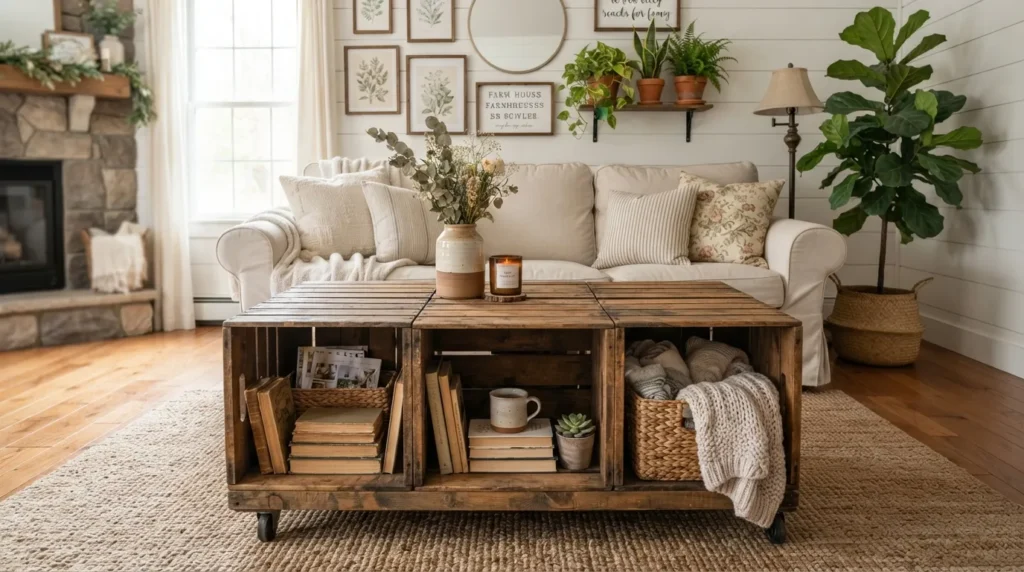
Wooden crates can become both the structure and storage system of a coffee table. Their open spaces provide convenient places for books, blankets, magazines, or decorative baskets.
This makes the design especially useful for smaller homes where every bit of storage matters.
I’ve found crate furniture works best when the materials are finished consistently rather than left looking unfinished.
How To Style It
Arrange four sturdy wooden crates around a central opening and secure them appropriately. Add a wood top for a more finished appearance.
Paint or stain the entire piece to coordinate with your living room.
4. Make a Minimalist Plywood Table
Quick Benefits
- Low-cost material
- Lightweight
- Modern appearance
- Easy to customize
- Simple construction
Why It Works
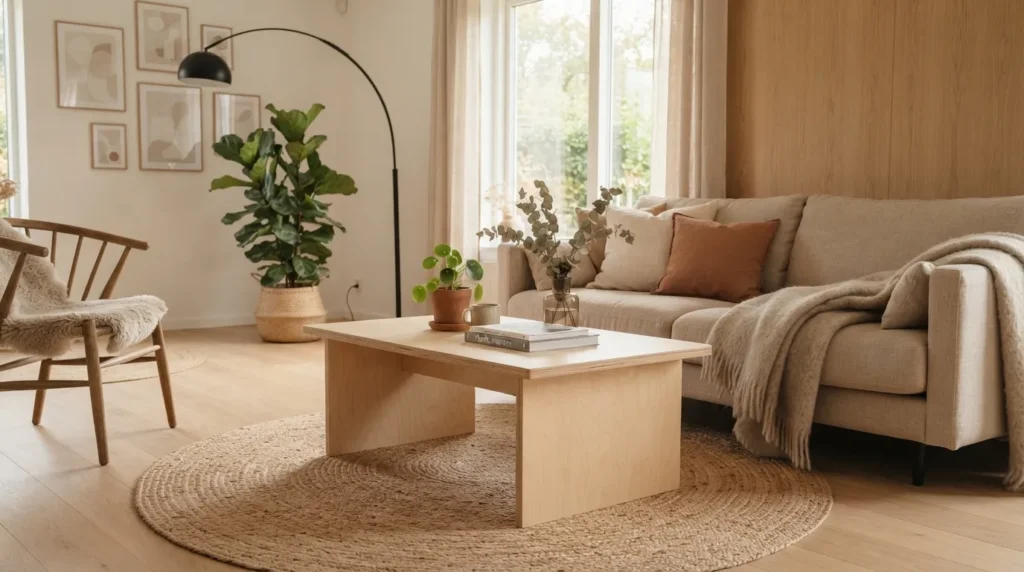
Plywood can create surprisingly beautiful furniture when its edges and surfaces are finished carefully. Its clean appearance works especially well in minimalist and Scandinavian-inspired rooms.
The key is treating the material as a design feature rather than trying to hide it.
I’ve found simple plywood furniture can look remarkably sophisticated when the shape is clean and the finish is consistent.
How To Style It
Create a rectangular or oval tabletop with simple matching legs. Sand the edges thoroughly and use a clear protective finish or soft neutral stain.
Pair it with light upholstery, natural textiles, and simple décor.
5. Build a Pallet Coffee Table
Quick Benefits
- Budget-friendly
- Reuses materials
- Rustic appearance
- Easy to customize
- Can include wheels
Why It Works
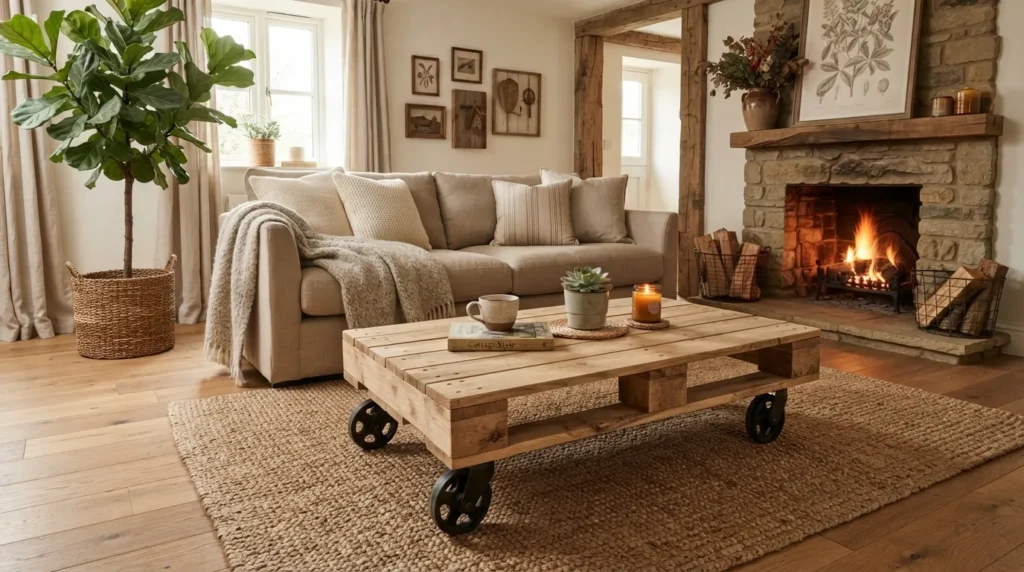
Pallets provide a ready-made wooden structure that can be transformed into a practical table with relatively little material.
They work particularly well for casual, farmhouse, rustic, or industrial interiors.
I’ve found adding wheels can make a pallet table much more functional because it can easily be moved when cleaning or rearranging the room.
How To Style It
Use properly prepared pallets, sand all surfaces carefully, and add a protective finish. Install sturdy casters if you want mobility.
Finish the look with a woven tray, books, a plant, and a few simple decorative objects.
6. Try a Concrete Tabletop
Quick Benefits
- Creates modern style
- Highly durable
- Adds texture
- Works with simple bases
- Creates a custom look
Why It Works
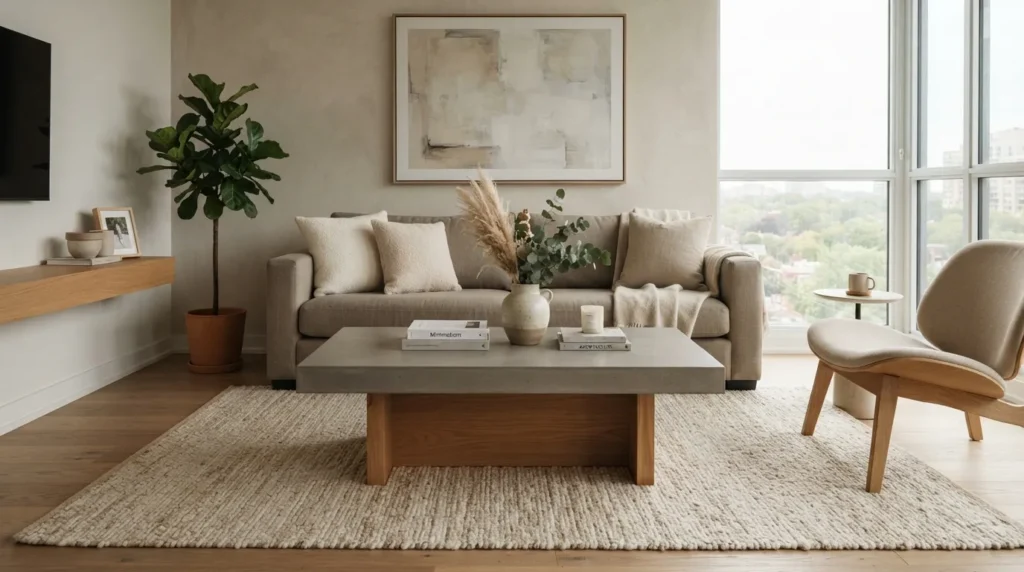
A concrete tabletop gives a DIY coffee table a sleek, contemporary appearance without requiring an expensive designer piece. Its subtle texture and neutral color work beautifully with wood, metal, and upholstered furniture.
Concrete can also be shaped and finished in different ways, allowing you to create a table that feels personalized rather than mass-produced.
I’ve found that pairing a simple concrete surface with a warm wood base creates an especially attractive balance between industrial and organic styles.
How To Style It
Create a properly supported concrete tabletop using an appropriate mold and concrete mix. Sand and seal the finished surface for a smoother appearance.
Pair it with a wooden or metal base, then soften the look with a woven tray, books, greenery, or neutral ceramics.
7. Add Hairpin Legs
Quick Benefits
- Easy to assemble
- Creates modern style
- Requires few materials
- Looks lightweight
- Works with wood tops
Why It Works
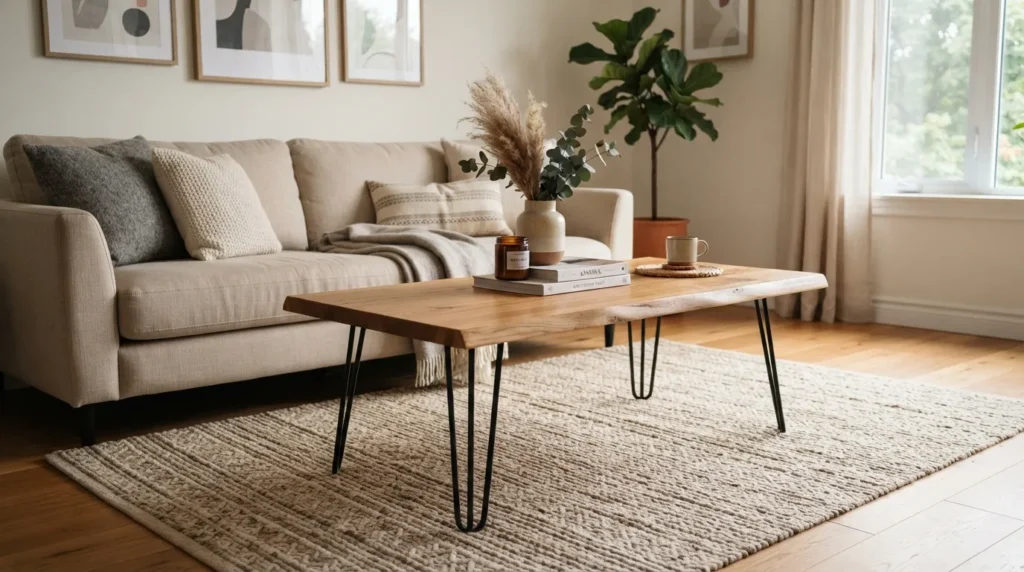
Hairpin legs are an easy way to turn an inexpensive wood panel or tabletop into a stylish coffee table. Their slim profile keeps the design visually light while adding a subtle industrial influence.
This approach is especially useful when you want to build furniture without complicated construction.
I’ve found hairpin legs look particularly polished when paired with a thick natural-wood tabletop.
How To Style It
Choose a wood slab, pine board, or finished tabletop and attach four appropriately sized hairpin legs underneath.
Keep the wood natural for an organic appearance or stain it a warm brown for a richer look.
8. Create a Storage Table
Quick Benefits
- Adds functionality
- Hides clutter
- Maximizes space
- Works in small rooms
- Creates practical design
Why It Works
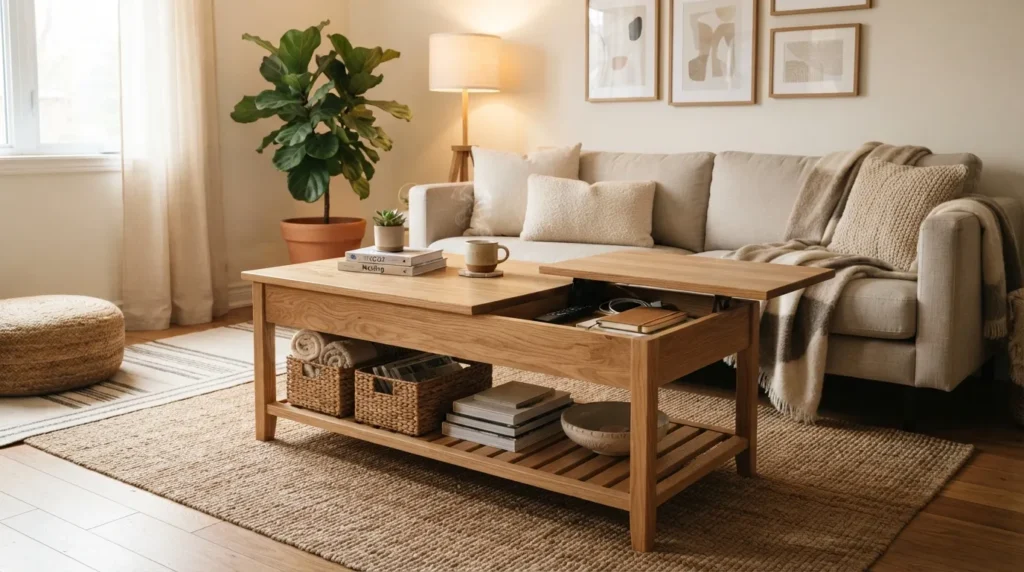
A coffee table with built-in storage can solve two problems at once: creating a centerpiece and providing a convenient place to organize everyday items.
This is especially useful in smaller living rooms where additional storage furniture may make the space feel crowded.
I’ve found hidden storage helps maintain a cleaner, more relaxed living room.
How To Style It
Build a simple rectangular table with a lower shelf, open cubbies, or a hinged compartment. Use baskets to organize blankets, magazines, remotes, and other small items.
Keep the tabletop relatively uncluttered with only a tray, plant, or small decorative arrangement.
9. Make a Round Coffee Table
Quick Benefits
- Softens room layouts
- Improves traffic flow
- Works with sectional sofas
- Adds visual variety
- Feels welcoming
Why It Works
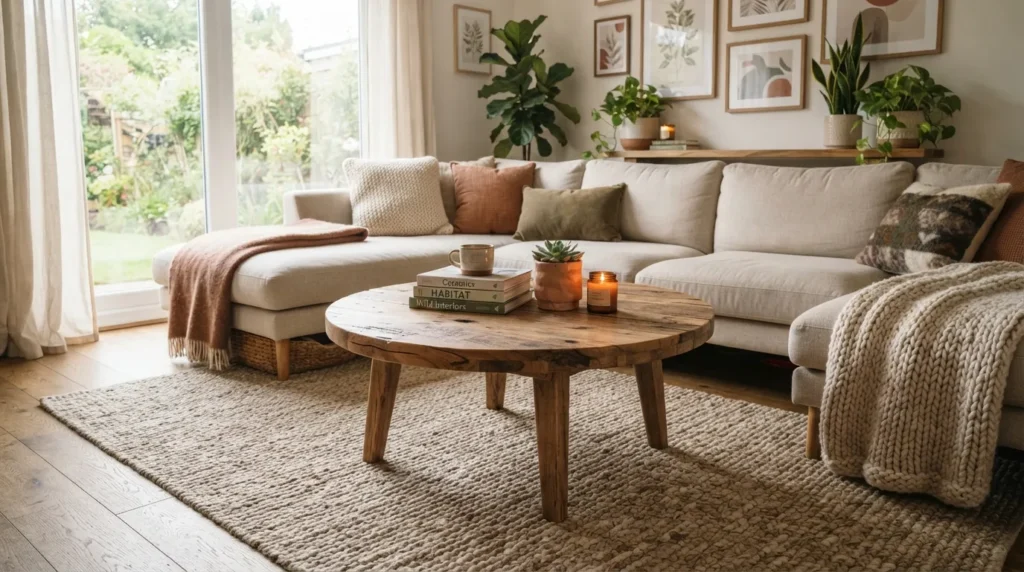
Round coffee tables eliminate sharp corners and create a softer visual shape in living rooms. They work particularly well with sectional sofas or furniture arrangements that encourage conversation.
A circular tabletop can also make a compact room feel easier to navigate.
I’ve found round tables are especially useful when you want a room to feel relaxed rather than overly structured.
How To Style It
Use a round wood tabletop, plywood circle, or another suitable material with three or four sturdy legs.
Add a round tray, small vase, coffee-table books, or a low plant while leaving enough surface area for everyday use.
10. Build a Farmhouse Table
Quick Benefits
- Adds warmth
- Creates timeless appeal
- Beginner-friendly
- Works with neutral décor
- Complements rustic interiors
Why It Works
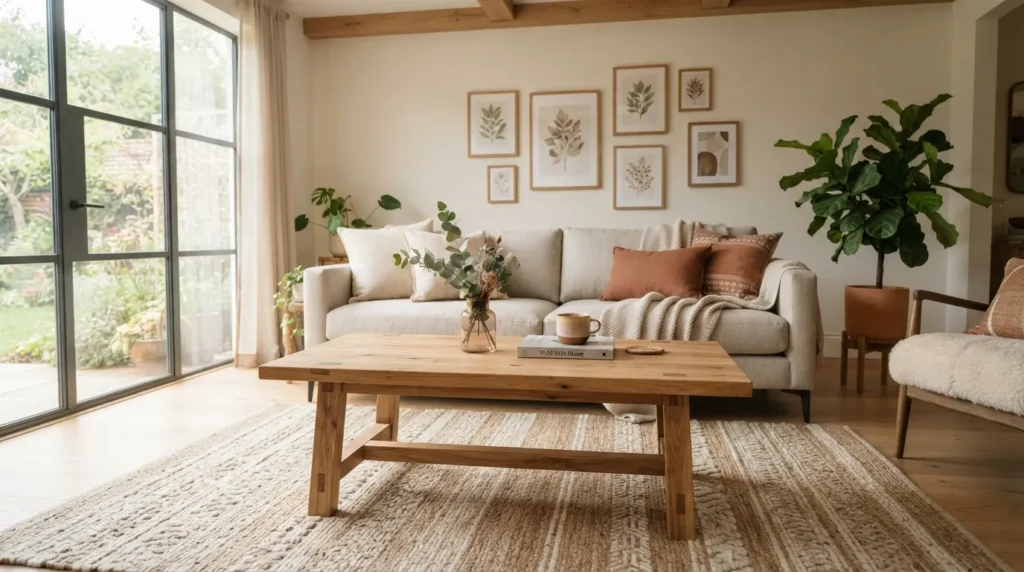
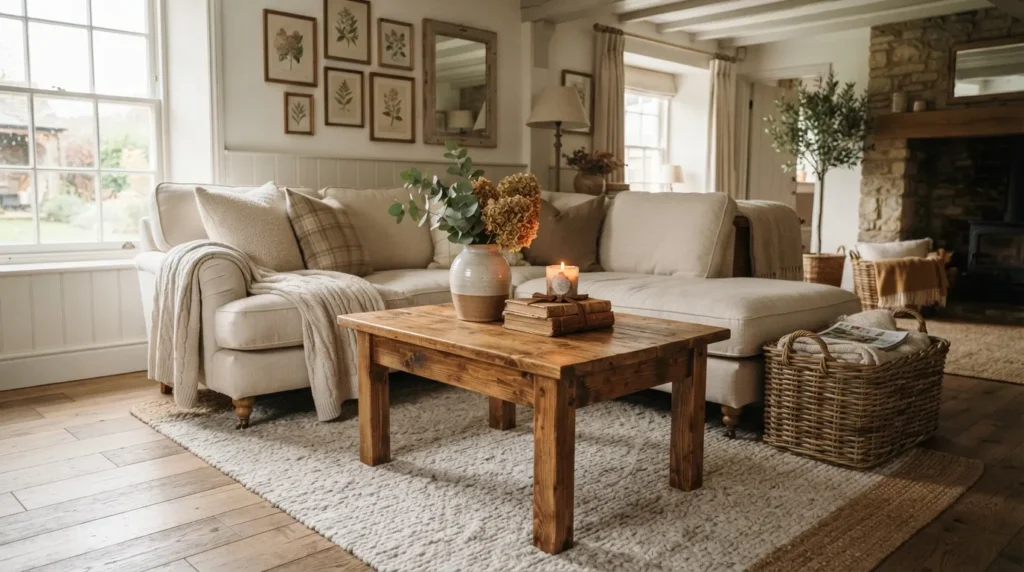
A farmhouse-inspired coffee table brings warmth and character to a living room through simple construction and natural materials. Its slightly substantial appearance works beautifully with comfortable sofas and layered textiles.
The style doesn’t need elaborate detailing. Simple wood, classic proportions, and a lightly distressed or natural finish can create the desired effect.
I’ve found farmhouse furniture looks best when it feels authentic rather than overly distressed.
How To Style It
Build a sturdy wooden tabletop with simple legs or a basic trestle-style base. Choose a natural stain, warm white paint, or lightly weathered finish.
Complete the look with a woven basket, neutral rug, soft throw, ceramic vase, and a few carefully selected books.
Frequently Asked Questions
What is the easiest DIY coffee table to build?
A simple wood tabletop with premade legs is one of the easiest options because it requires minimal construction and can be customized with paint or stain.
What is the cheapest material for a DIY coffee table?
Pine boards, plywood, reclaimed wood, and properly prepared pallets can be relatively affordable options.
How can I make a DIY coffee table look expensive?
Focus on clean lines, careful sanding, a quality-looking finish, sturdy hardware, and proportions that suit your furniture.
What coffee table works best in a small living room?
Round or compact rectangular tables can work well because they provide useful surface space without making the room feel crowded.
Can I make a coffee table without advanced woodworking skills?
Yes. Projects using premade legs, crates, simple boards, or reclaimed materials can be suitable for beginners.
How do I protect a homemade wood coffee table?
Apply an appropriate protective finish designed for the material and intended use, following the product manufacturer’s instructions.
Conclusion
DIY coffee tables are an excellent way to create functional furniture while keeping your decorating budget under control. From reclaimed wood and pallets to plywood, crates, and simple tabletops, inexpensive materials can become stylish centerpieces with thoughtful construction and finishing.
The most important part is choosing a design that fits your room. Consider the size of your sofa, available walking space, storage needs, and overall decorating style before starting your project.
With a simple plan and attention to detail, a handmade coffee table can look intentional, durable, and completely at home in your living room.