How to Declutter Your Home Without Feeling Overwhelmed
Decluttering your home can sound simple until you look around and realize how many decisions are involved. What should you keep? What can you donate? What if you need something later? And where do you even begin when every room seems to need attention?
The good news is that decluttering doesn’t have to mean spending an entire weekend emptying every cabinet and sorting everything you own. In fact, trying to do too much at once can make the process feel even more stressful.
A better approach is to work gradually, focus on one manageable area, and make simple decisions that create visible progress. Even clearing one drawer, countertop, or closet shelf can give you momentum.
In my experience, the biggest mistake people make is treating decluttering as a race. Your goal isn’t to create a perfectly minimal home overnight. It’s to create a home where the things you own are useful, meaningful, or genuinely enjoyable to have around.
Once you remove unnecessary items, maintaining your space becomes easier too. You’ll have fewer things to clean, organize, move, and store.
These practical decluttering strategies are designed to help you make progress without turning your home upside down. Whether you’re dealing with a crowded kitchen, overflowing closet, cluttered bedroom, or simply too many miscellaneous items, you can use these steps to create a calmer and more manageable home.
Table of Contents
- Start With One Small Area
- Use the Four-Category Method
- Set a Short Timer
- Clear Visible Surfaces
- Declutter Duplicates
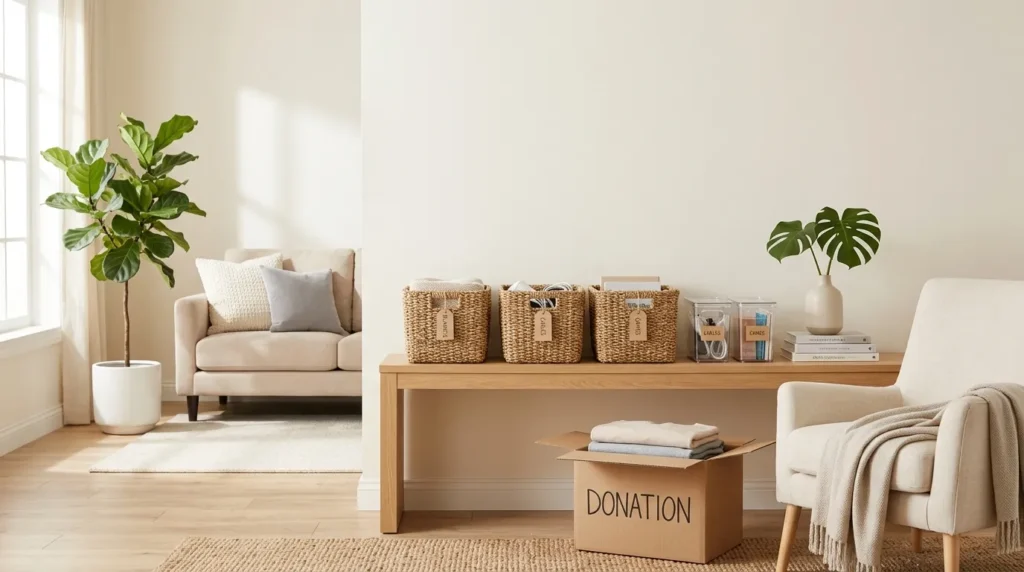
- Create a Donation Box
- Handle Sentimental Items Last
- Give Everything a Home
- Use the One-In One-Out Rule
- Create a Simple Maintenance Routine
1. Start With One Small Area
Quick Benefits
- Reduces stress
- Creates quick progress
- Makes decisions easier
- Prevents large messes
- Builds momentum
Why It Works
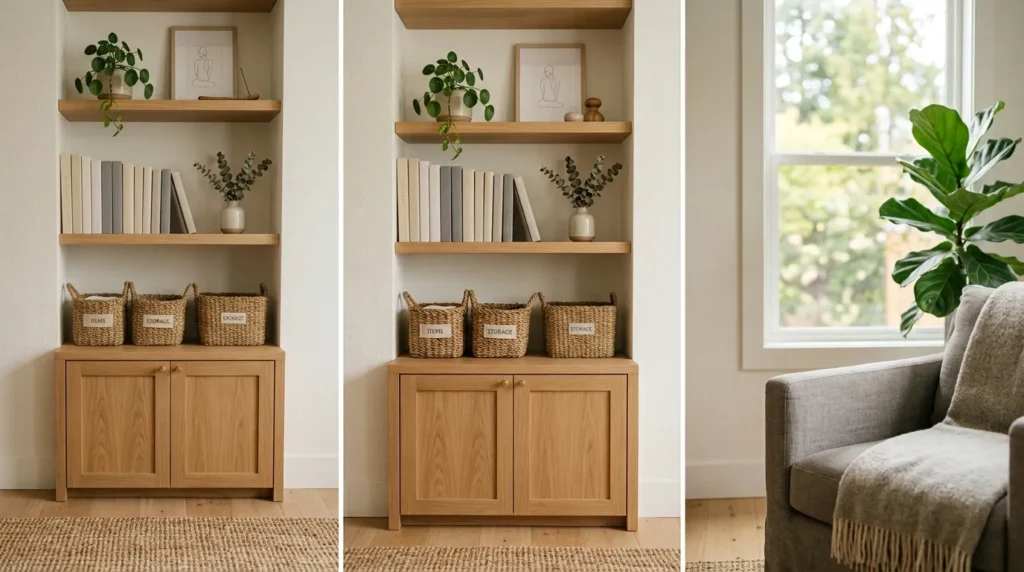
Decluttering an entire home at once can make the project feel impossible. Starting with a small, clearly defined area gives you a manageable goal and lets you see results quickly.
A single drawer, shelf, bathroom cabinet, or corner of a room is enough to get started. Once you finish it, you’ll have a visible reminder that progress is possible.
I’ve found that small wins create much more motivation than ambitious plans that take days before producing noticeable results.
How To Style It
Choose an area that can realistically be completed in one short session. Remove everything, sort the items, wipe the space, and return only what belongs there.
Once the area is finished, stop if you feel tired. You can continue another day.
2. Use the Four-Category Method
Quick Benefits
- Simplifies decisions
- Creates structure
- Reduces indecision
- Makes sorting faster
- Works in every room
Why It Works
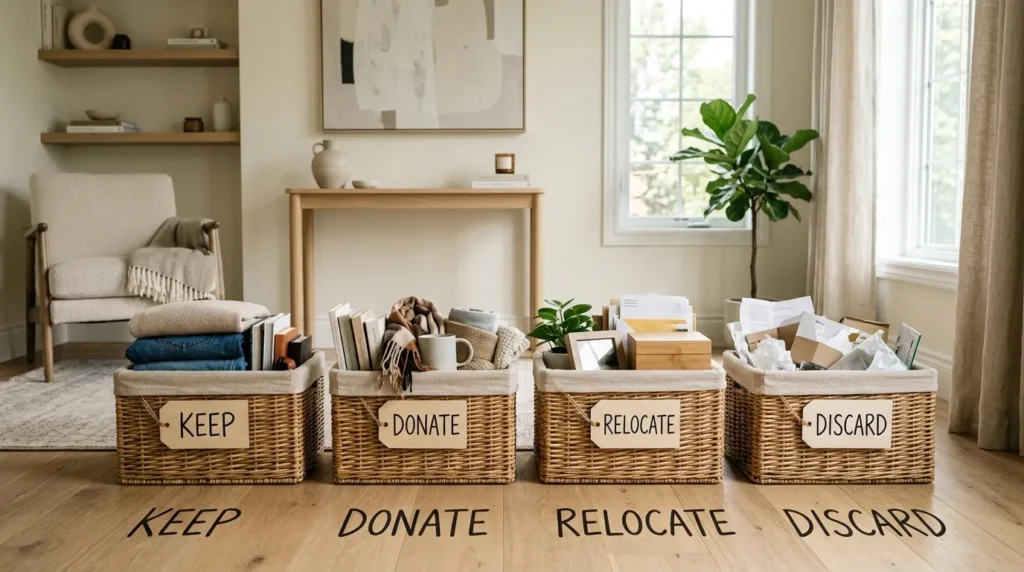
Sorting becomes easier when every item has a clear destination. Instead of repeatedly asking yourself what to do with something, create four categories: keep, donate, relocate, and discard.
This system prevents piles from becoming confusing and helps you make consistent decisions.
I’ve found that separating “relocate” items is especially useful because things often accumulate in rooms where they don’t actually belong.
How To Style It
Use four boxes, bags, or designated areas for the categories. Work through one small section at a time.
Once you’re finished, immediately move the donation and discard items out of the area so they don’t become part of the clutter again.
3. Set a Short Timer
Quick Benefits
- Reduces pressure
- Makes tasks manageable
- Encourages consistency
- Prevents burnout
- Creates quick results
Why It Works
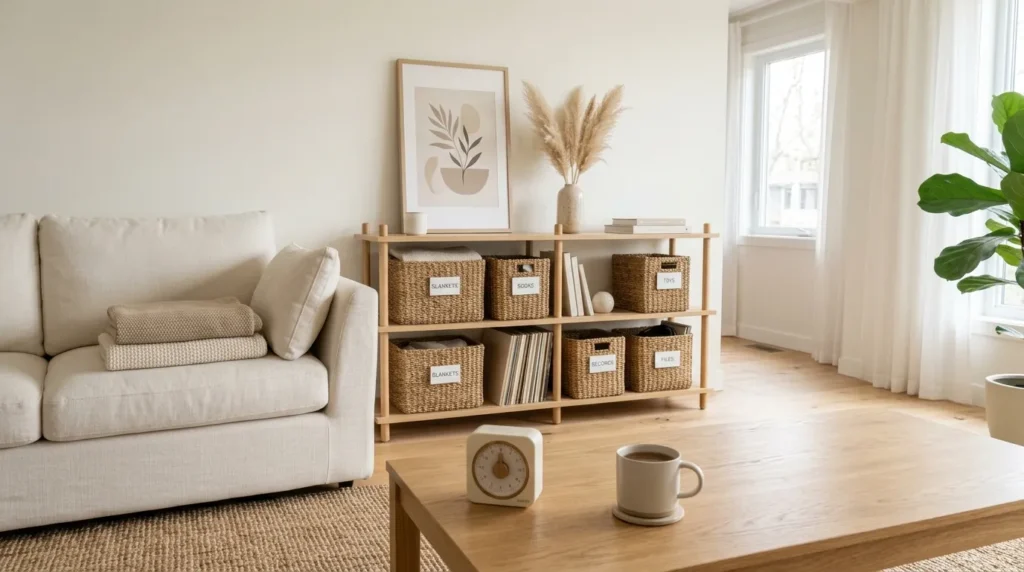
A short time limit can make decluttering feel much less intimidating. Instead of thinking about everything that needs to be done, you’re only committing to a focused period.
Even a few minutes can make a noticeable difference when you repeat the process consistently.
I’ve found short sessions are often easier to maintain than occasional marathon cleaning days.
How To Style It
Set a timer for a realistic period and focus only on the selected area. Don’t move to another room because you notice something that needs attention.
When the timer ends, either stop or continue if you still have energy.
4. Clear Visible Surfaces
Quick Benefits
- Creates instant visual calm
- Makes rooms feel cleaner
- Improves daily functionality
- Reduces distractions
- Provides quick motivation
Why It Works
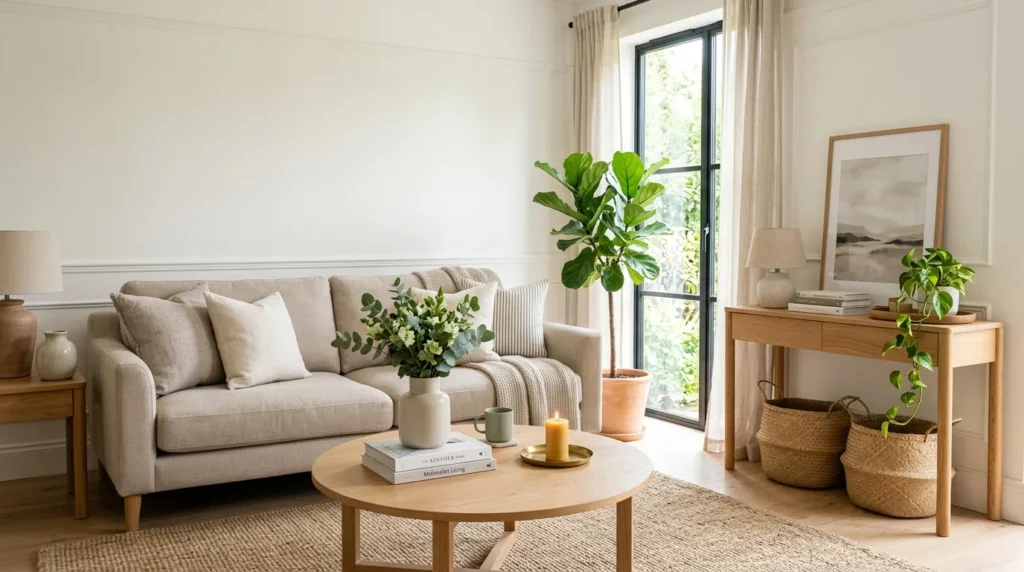
Visible clutter often makes a home feel messier than it actually is. Clearing countertops, tables, dressers, and other prominent surfaces creates an immediate sense of order.
This can also make it easier to identify what items are genuinely useful and what has simply accumulated.
I’ve found that clearing visible surfaces often provides the biggest psychological payoff.
How To Style It
Choose one surface and remove everything from it. Sort the items, clean the surface, and return only the essentials.
Use a tray or small container to group frequently used items rather than allowing them to spread across the entire surface.
5. Declutter Duplicates
Quick Benefits
- Frees storage
- Reduces clutter
- Simplifies choices
- Makes organization easier
- Saves space
Why It Works
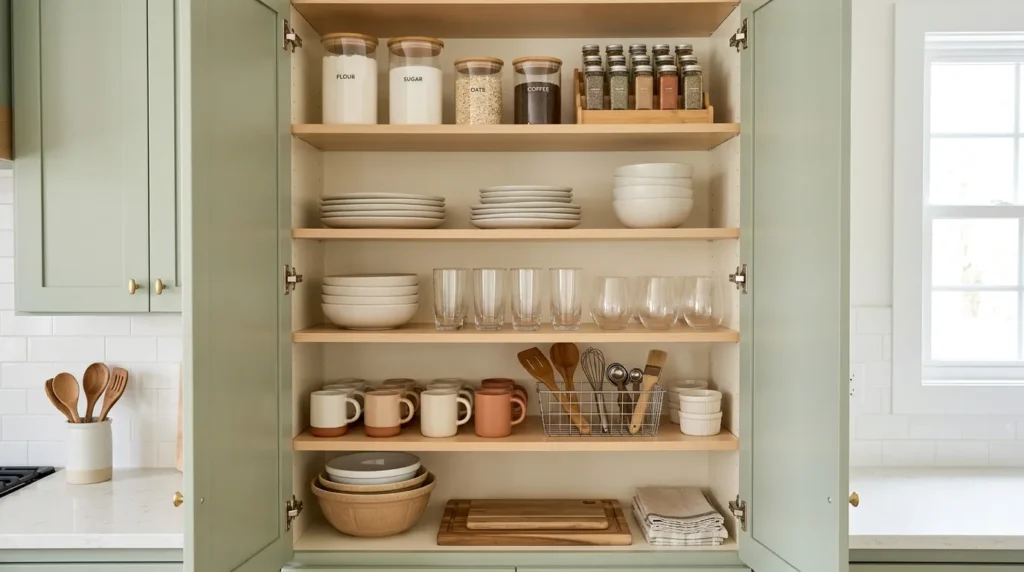
Duplicates are easy to overlook because each individual item may seem useful. But when several perform essentially the same function, they can quickly consume valuable storage.
Kitchen utensils, water bottles, cleaning supplies, beauty tools, office supplies, and linens are common examples.
I’ve found that eliminating unnecessary duplicates can create surprisingly large amounts of space.
How To Style It
Gather similar items together so you can see exactly how many you own. Keep the versions you use most often and let go of extras that are rarely used or no longer useful.
Store the remaining items together so they’re easy to find.
6. Create a Donation Box
Quick Benefits
- Makes decisions easier
- Prevents re-cluttering
- Keeps donations organized
- Encourages regular decluttering
- Creates visible progress
Why It Works
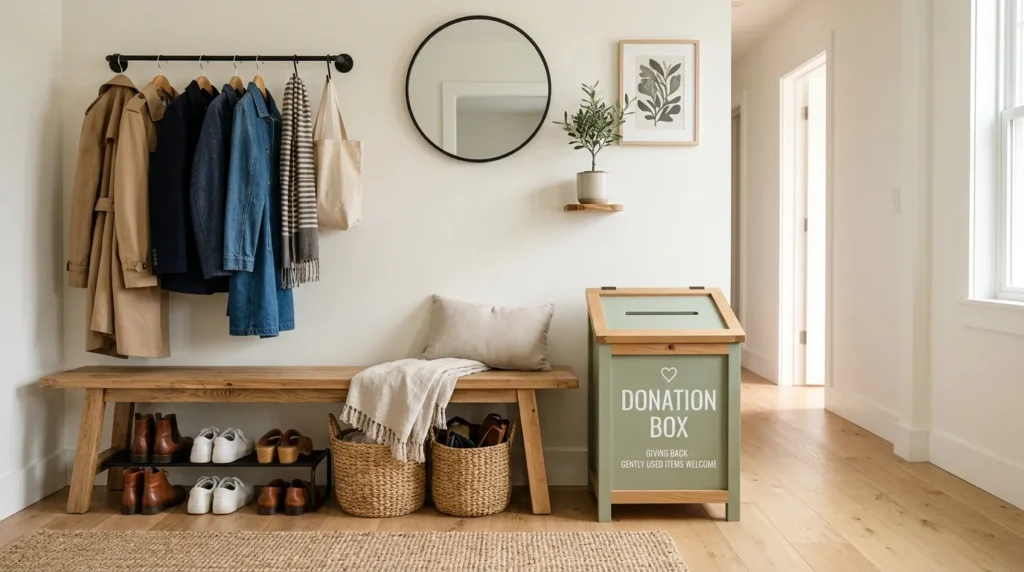
Having a designated donation box removes one of the biggest obstacles to decluttering: not knowing where unwanted items should go. Instead of putting something aside and forgetting about it, you have a clear place for items you’re ready to pass along.
A donation box also makes decluttering feel less like a major project and more like an ongoing household habit.
I’ve found that keeping the container accessible makes it much easier to let go of things when you realize you’re no longer using them.
How To Style It
Choose a sturdy box, basket, or reusable bag and place it somewhere convenient. When you find an item you no longer need, put it directly inside.
Once the container is full, arrange an appropriate donation or recycling drop-off rather than letting the box become permanent storage.
7. Handle Sentimental Items Last
Quick Benefits
- Reduces emotional stress
- Makes early progress easier
- Prevents decision fatigue
- Creates a practical starting point
- Makes difficult decisions more manageable
Why It Works
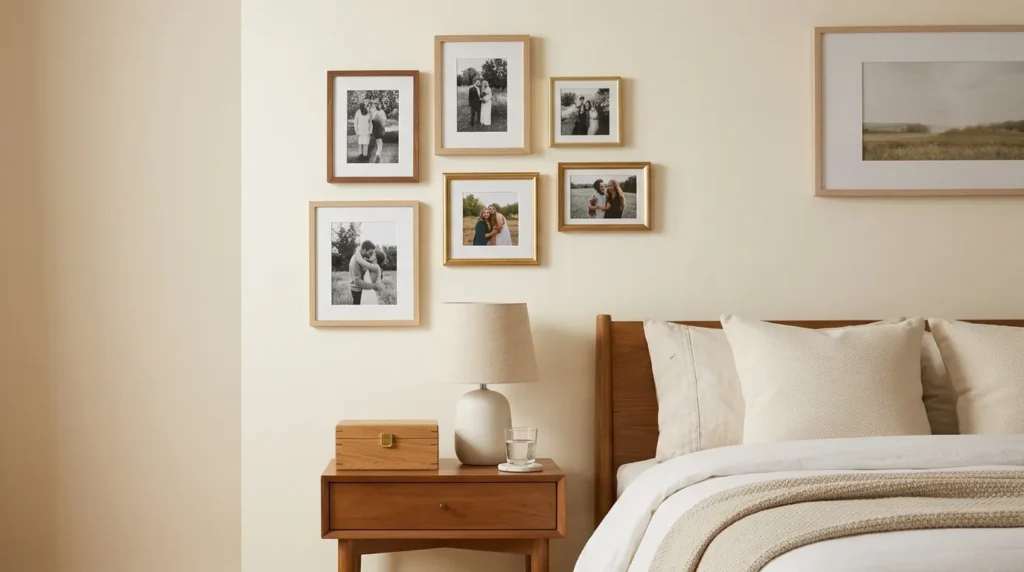
Sentimental belongings are often the hardest things to declutter because their value isn’t based on usefulness. Trying to make these decisions at the beginning can quickly drain your energy.
Starting with obvious clutter allows you to build confidence before dealing with emotionally meaningful items.
I’ve found that sentimental belongings become easier to evaluate once the surrounding clutter has already been reduced.
How To Style It
Begin with practical categories such as expired products, broken items, duplicates, unused containers, or things you simply don’t like.
Once you feel comfortable making easier decisions, move toward sentimental belongings one small group at a time.
8. Give Everything a Home
Quick Benefits
- Prevents future clutter
- Makes cleaning easier
- Saves time
- Improves organization
- Creates lasting order
Why It Works
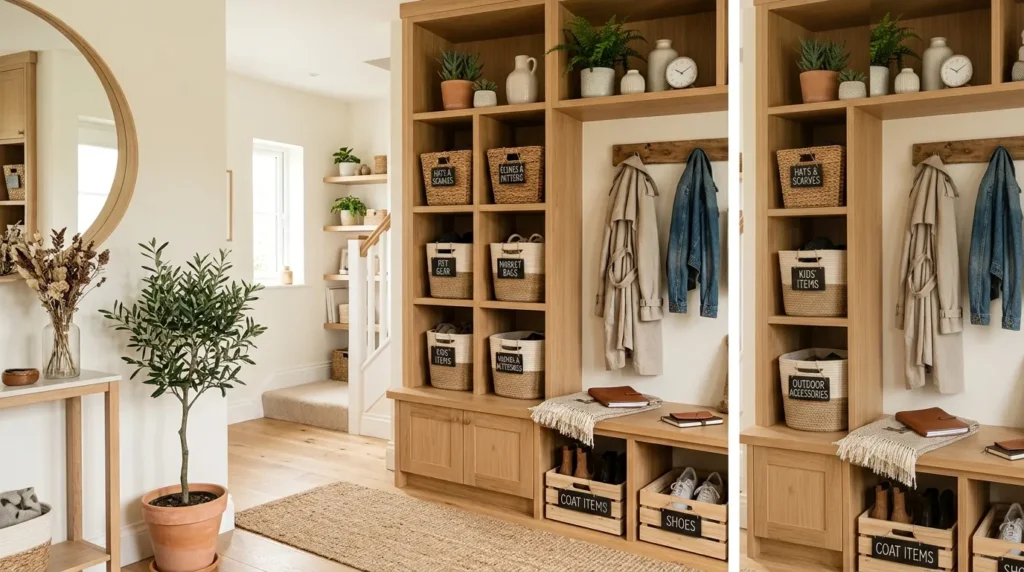
Decluttering removes unnecessary items, but organization determines whether the results last. When frequently used belongings have designated homes, they’re much easier to put away.
The best storage system isn’t necessarily complicated. It simply needs to make sense for how you actually use your home.
I’ve found that storage works better when the most frequently used items are the easiest to access.
How To Style It
Assign specific locations to everyday items such as keys, mail, chargers, shoes, cleaning supplies, and kitchen tools.
Use baskets, bins, drawer organizers, or simple labels where helpful, but avoid buying storage containers before you know what you actually need to store.
9. Use the One-In-One-Out Rule
Quick Benefits
- Controls future clutter
- Encourages mindful purchases
- Maintains storage space
- Makes decisions easier
- Creates sustainable habits
Why It Works
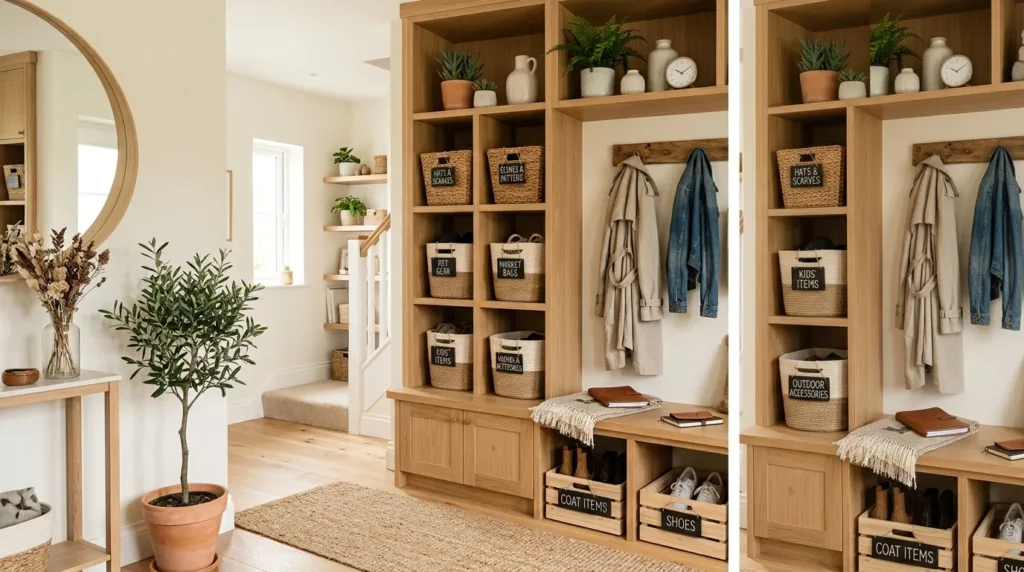
Decluttering becomes much easier when fewer unnecessary items enter your home. The one-in-one-out rule creates a simple boundary: when you bring in a new item, consider removing an existing item that serves a similar purpose.
This doesn’t mean every purchase must result in an immediate replacement. It’s simply a helpful guideline for categories that tend to accumulate.
I’ve found this approach particularly useful for clothing, kitchenware, books, and decorative accessories.
How To Style It
Before buying something new, consider whether you already own something that performs the same function.
If you decide to make the purchase, identify an older or less useful item that can leave your home.
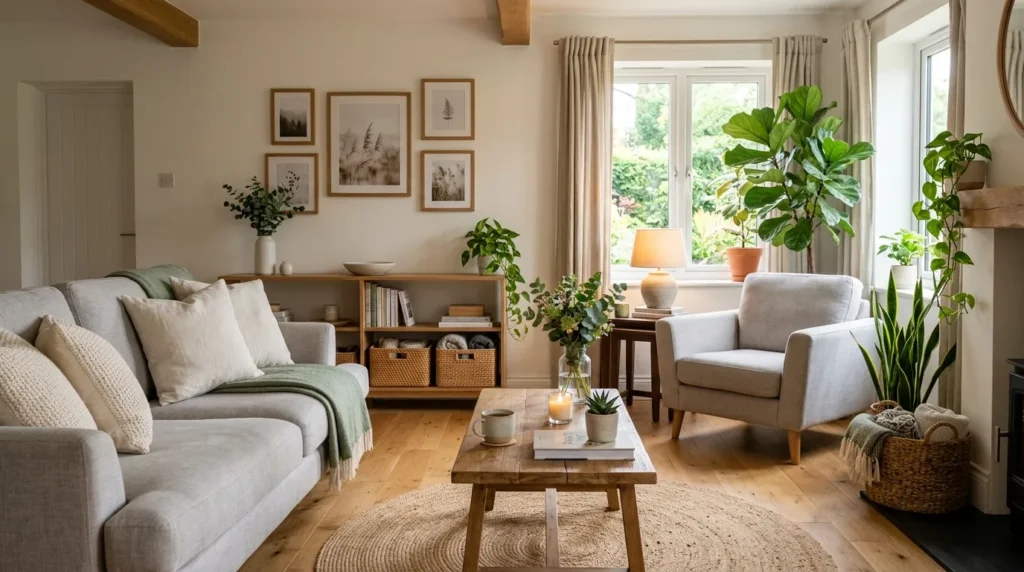
10. Create a Simple Maintenance Routine
Quick Benefits
- Prevents buildup
- Saves time
- Keeps spaces manageable
- Reduces stress
- Makes decluttering sustainable
Why It Works
A home stays organized more easily when clutter is addressed regularly instead of waiting until it becomes overwhelming again.
You don’t need a complicated cleaning schedule. Small habits performed consistently can prevent everyday items from accumulating.
I’ve found that a few minutes of regular resetting can be much easier than another major decluttering session.
How To Style It
Choose a simple daily or weekly reset. Return misplaced items, clear major surfaces, process incoming mail, and remove anything that no longer belongs.
Keep the routine short enough that you can realistically maintain it even during busy weeks.
Frequently Asked Questions
Where should I start when my whole house is cluttered?
Start with one small, manageable area such as a drawer, countertop, shelf, or bathroom cabinet. Completing a small section creates momentum without overwhelming you.
How do I declutter without throwing away things I might need?
Ask whether you have used the item recently, whether you have an easy replacement if needed, and whether keeping it is worth the storage space it occupies.
What should I declutter first?
Begin with obvious items such as broken belongings, expired products, duplicates, things you dislike, and items you haven’t used in a long time.
How do I deal with sentimental clutter?
Save sentimental belongings for later. Sort them in small batches and consider whether photographs or a smaller selection can preserve the memory without keeping everything.
How often should I declutter my home?
There is no universal schedule. A short monthly or seasonal review can help prevent clutter from accumulating, especially in high-traffic areas.
How can I keep my home from becoming cluttered again?
Give frequently used items designated homes, avoid unnecessary purchases, regularly process incoming belongings, and use simple maintenance habits.
Conclusion
Decluttering your home doesn’t have to be an exhausting project completed in a single weekend. The most sustainable approach is to work in small areas, make simple decisions, and build habits that prevent clutter from returning.
Start with easy categories and visible surfaces before moving toward sentimental belongings. Use clear sorting categories, create a donation box, give everything a designated home, and regularly remove items that no longer serve a purpose.
Most importantly, remember that the goal isn’t perfection. A comfortable, functional home can still contain meaningful belongings, everyday messes, and signs of real life.
When you focus on creating a home that works better for you rather than chasing a perfectly minimal space, decluttering becomes much more manageable.