
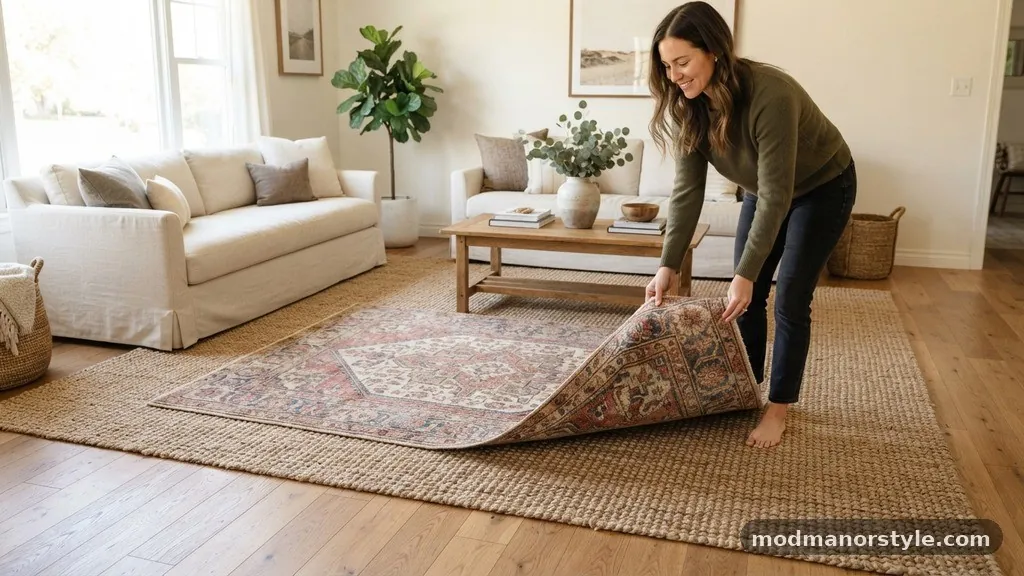
How to Layer a Smaller Patterned Rug Over a Large Neutral Jute Base
Layering a smaller patterned rug over a large neutral jute base is a design strategy that instantly transforms a room by adding depth and visual interest. This technique allows you to ground a space with the organic, earthy texture of a natural fiber base while introducing personality through a decorative top layer.
Whether you are aiming for a bohemian aesthetic or a refined transitional look, mastering this combination requires balancing scale, color, and material durability. By choosing the right proportions and securing your layers, you can create a cozy, professional-looking foundation for your home decor that feels both intentional and incredibly inviting.
Choosing the Right Jute Base
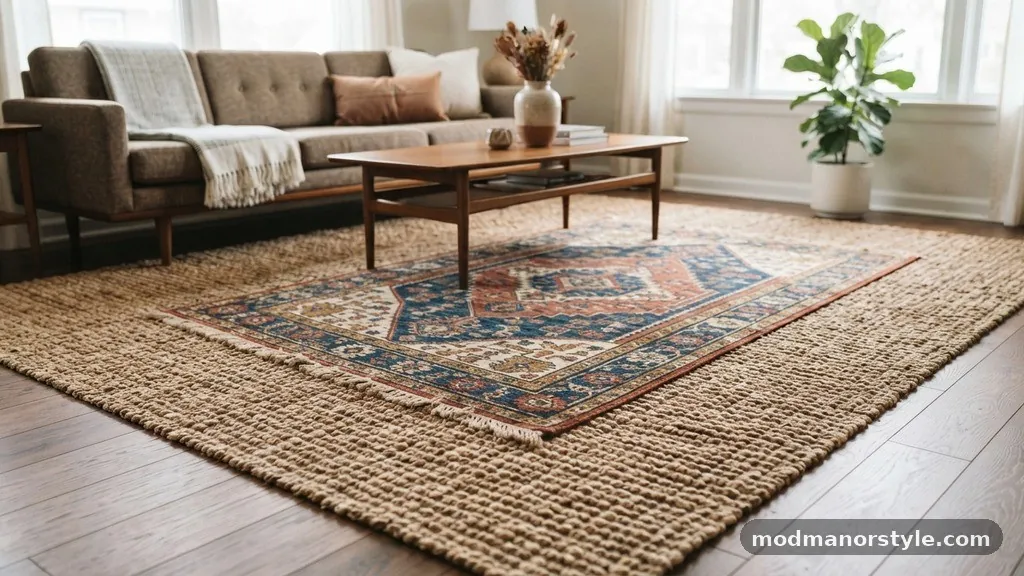
The foundation of your design is the base rug, which needs to be large enough to anchor the entire seating area or room. Jute is an excellent choice for this role because its neutral, woody tones act as a canvas for almost any color palette.
When selecting a base, look for a weave that is relatively flat to ensure a stable surface for the top layer. A chunky, braided jute can sometimes feel uneven, which might cause your top rug to buckle or slide over time.
Aim for a size that extends at least 12 to 18 inches beyond the furniture grouping on all sides. This creates a sense of scale and prevents the room from feeling disjointed or cramped.
Because jute is a natural fiber, it is durable and hides dirt well, making it ideal for high-traffic areas like living rooms or entryways. Always check the backing of the jute rug; a natural latex or cotton backing can prevent the base from sliding on hardwood floors, saving you from needing an extra pad underneath.
Selecting the Perfect Patterned Top Rug
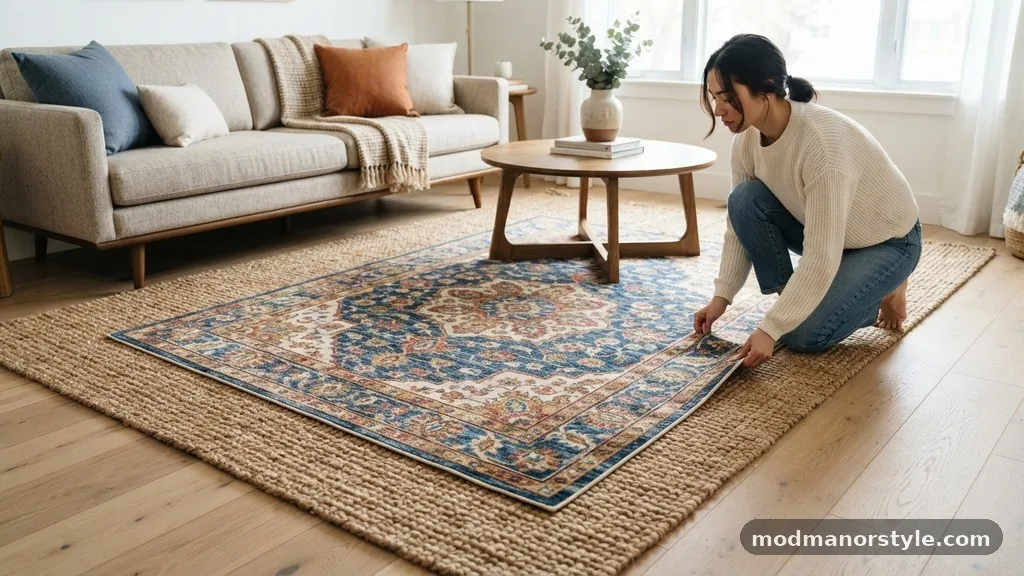
Once your base is set, the top rug becomes the focal point of the floor. You want to select a piece that contrasts with the neutral jute in terms of color, pattern, or material.
Vintage-style Persian rugs, geometric kilims, or soft, plush Moroccan rugs are all popular choices for this look. The goal is to create a visual “pop” that draws the eye inward, making the space feel more curated and intimate.
Consider the material of the top rug in relation to your lifestyle. If you have pets or children, a flat-weave wool or a washable synthetic blend is often more practical than a delicate silk or high-pile shag.
Ensure the pattern is not too busy if your furniture is already heavily patterned, as you want the rugs to complement the room rather than compete with it. A good rule of thumb is to pick a top rug that shares at least one color with your throw pillows or wall art to tie the entire room together.
Calculating Ideal Proportions
The visual success of this pairing depends heavily on the ratio between the two rugs. If the top rug is too small, it looks like a lonely island floating in the middle of the room.
If it is too large, it hides the beautiful texture of the jute base, rendering the layering effect pointless. A common mistake is choosing a top rug that is nearly the same size as the base, which creates a messy, overlapping border.
A good starting point is to choose a top rug that is roughly 2 to 3 feet smaller than the jute base in both length and width. This allows for a generous 12-inch “frame” of jute to show around the edges of the top rug.
If you are layering in a large open-concept living area, you may need a larger jute base to maintain this framing effect. Consistency in the border width helps the two pieces look like a single, unified unit rather than two separate rugs thrown together.
Securing Layers for Safety
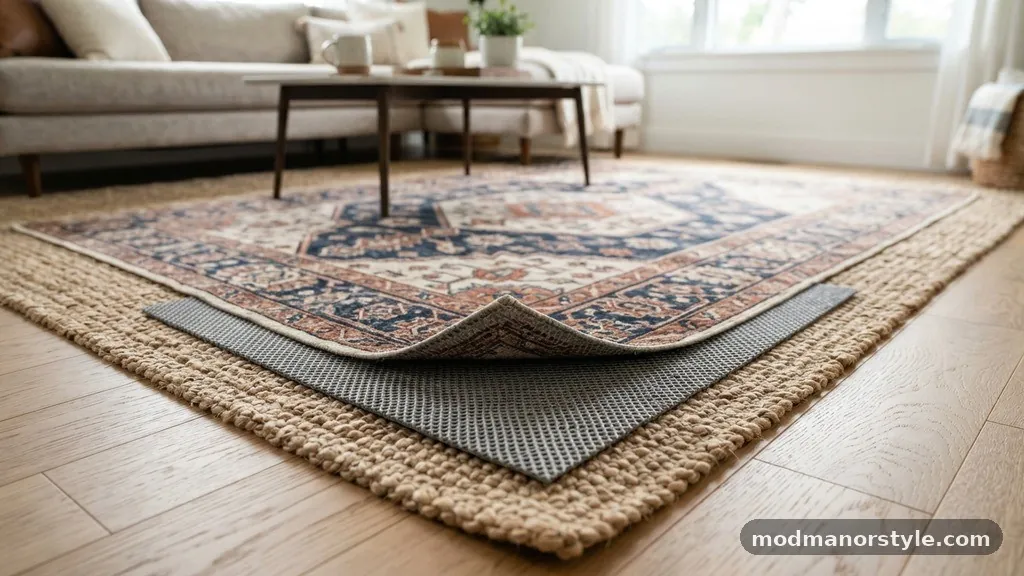
Safety is a critical consideration when stacking textiles, as the movement between layers can create a tripping hazard. Even if the base rug is heavy, the top rug can shift as people walk across it.
Using a high-quality rug pad between the two layers is the most effective way to prevent sliding and bunching. You can find specialized “rug-to-rug” pads designed specifically to grip the bottom of the top rug while clinging to the surface of the jute.
Another option is to use double-sided carpet tape or rug anchors at the corners of the top piece. This keeps the edges flat and prevents the corners from curling, which is a common issue with thinner, vintage-style rugs.
If you are using a very thick, heavy top rug, you may find that its own weight is enough to hold it in place. However, always test the stability by walking over the area before finalizing the placement of your furniture.
Styling for Different Room Types
The way you layer these rugs should change based on the function of the room you are decorating. In a bedroom, for example, you can position the jute rug horizontally under the bed, with the patterned top rug placed at the foot or extending slightly under the bottom two-thirds of the bed frame.
This adds warmth underfoot where you step out each morning. In a dining room, ensure that all chair legs remain on the top rug even when pulled out.
If the top rug is too small for a dining table, the chair legs will catch on the edge of the rug every time you sit down, which is both frustrating and damaging to the fabric. In a living room, the entire front legs of your sofa and armchairs should sit firmly on the top rug.
This anchors the furniture to the rug and creates a cohesive “zone.” For more inspiration on textile placement, you can visit Architectural Digest to see how professional designers handle spatial planning.
Comparing Layering Options
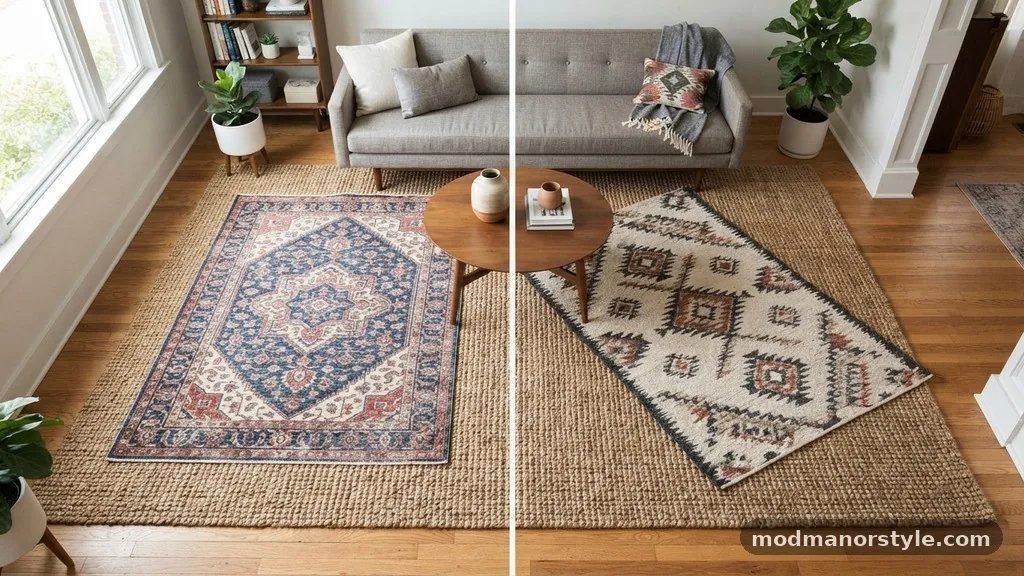
Choosing between different styles of top rugs can feel overwhelming, so it helps to categorize your options based on the desired vibe. The following table highlights common pairings that work well with a neutral jute base.
| Top Rug Style | Visual Impact | Best For |
|---|---|---|
| Vintage Persian | Sophisticated, Timeless | Formal Living Rooms |
| Geometric Kilim | Modern, Energetic | Casual Den or Office |
| Plush Moroccan | Cozy, Texture-rich | Bedrooms or Reading Nooks |
| Distressed Overdyed | Eclectic, Bold | Bohemian or Art-focused Rooms |
Managing Maintenance and Cleaning
Natural jute is durable but notoriously difficult to clean because it is sensitive to moisture. Because the jute is the bottom layer, it is protected from direct spills and heavy traffic, which is a major benefit of this layering strategy.
However, you should still vacuum both layers regularly to prevent dust and grit from settling into the fibers. For the top layer, follow the manufacturer’s care instructions based on the material, whether it is wool, cotton, or synthetic.
If a spill occurs on the top rug, blot it immediately and ensure that no liquid seeps through to the jute base. If the jute gets wet, it can develop mold or mildew or lose its structural integrity.
If you have a deep clean planned for the top rug, it is best to remove it entirely from the base before addressing any stains. Always rotate the rugs every few months to ensure even wear, especially if one area of the room receives more sunlight or foot traffic than others.
Creating Cohesion with Color
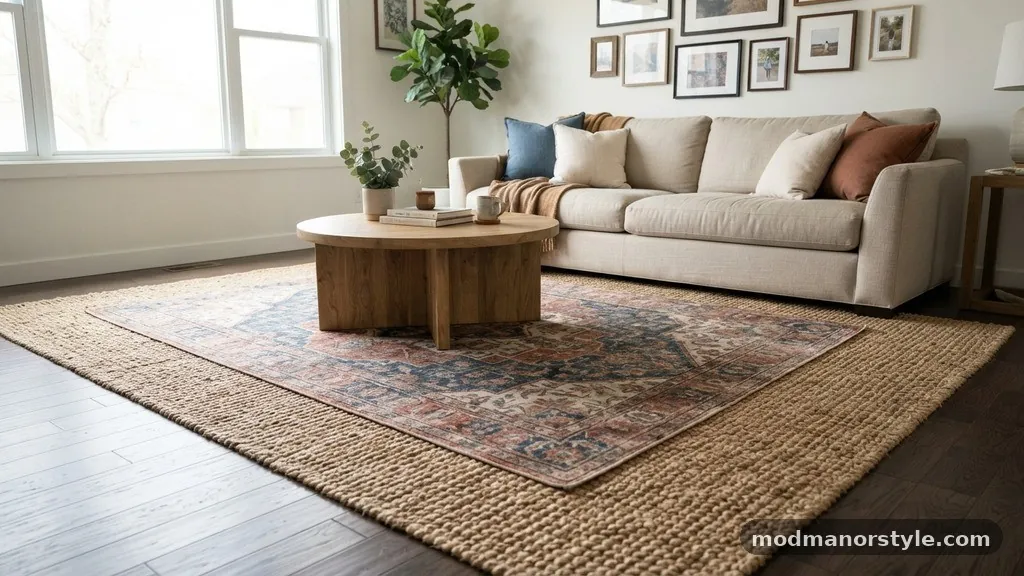
While the jute base is neutral, the top rug introduces color that dictates the mood of the space. If you want a calm and serene environment, choose a patterned rug with soft, muted tones like sage green, dusty blue, or cream.
If you prefer a vibrant, energetic space, opt for a top rug with bold reds, deep navys, or mustard yellows. The key is to ensure the “neutral” aspect of the jute doesn’t clash with the undertones of the pattern.
Consider the warmth of your jute; most jute rugs have a golden-yellow or tan undertone. A top rug with cool-toned colors can sometimes look out of place unless you balance those colors elsewhere in the room with throw blankets or pillows.
If you are unsure, stick to earth tones or classic patterns that naturally complement the organic, woven look of the base. This approach ensures that the transition between the two layers feels intentional and harmonious.
Common Mistakes to Avoid
Many people struggle with the “clutter” look when layering rugs because they choose patterns that are too intense. Avoid pairing a very busy, high-contrast pattern with a jute rug that has a complex, chunky weave.
The combination of two different textures and a high-contrast pattern can make the floor look chaotic. Instead, let the jute provide the texture and let the top rug provide the visual interest through color and pattern.
Another common error is failing to account for door clearance. If you are layering in an entryway, make sure that the combined height of the two rugs does not prevent the front door from opening and closing smoothly.
If the door catches on the rug, you may need a thinner base or a lower-profile top layer. Finally, avoid using two rugs that are both “distressed” or “worn,” as this can make the room look like it needs a renovation rather than a design upgrade.
FAQ About Rug Layering
Is layering rugs still in style?
Yes, layering rugs is a timeless design technique that remains highly popular in 2026. It is a functional way to add comfort, define zones in open-concept homes, and protect expensive or delicate rugs by using a durable jute base.
Can I layer a rug over wall-to-wall carpet?
You can, but it is often more challenging than layering over hard floors. You must use a rug pad with a strong grip designed for carpet to prevent the rugs from shifting, and ensure the top rug is flat enough not to create a trip hazard.
What if my jute rug sheds?
Natural jute will shed slightly, especially when new. This is normal and will decrease over time with regular vacuuming using a suction-only setting, which protects the fibers from being pulled or frayed by a beater bar.
Should the top rug be centered?
Centering the top rug is the most common approach, but it is not a strict rule. In a large living room, you might offset the top rug to better define a specific seating area, provided the arrangement feels balanced with the rest of the furniture.
How do I stop the rugs from curling at the edges?
Rug corner grippers or double-sided carpet tape are the best solutions for curling edges. You can also place heavy furniture, like a coffee table or a chair, over the corners of the top rug to weigh them down until they settle flat.
Conclusion
Layering a smaller patterned rug over a large neutral jute base is a simple yet powerful way to elevate the style of any room. By focusing on the right proportions, ensuring your layers are securely anchored, and choosing patterns that complement the natural texture of the jute, you create a space that feels both grounded and sophisticated. This design choice offers a practical solution for defining living zones while adding that essential layer of warmth to your floors.
As you experiment with different colors and textures, remember that the best combinations are those that reflect your personal taste while maintaining the functional integrity of the space. Take the time to measure your area, select your pieces carefully, and enjoy the transformation of your home.