
How to Organize a Small Bedroom with Smart Furniture
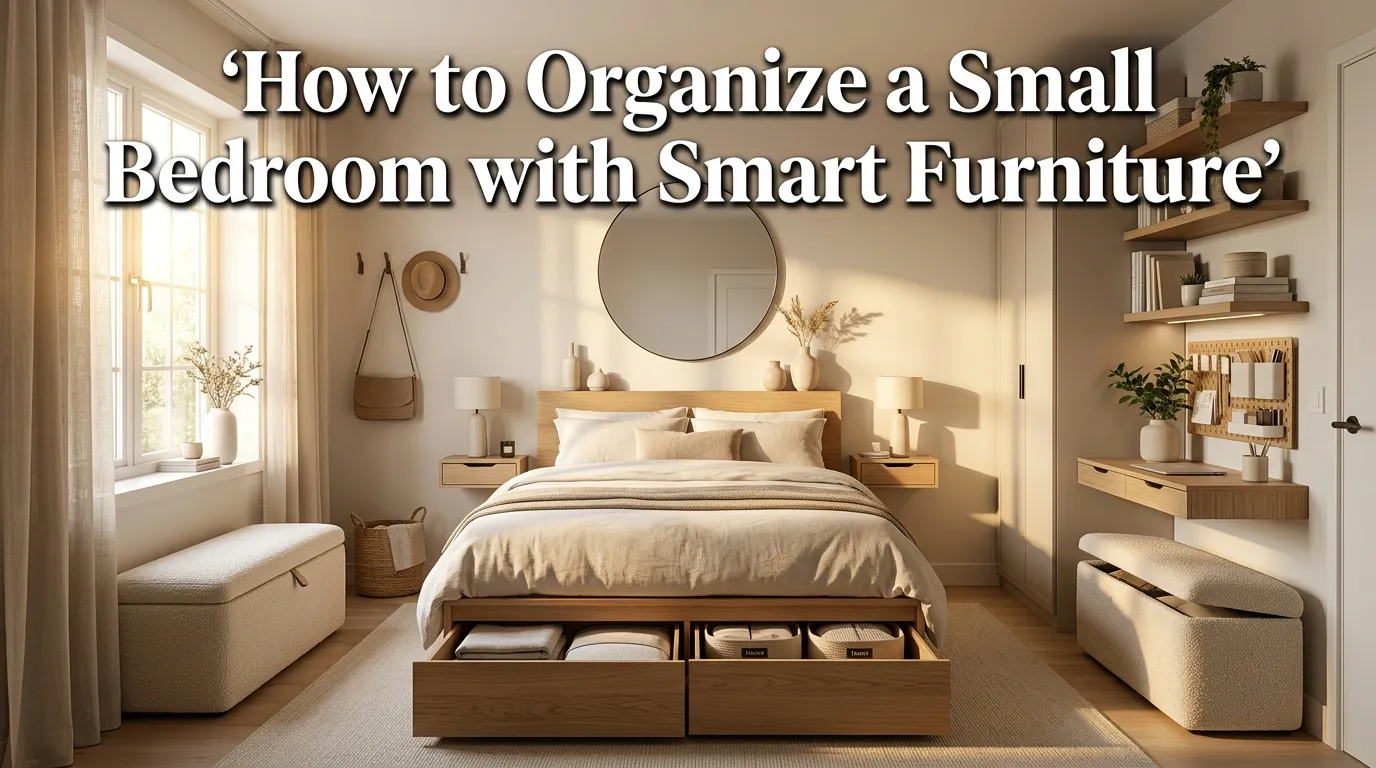
Organizing a small bedroom can feel challenging when every piece of furniture seems to compete for valuable floor space. A bed, dresser, nightstand, wardrobe, and desk can quickly make a compact room feel crowded. The solution isn’t always having fewer belongings—it often comes down to choosing furniture that works harder.
Smart furniture can provide multiple functions while keeping the room visually organized. A bed with built-in drawers can replace a separate storage unit, a wall-mounted desk can create a workspace without taking over the floor, and a narrow nightstand can provide useful storage without making the room feel cramped.
The layout matters just as much. Even beautiful furniture can make a small bedroom difficult to use if pathways are blocked or large pieces are positioned poorly.
In my experience, the best small bedrooms prioritize movement first and storage second. Once you know where you need clear walking space, you can select furniture that fits naturally into the remaining areas.
Color and visual weight also matter. Furniture with lighter finishes, raised legs, reflective surfaces, or streamlined shapes can help the room feel more open.
Whether you’re organizing a compact guest room, apartment bedroom, or small primary bedroom, these smart furniture ideas can help you create a space that feels comfortable, functional, and much more organized.
Table of Contents
- Choose a Storage Bed
- Use a Narrow Nightstand
- Add a Tall Dresser
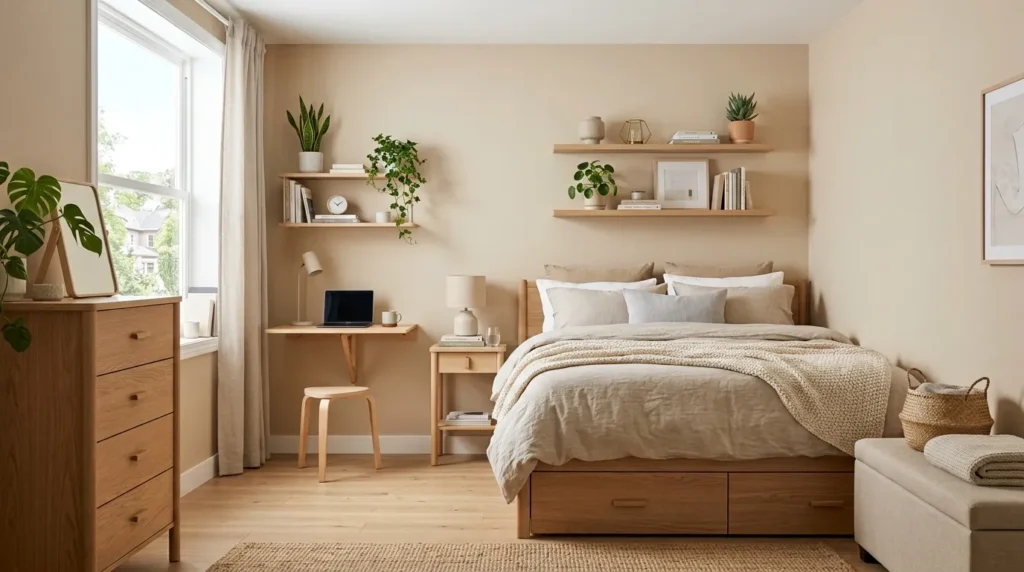
- Install a Wall-Mounted Desk
- Choose a Storage Ottoman
- Use a Slim Wardrobe
- Add Floating Shelves
- Try Nesting Furniture
- Use an Over-the-Bed Cabinet
- Choose Multifunctional Furniture
1. Choose a Storage Bed
Quick Benefits
- Maximizes hidden storage
- Reduces furniture needs
- Keeps belongings organized
- Uses unused space
- Works in compact rooms
Why It Works
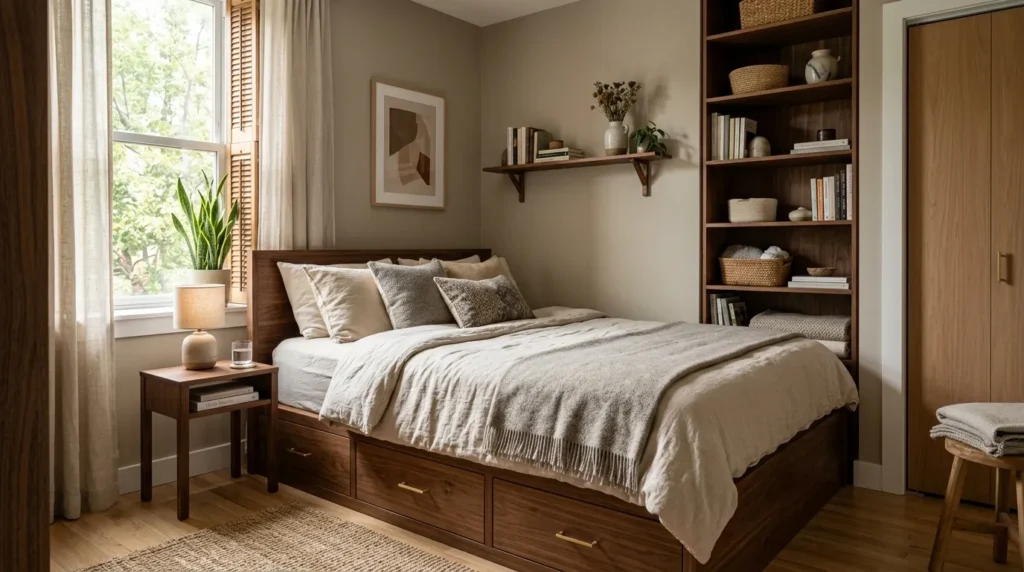
The area beneath a bed is often wasted space, making a storage bed one of the most useful furniture choices for a small bedroom. Built-in drawers or lift-up compartments can store clothing, bedding, shoes, seasonal items, and other belongings.
This can reduce the need for additional cabinets or storage bins around the room.
I’ve found storage beds are especially helpful when closet space is limited.
How To Style It
Choose a streamlined bed frame with drawers that are easy to access. If the room is very small, avoid oversized headboards or bulky decorative details.
Use matching storage containers inside the compartments to keep smaller items organized.
2. Use a Narrow Nightstand
Quick Benefits
- Saves floor space
- Provides essential storage
- Keeps essentials nearby
- Maintains clear pathways
- Works beside compact beds
Why It Works
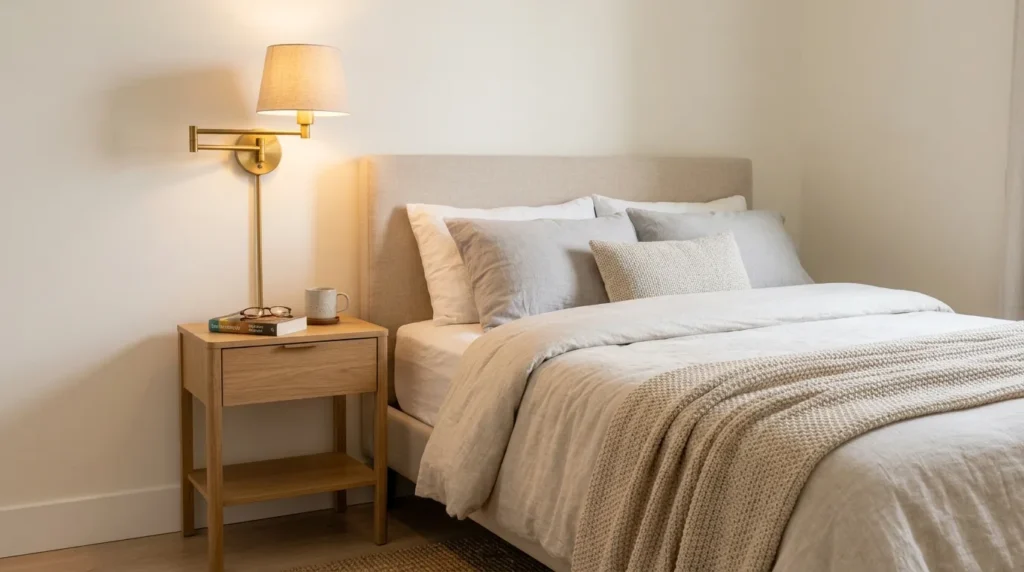
A nightstand doesn’t need to be wide to be useful. In a small bedroom, a narrow piece can provide enough room for a lamp, phone, book, and a few personal items without crowding the bed.
Choosing a vertical design can provide additional storage while maintaining a small footprint.
I’ve found that oversized nightstands are one of the easiest ways to make a compact bedroom feel unnecessarily crowded.
How To Style It
Choose a slim nightstand with one drawer or a small cabinet. Keep the top surface simple and use the drawer for items you don’t need visible.
A wall-mounted bedside shelf can work even better when floor space is extremely limited.
3. Add a Tall Dresser
Quick Benefits
- Uses vertical space
- Provides substantial storage
- Saves floor area
- Creates organization
- Works in narrow rooms
Why It Works
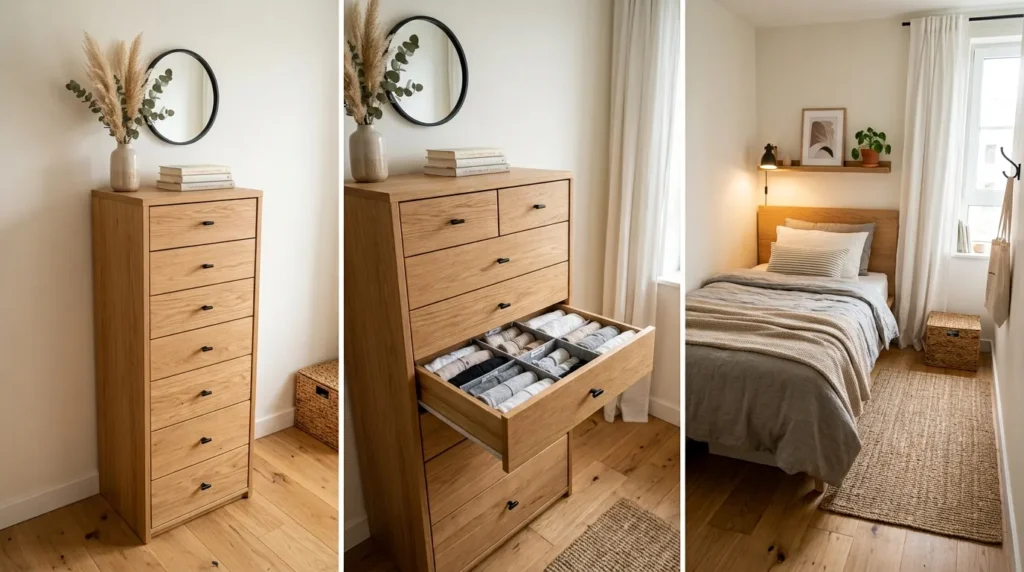
When floor space is limited, vertical furniture can provide storage without spreading across the room. A tall dresser uses height instead of width, making it especially useful in compact bedrooms.
It can store clothing, accessories, linens, and other belongings while keeping them easy to access.
I’ve found vertical storage is one of the most effective ways to increase capacity without making a room feel smaller.
How To Style It
Choose a tall, narrow dresser rather than a wide low unit. Leave some wall space around it so the furniture doesn’t visually overwhelm the room.
Use drawer organizers to keep smaller items separated and easy to find.
4. Install a Wall-Mounted Desk
Quick Benefits
- Saves floor space
- Creates a workspace
- Keeps the room flexible
- Works in small corners
- Provides practical function
Why It Works
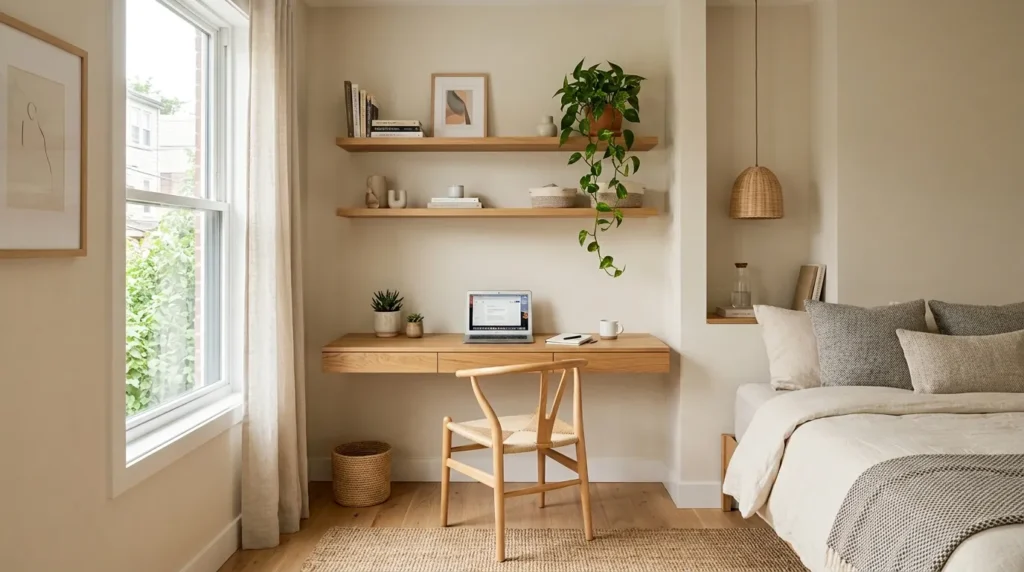
A traditional desk can consume valuable floor space, but a wall-mounted version provides a useful work surface without requiring a large base.
This is especially useful for bedrooms that need to double as a workspace.
I’ve found floating desks are ideal when you need functionality but don’t want the room to feel like an office.
How To Style It
Install the desk on an empty wall or unused corner. Add a compact chair that can slide underneath when not in use.
Use floating shelves or small wall organizers above the desk instead of adding a large storage cabinet.
5. Choose a Storage Ottoman
Quick Benefits
- Adds seating
- Provides storage
- Can serve as a bench
- Uses one piece for multiple purposes
- Softens the room
Why It Works
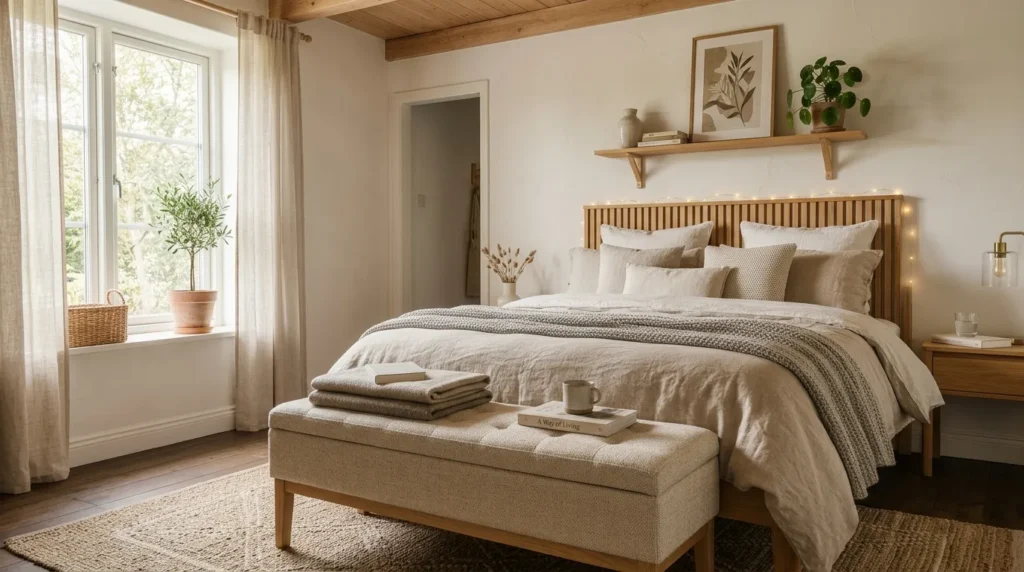
Multifunctional furniture is especially valuable in a small bedroom. A storage ottoman can function as seating, a place to put on shoes, a decorative accent, and hidden storage.
It can also be moved when necessary.
I’ve found upholstered storage benches are particularly useful at the foot of a bed when the layout allows enough clearance.
How To Style It
Choose an ottoman or bench proportional to the bed. Use its interior for blankets, seasonal clothing, handbags, or extra bedding.
Select a neutral fabric if you want it to visually blend into the room.
6. Use a Slim Wardrobe
Quick Benefits
- Maximizes vertical space
- Adds clothing storage
- Fits narrow walls
- Reduces visual clutter
- Creates organized storage
Why It Works
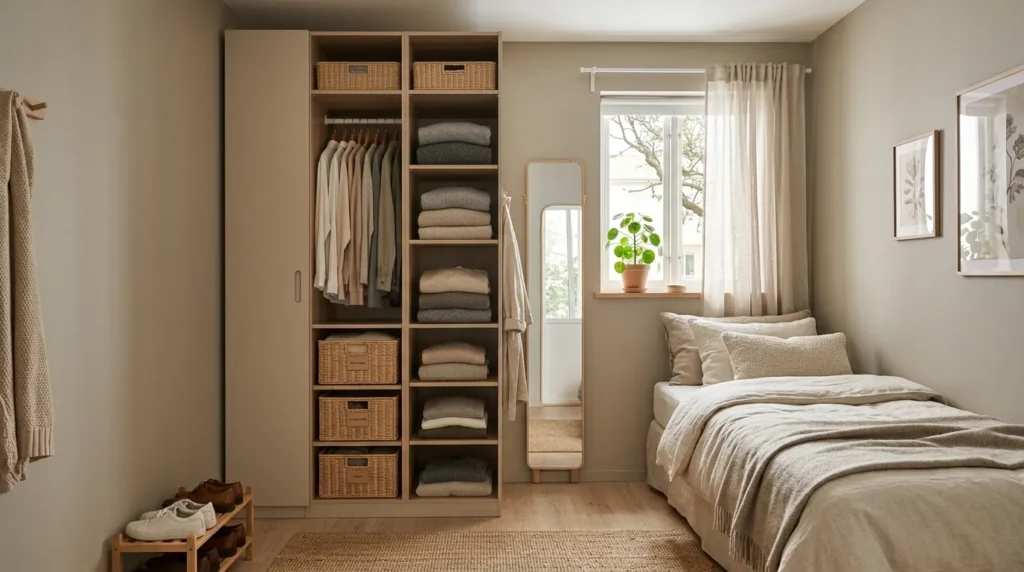
A slim wardrobe can provide valuable clothing storage without requiring the width of a traditional closet system. This is especially useful in bedrooms with limited built-in storage or awkward layouts.
Choosing a taller wardrobe allows you to take advantage of unused wall height while keeping the floor area relatively open.
I’ve found that closed storage often makes a small bedroom feel calmer because everyday items remain hidden.
How To Style It
Choose a wardrobe with a simple exterior and minimal hardware. Use matching hangers inside and add small organizers for accessories, shoes, or folded clothing.
If possible, position the wardrobe against the longest available wall without blocking windows or pathways.
7. Add Floating Shelves
Quick Benefits
- Saves floor space
- Uses empty walls
- Adds storage
- Displays décor
- Keeps furniture minimal
Why It Works
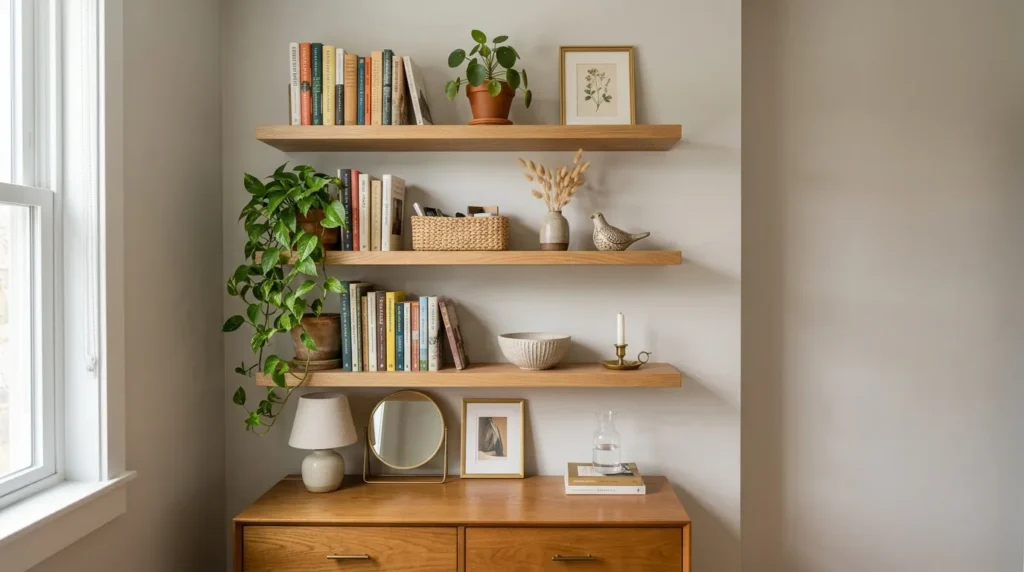
Floating shelves provide storage without requiring another floor-standing piece of furniture. They are useful for books, small baskets, plants, photographs, and everyday accessories.
Because they leave the floor visible, they can also help a compact room feel more open.
I’ve found that a few strategically placed shelves work better than covering an entire wall with storage.
How To Style It
Install one or two shelves above a desk, dresser, or bedside area. Use small baskets to hide practical items and leave some open space between decorative objects.
Keep the colors coordinated with your bedding and furniture.
8. Try Nesting Furniture
Quick Benefits
- Saves space
- Provides flexible surfaces
- Easy to move
- Works in small rooms
- Adds versatility
Why It Works
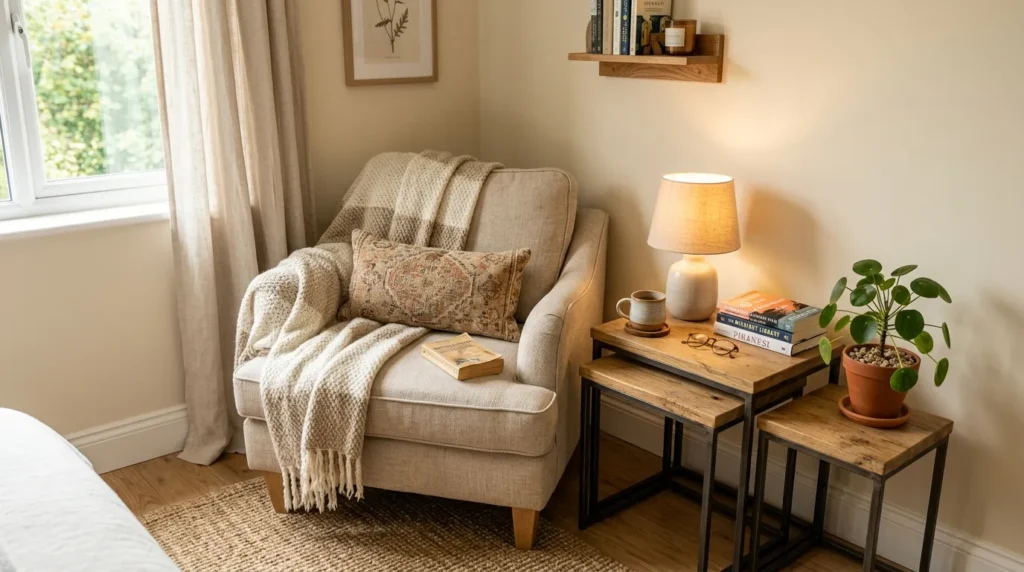
Nesting tables and stools can provide additional surfaces when needed without permanently occupying the same amount of space.
This makes them useful in bedrooms where furniture needs to be flexible.
I’ve found nesting pieces are particularly practical when you occasionally need extra surfaces but don’t want more permanent furniture.
How To Style It
Use a small nesting table beside a reading chair or near the bed. Keep the smaller pieces tucked underneath the largest table until they are needed.
Choose simple finishes that blend with the rest of the room.
9. Use an Over-the-Bed Cabinet
Quick Benefits
- Uses vertical space
- Adds hidden storage
- Keeps floor clear
- Creates a built-in appearance
- Maximizes unused wall area
Why It Works
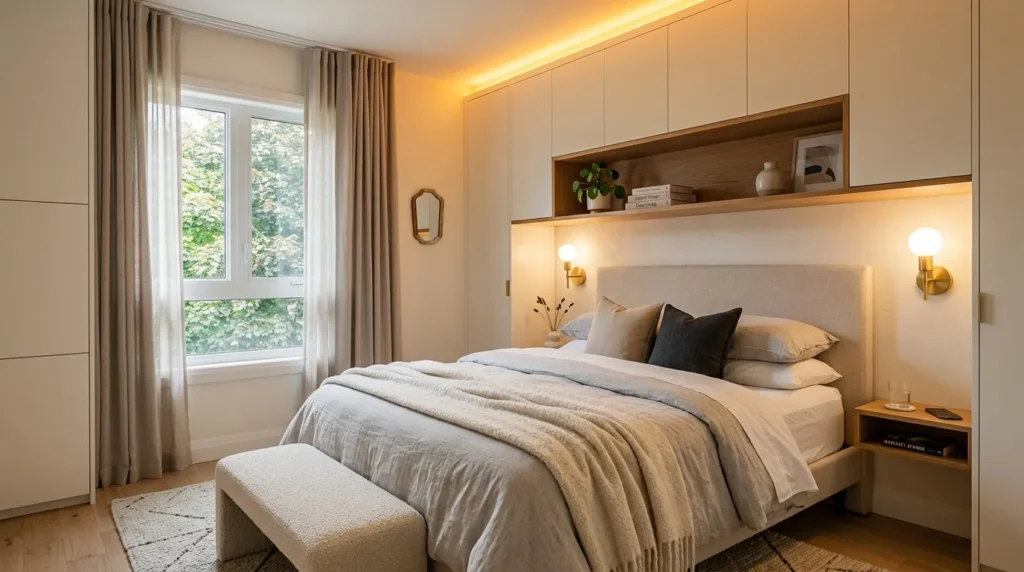
The wall above the bed is often overlooked as a storage opportunity. Properly installed cabinets or shelving can turn this unused area into valuable storage without taking additional floor space.
Closed cabinets are particularly useful for items you don’t want displayed.
I’ve found this approach works best when the storage is designed to look intentional rather than added as an afterthought.
How To Style It
Choose cabinetry that complements the bed and surrounding furniture. Use closed doors for practical belongings and reserve open sections for a few decorative pieces.
Make sure any wall-mounted furniture is securely installed and appropriately suited to the wall structure.
10. Choose Multifunctional Furniture
Quick Benefits
- Saves space
- Reduces furniture count
- Improves functionality
- Creates flexibility
- Simplifies organization
Why It Works
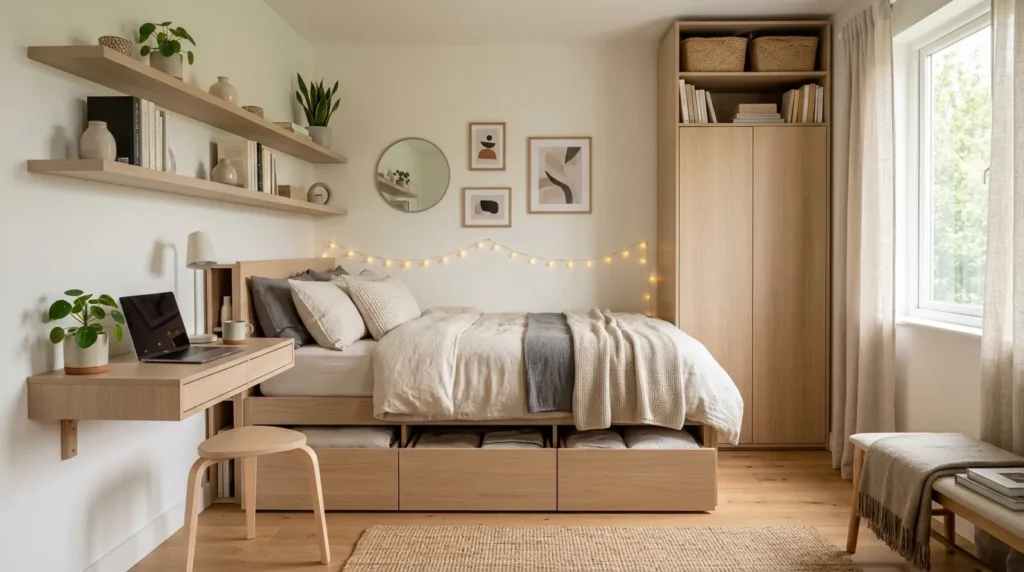
The smartest furniture choices in a small bedroom often perform more than one job. A storage bed, desk with shelving, bench with hidden storage, or mirror with integrated storage can replace multiple individual pieces.
This reduces the number of objects competing for floor space.
I’ve found that asking “What else can this piece do?” is one of the most useful questions when furnishing a small bedroom.
How To Style It
Prioritize furniture based on your actual needs. Choose pieces that combine storage, seating, workspace, or display functions.
Keep larger furniture pieces visually simple and maintain clear pathways around the bed.
Frequently Asked Questions
What furniture is best for a small bedroom?
Storage beds, narrow dressers, slim wardrobes, floating shelves, compact nightstands, and multifunctional furniture are excellent choices.
How do I maximize storage in a small bedroom?
Use vertical storage, under-bed compartments, wall-mounted shelves, over-the-door organizers, and furniture with hidden storage.
Should a small bedroom have a dresser?
It can, but choose a narrow or tall dresser if space is limited. A storage bed or wardrobe may reduce the need for a large dresser.
How can I fit a desk into a small bedroom?
Consider a wall-mounted or floating desk. Pair it with a compact chair that can slide underneath when the desk isn’t being used.
How do I make small bedroom furniture feel less bulky?
Choose streamlined pieces, lighter finishes, raised legs, and furniture that matches the room’s color palette.
Is vertical storage better for small bedrooms?
Often, yes. Using wall height allows you to increase storage capacity while preserving valuable floor space.
Conclusion
Organizing a small bedroom becomes much easier when every piece of furniture has a clear purpose. Instead of filling the room with separate storage units, choose pieces that combine functions and take advantage of unused vertical or hidden space.
A storage bed can replace bulky cabinets, a floating desk can create a workspace, and a tall dresser can provide substantial storage without spreading across the floor.
The goal isn’t to squeeze as much furniture as possible into the room. It’s to create a balanced layout where storage and functionality work together while keeping pathways open.
With thoughtful furniture choices and a little planning, even a compact bedroom can feel organized, comfortable, and surprisingly spacious.