

How to Decorate a Bedroom Using Designer Tricks
Decorating a beautiful bedroom doesn’t require an unlimited budget or the help of a professional interior designer. In fact, many designer-inspired spaces rely on a handful of timeless principles that anyone can use to create a room that feels polished, comfortable, and inviting. The difference isn’t always found in expensive furniture or luxury finishes—it’s often the thoughtful details, balanced layouts, and layered styling that make a bedroom feel truly special.
I’ve noticed that one of the biggest mistakes homeowners make is decorating one item at a time without considering how every piece works together. Designers approach a bedroom as a complete space, carefully balancing color, texture, lighting, scale, and functionality to create a room that feels effortless. Even small adjustments, such as hanging curtains higher, layering bedding, or choosing the right bedside lighting, can dramatically change the overall look without requiring a full makeover.
Whether you’re refreshing a cozy guest room, updating your primary bedroom, or decorating a new home, timeless designer tricks can help you make the most of your space. These ideas focus on creating harmony, improving comfort, and adding elegant details that never go out of style. Best of all, many of them can be completed over a weekend using furniture and accessories you already own.
In this guide, you’ll discover ten designer-approved bedroom decorating ideas that combine style with practicality. From selecting the perfect color palette to layering textures, maximizing natural light, and creating balanced layouts, each tip is designed to help you transform your bedroom into a relaxing retreat you’ll love waking up in every day.
Table of Contents
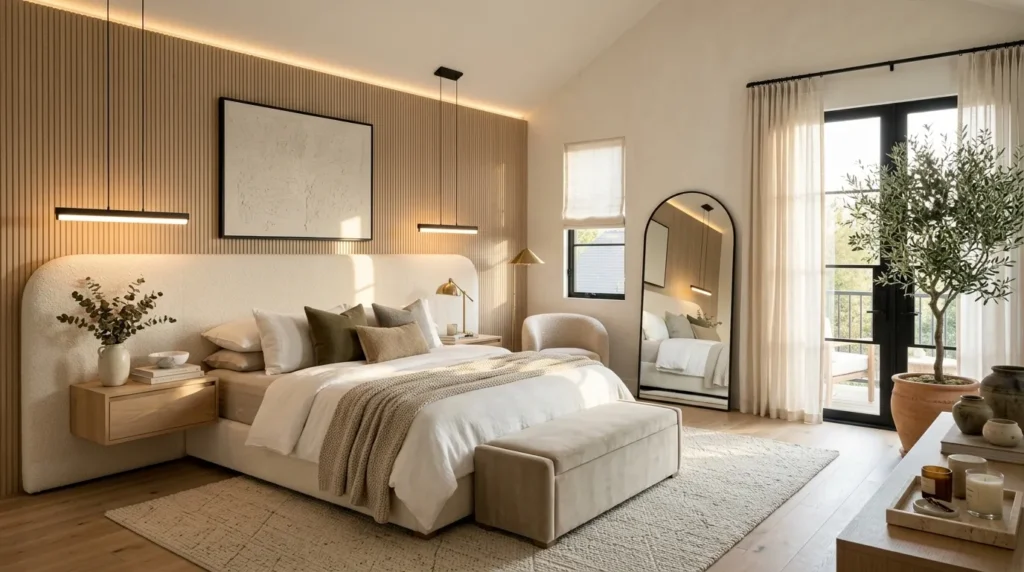
1. Start with Neutrals
Create a timeless foundation using soft, calming colors.
2. Layer Your Bedding
Achieve a luxurious, hotel-inspired bed.
3. Balance the Layout
Arrange furniture for symmetry and comfort.
4. Upgrade Lighting
Layer light sources for warmth and function.
5. Hang Curtains High
Make ceilings appear taller and rooms brighter.
6. Add Rich Textures
Create depth using fabrics and natural materials.
7. Choose Statement Art
Introduce personality without overwhelming the room.
8. Style Every Surface
Keep furniture polished yet uncluttered.
9. Bring in Greenery
Add natural freshness with indoor plants.
10. Finish with Details
Complete the room using thoughtful accessories.
1. Start with Neutrals
Quick Benefits
- Creates a calming atmosphere
- Makes the room appear larger
- Reflects natural light beautifully
- Never goes out of style
- Easy to refresh seasonally
Why It Works
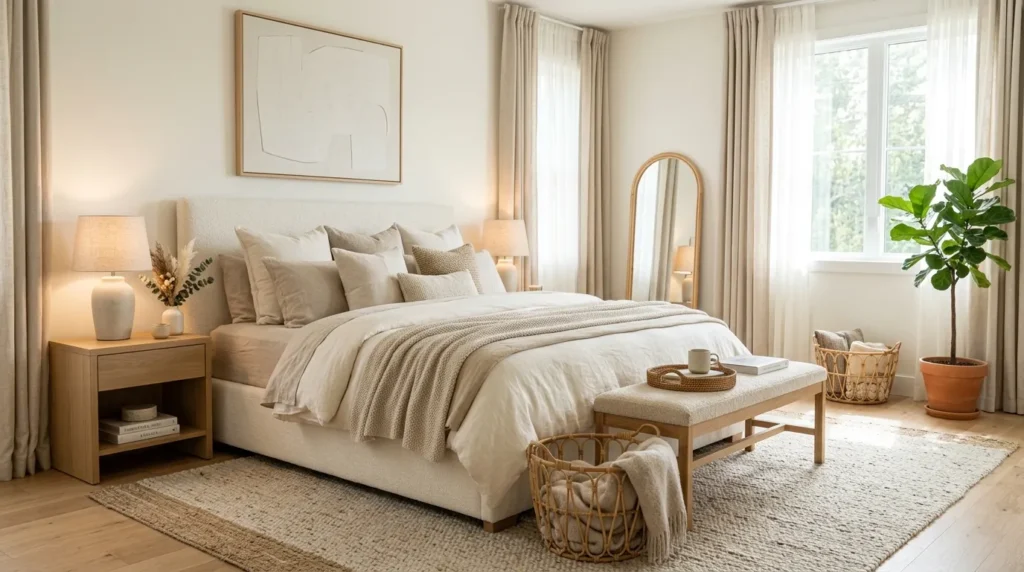
One of the first things professional designers consider is the overall color palette. Soft neutrals such as warm white, ivory, greige, taupe, and light beige create a peaceful environment that encourages relaxation while making the room feel brighter and more spacious. These colors also serve as a timeless backdrop that allows furniture, artwork, and decorative accents to stand out naturally.
In my experience, neutral bedrooms offer incredible flexibility. Instead of repainting when trends change, you can simply update pillows, throws, or artwork to achieve a fresh look. That’s why many designers recommend building your bedroom around classic colors before introducing personality through carefully selected accessories.
How To Style It
Paint the walls in a warm white or soft greige and pair them with a neutral upholstered bed. Incorporate light oak or walnut furniture to add warmth while maintaining an airy atmosphere. Layer white bedding with textured beige throws and linen accent pillows to create subtle depth without relying on bold colors.
Complete the room with woven baskets, ceramic vases, and soft linen curtains. These natural materials reinforce the peaceful palette while adding visual interest that keeps the room from feeling flat.
2. Layer Your Bedding
Quick Benefits
- Creates a luxury hotel look
- Adds warmth and comfort
- Makes the bed the focal point
- Introduces texture
- Easy to update throughout the year
Why It Works
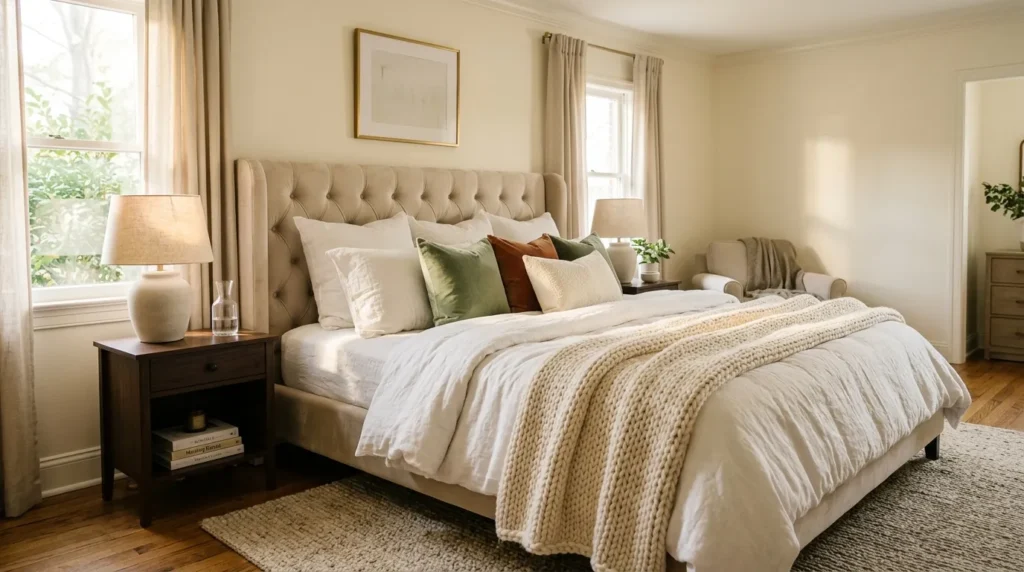
Designers know that a beautifully layered bed instantly elevates an entire bedroom. Rather than relying on a single comforter, combining crisp sheets, plush duvets, quilts, decorative pillows, and textured throws creates depth that makes the room feel rich and inviting. Layering also allows you to adjust your bedding seasonally while maintaining a polished appearance.
I’ve seen even modest bedrooms feel significantly more luxurious after simply upgrading the bedding. The secret isn’t using more items—it’s choosing complementary textures and arranging them thoughtfully to create a balanced, comfortable look.
How To Style It
Begin with high-quality white cotton sheets, followed by a fluffy duvet in a soft neutral tone. Fold a lightweight quilt across the foot of the bed and finish with a chunky knit throw for additional texture. Arrange decorative pillows in varying sizes while keeping the overall color palette cohesive.
Complete the bed with matching bedside lamps and a plush area rug extending beneath the lower two-thirds of the bed. This creates a designer-inspired focal point that immediately draws attention when entering the room.
3. Balance the Layout
Quick Benefits
- Creates visual harmony
- Improves everyday functionality
- Enhances traffic flow
- Makes the room feel professionally designed
- Promotes relaxation
Why It Works
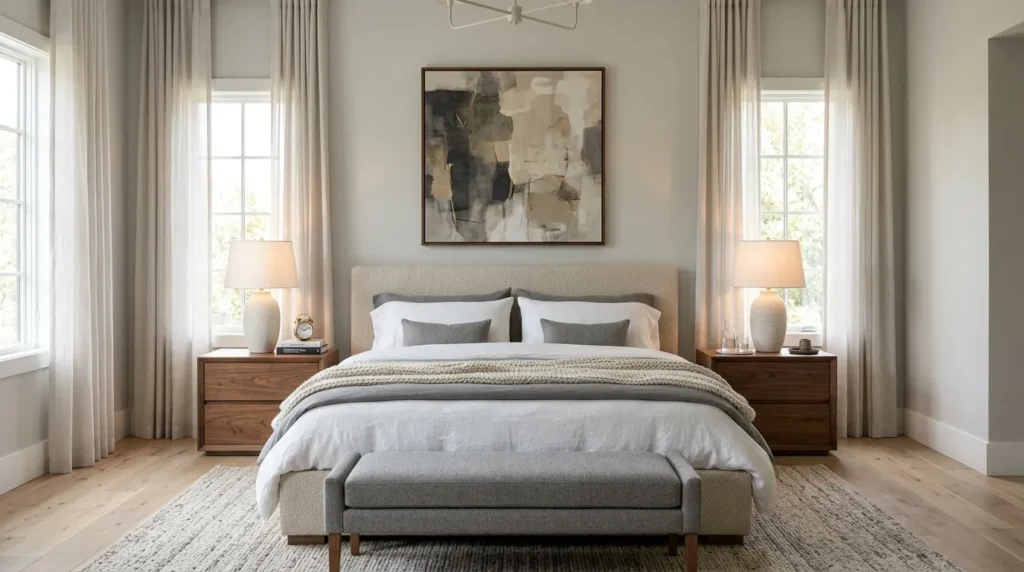
One of the biggest differences between professionally designed bedrooms and ordinary ones is balance. Symmetry naturally creates a sense of order and calm, making the room feel more comfortable and visually appealing. Matching nightstands, evenly spaced lamps, and centered furniture layouts all contribute to this effect without feeling overly formal.
A mistake many homeowners make is placing furniture wherever it fits instead of considering proportion and flow. Designers focus on creating clear pathways while ensuring the bed remains the natural focal point. This intentional arrangement makes even smaller bedrooms feel more spacious and organized.
How To Style It
Position the bed centered on the room’s main wall whenever possible, then place matching nightstands on either side. Add coordinating table lamps to reinforce symmetry while providing practical reading light. Keep at least 24 to 30 inches of walking space around the bed to ensure comfortable movement.
Anchor the room with a large area rug extending beyond the bed and use a bench or upholstered ottoman at the foot of the bed if space allows. Finish the layout with a dresser positioned opposite the bed and minimal decorative accents to maintain a clean, balanced appearance.
4. Upgrade Lighting
Quick Benefits
- Creates a warm, relaxing atmosphere
- Improves functionality throughout the day
- Highlights architectural details
- Adds a luxurious designer feel
- Makes the room appear larger
Why It Works
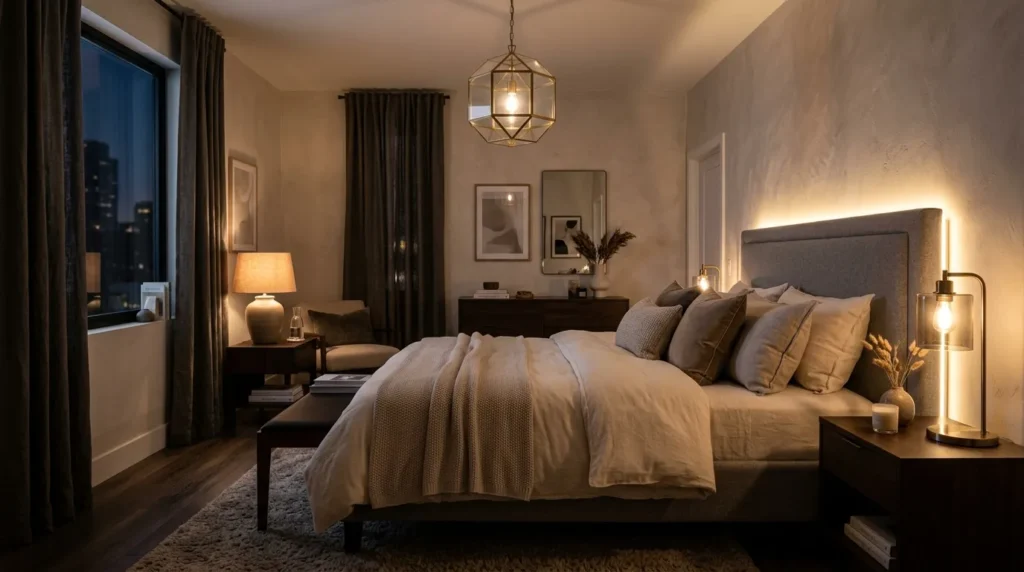
Professional designers rarely rely on a single ceiling fixture to illuminate a bedroom. Instead, they layer multiple light sources to create depth, flexibility, and a welcoming ambiance. Combining overhead lighting, bedside lamps, wall sconces, and subtle accent lighting allows you to adjust the mood depending on the time of day or activity.
I’ve noticed that warm lighting instantly changes how a bedroom feels. Soft illumination enhances natural wood, cozy textiles, and neutral color palettes while reducing harsh shadows. That’s why many luxury hotels use layered lighting to create a peaceful environment that encourages relaxation.
How To Style It
Install a modern pendant light, chandelier, or semi-flush fixture as your primary light source. Add matching bedside lamps with linen or fabric shades to provide soft reading light and visual symmetry. Use warm white LED bulbs between 2700K and 3000K to create a cozy glow that flatters the entire room.
For an elevated designer touch, add LED strip lighting behind the headboard or beneath floating shelves. Complete the space with candles or battery-operated lanterns on a dresser to introduce gentle evening ambiance.
5. Hang Curtains High
Quick Benefits
- Makes ceilings appear taller
- Allows more natural light inside
- Creates a luxurious look
- Frames windows beautifully
- Makes the room feel larger
Why It Works
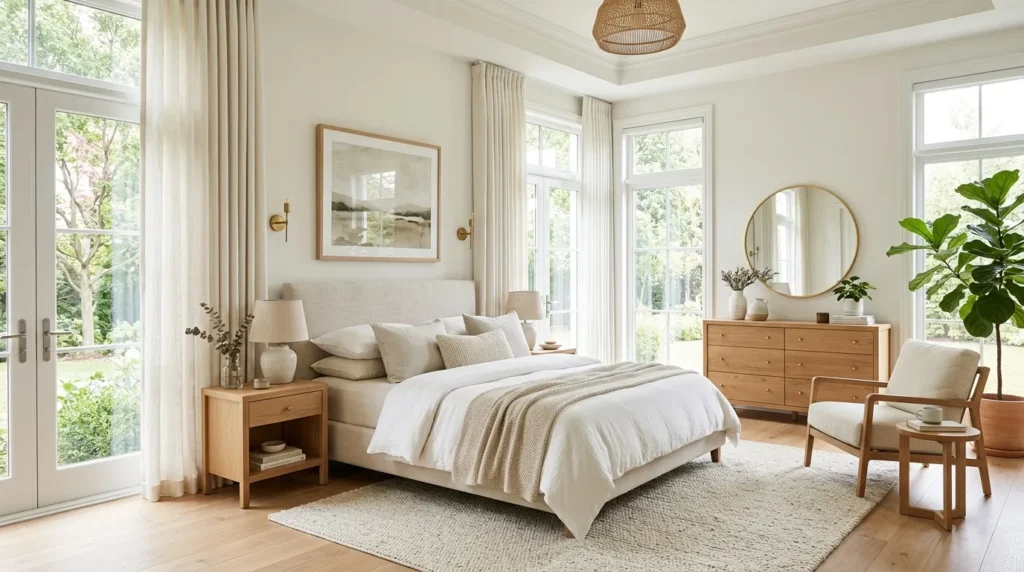
One of the oldest designer tricks is hanging curtain rods higher than the window frame. This simple adjustment draws the eye upward, creating the illusion of taller ceilings and larger windows. Extending the curtain rod beyond the window width also allows curtains to stack neatly on each side, maximizing natural light during the day.
In my experience, this affordable update has one of the biggest visual impacts in any bedroom. It instantly makes the room feel brighter, more elegant, and professionally designed without changing any major furniture.
How To Style It
Mount curtain rods approximately 8–12 inches above the window frame or as close to the ceiling as possible. Extend the rod 6–10 inches beyond each side of the window so curtains can fully open without blocking sunlight.
Choose full-length linen or cotton curtains in warm white, ivory, or soft beige. Allow the fabric to lightly touch the floor for an elegant finish. Pair the window treatment with woven blinds or light-filtering shades for added privacy while maintaining an airy feel.
6. Add Rich Textures
Quick Benefits
- Makes the room feel warmer
- Creates visual depth
- Softens modern furniture
- Adds timeless elegance
- Increases everyday comfort
Why It Works
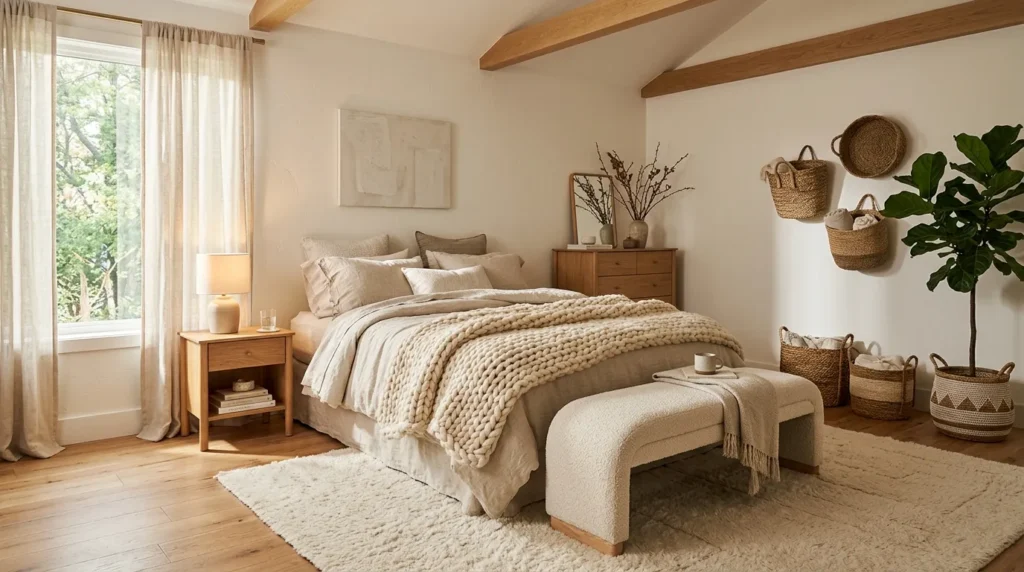
Texture is one of the secret ingredients designers use to make bedrooms feel luxurious. Even with a simple neutral palette, combining different materials prevents the space from feeling flat. Linen, velvet, boucle, cotton, wool, rattan, and natural wood all introduce subtle contrast that enhances the overall design.
I’ve seen beautifully layered textures completely transform bedrooms that initially looked plain. Rather than adding more color, designers rely on material variation to create richness while preserving a calm, relaxing atmosphere.
How To Style It
Layer crisp cotton sheets with a linen duvet cover, velvet accent pillows, and a chunky knit throw. Place a plush area rug beneath the bed to add warmth underfoot and soften hardwood flooring. Add woven baskets for storage and ceramic vases to introduce handcrafted character.
Natural wood furniture, upholstered seating, and linen curtains complete the look while maintaining a cohesive palette. Keeping colors consistent while varying textures creates a sophisticated bedroom that feels effortlessly elegant.
7. Choose Statement Art
Quick Benefits
- Creates a stylish focal point
- Reflects your personality
- Completes the bedroom design
- Adds subtle color
- Enhances visual balance
Why It Works
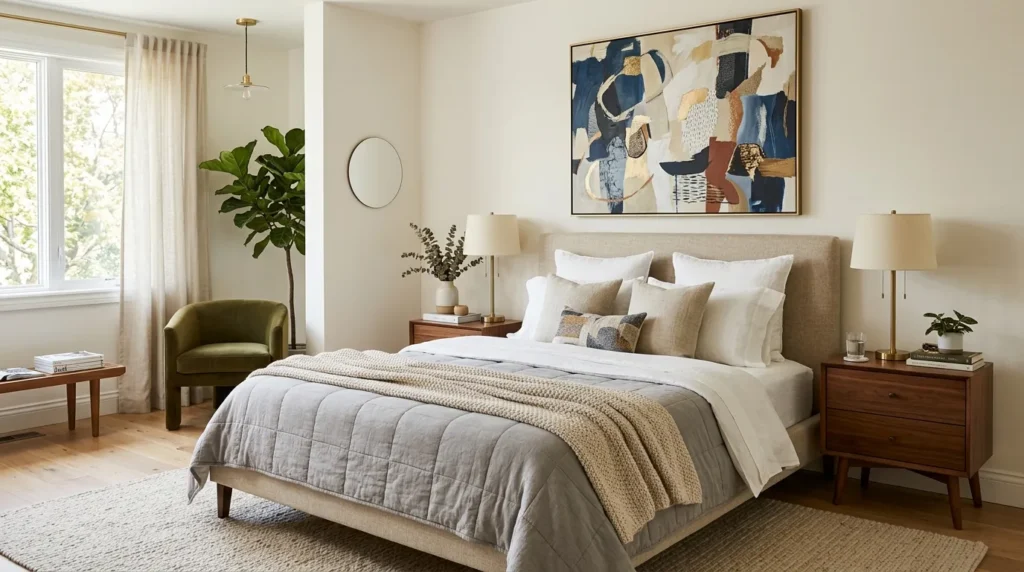
Artwork has the ability to transform a bedroom from ordinary to unforgettable. Rather than filling every wall with numerous small pieces, designers often choose one oversized artwork or a carefully coordinated pair of prints. This approach creates visual impact while maintaining the clean, uncluttered atmosphere essential for restful spaces.
One thing that works especially well is selecting artwork that complements your existing color palette rather than competing with it. Soft abstract paintings, calming landscapes, and botanical illustrations introduce personality while preserving the room’s peaceful ambiance.
How To Style It
Center a large framed artwork above the headboard, leaving approximately 6–10 inches between the frame and the bed. Choose colors that echo the room’s bedding, curtains, or decorative accessories for a cohesive appearance.
If you prefer a gallery arrangement, use two or three matching frames with coordinating artwork instead of numerous unrelated prints. Finish the styling with simple bedside accessories and soft lighting so the artwork remains the room’s focal point while enhancing the overall designer-inspired look.
8. Style Every Surface
Quick Benefits
- Creates a polished designer look
- Prevents clutter from building up
- Highlights quality décor pieces
- Improves everyday organization
- Makes the room feel intentional
Why It Works
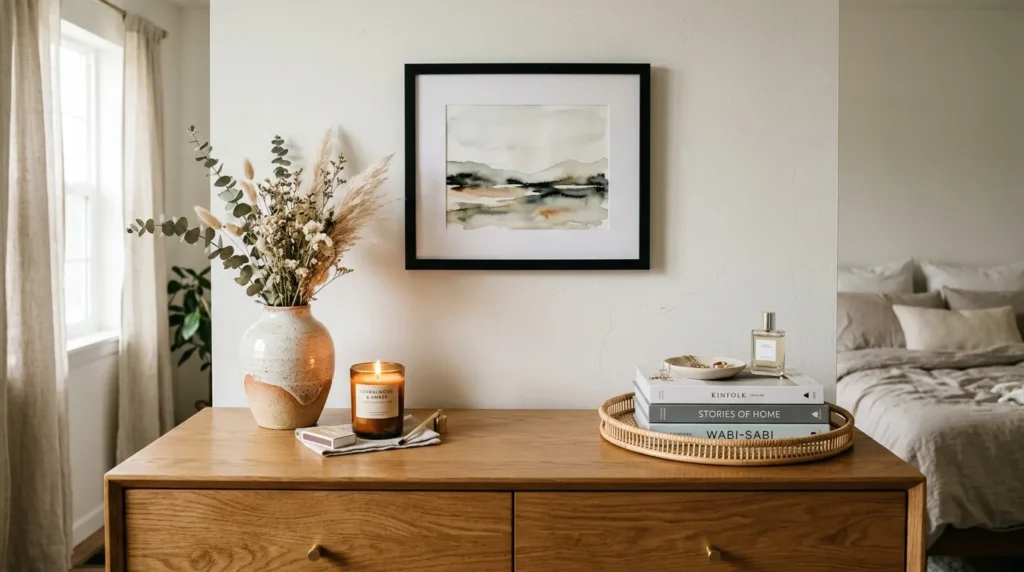
One of the easiest ways to recognize a professionally styled bedroom is by looking at the furniture surfaces. Designers avoid filling every available space with decorative objects. Instead, they carefully curate a few meaningful pieces that create balance while allowing each item to stand out. This approach keeps the room feeling elegant rather than crowded.
I’ve noticed that homeowners often decorate by adding more items when the real secret is thoughtful editing. Leaving a little empty space around accessories allows furniture, artwork, and lighting to shine. That’s why beautifully styled bedrooms feel calm, sophisticated, and effortlessly organized.
How To Style It
Style your nightstands with a matching table lamp, a favorite book, a small ceramic vase filled with fresh greenery, and a decorative tray for jewelry or everyday essentials. On the dresser, arrange a framed photo, a scented candle, and one sculptural object while leaving plenty of open space.
Use woven baskets or decorative boxes to hide personal items and charging cables. Keeping surfaces clean and intentional instantly gives the bedroom a luxurious, magazine-worthy appearance.
9. Bring in Greenery
Quick Benefits
- Adds life and freshness
- Softens modern interiors
- Introduces natural color
- Creates a calming atmosphere
- Complements timeless décor
Why It Works
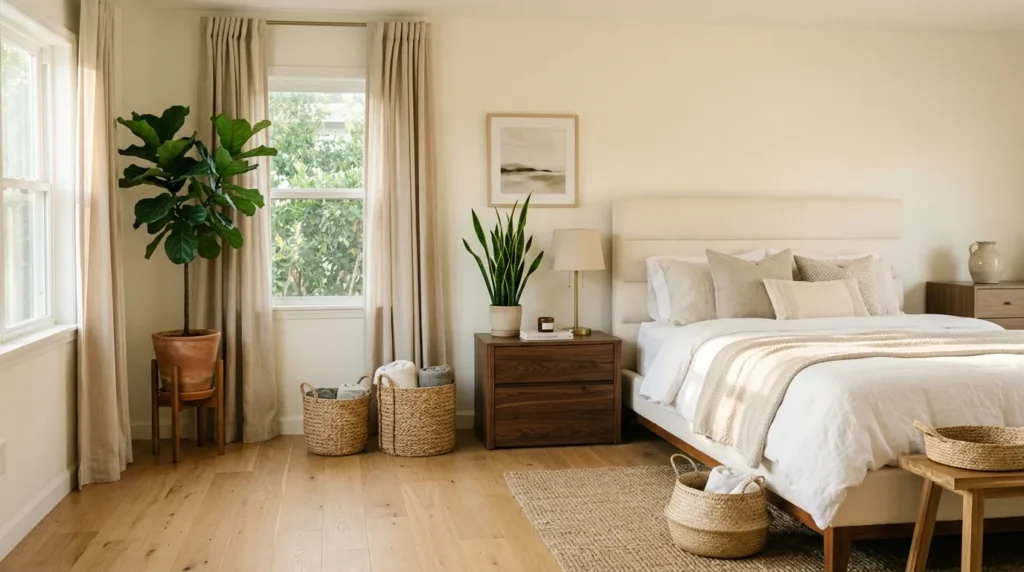
Every designer knows that plants instantly make a room feel more welcoming. Their organic shapes and vibrant green leaves provide a beautiful contrast to upholstered furniture, neutral walls, and wooden finishes. Even a single plant can transform the atmosphere while reinforcing the peaceful feeling every bedroom should have.
In my experience, greenery also helps a room feel complete. Instead of relying solely on decorative accessories, plants introduce natural texture and movement that never goes out of style. They’re a simple addition that makes a noticeable difference without requiring a major investment.
How To Style It
Place a tall fiddle-leaf fig, olive tree, or rubber plant in an empty corner to add height and visual balance. Style smaller plants such as snake plants, pothos, or peace lilies on dressers, floating shelves, or bedside tables using ceramic or woven planters in neutral colors.
For a softer decorative touch, display fresh eucalyptus or olive branches in a glass or ceramic vase. These natural elements complement nearly every bedroom style while creating a fresh, relaxing atmosphere.
10. Finish with Details
Quick Benefits
- Makes the room feel professionally designed
- Adds warmth and personality
- Creates a cohesive appearance
- Elevates everyday comfort
- Completes the overall design
Why It Works
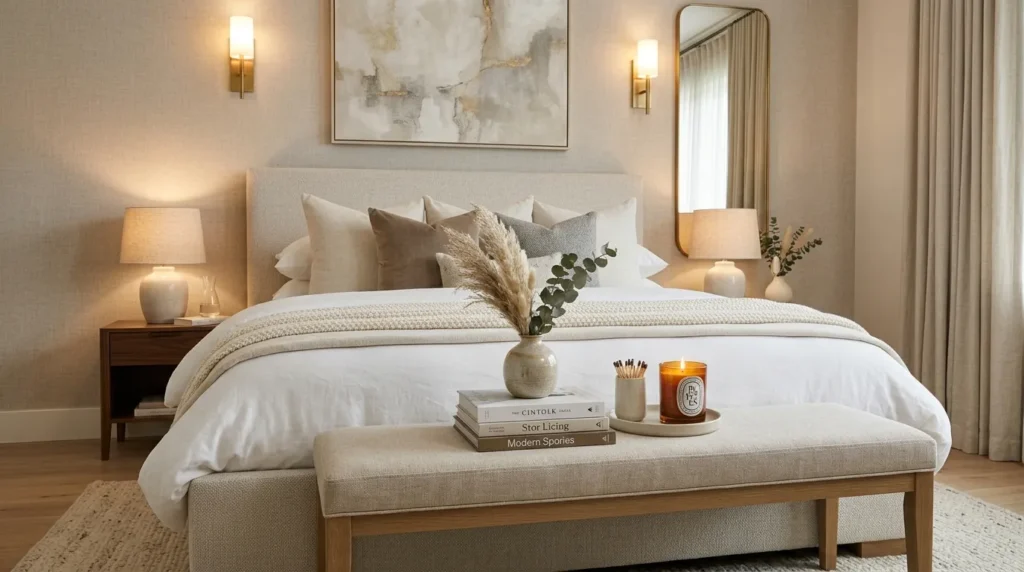
The final layer of decorating is often what separates a nice bedroom from one that truly feels designer-inspired. Carefully selected accessories bring warmth, personality, and polish without overwhelming the space. Rather than adding trendy décor, designers focus on timeless pieces that complement the room’s overall style and create a sense of harmony.
One simple trick I always suggest is choosing accessories that share similar colors, materials, or finishes. Repeating elements like brushed brass, natural wood, linen, or ceramic throughout the room creates visual consistency that makes the entire design feel intentional and refined.
How To Style It
Add a cozy upholstered bench at the foot of the bed, a decorative tray on the dresser, and a soft throw folded neatly over a reading chair. Use matching picture frames, ceramic vases, and candles to reinforce your chosen style without creating clutter.
Finish the room with a subtle scented candle, a stack of beautiful coffee table books, and one meaningful decorative object that reflects your personality. These final touches make the space feel welcoming, luxurious, and complete.
Frequently Asked Questions
1. What is the first step when decorating a bedroom?
Start by selecting a neutral color palette and deciding on your largest furniture pieces. Once the foundation is in place, layer in lighting, textiles, artwork, and decorative accessories to create a cohesive, balanced design.
2. How do designers make bedrooms feel luxurious?
Designers focus on layered bedding, warm lighting, natural textures, high-quality furniture, and uncluttered styling. They also emphasize balance, symmetry, and carefully chosen accessories rather than filling the room with unnecessary décor.
3. Should all bedroom furniture match?
Not necessarily. Coordinating finishes, proportions, and colors creates a more timeless look than purchasing identical furniture sets. Mixing upholstered pieces with complementary wood tones often adds more character and visual interest.
4. What colors make a bedroom look elegant?
Warm white, ivory, greige, taupe, beige, and soft gray are classic choices. These shades create a relaxing atmosphere while pairing beautifully with wood furniture, natural fabrics, and metallic accents.
5. How can I decorate my bedroom on a budget?
Focus on affordable updates with high visual impact, such as new bedding, decorative pillows, stylish lighting, framed artwork, indoor plants, and fresh paint. Rearranging furniture and decluttering can also dramatically improve the room without spending much money.
6. What is the biggest decorating mistake in a bedroom?
Overcrowding the space with too much furniture or too many accessories is one of the most common mistakes. Keeping the layout balanced and editing decorative items regularly helps maintain a peaceful, designer-inspired atmosphere.
Conclusion
Creating a designer-inspired bedroom isn’t about copying expensive showrooms—it’s about applying timeless decorating principles that combine beauty, comfort, and functionality. From choosing a calming neutral palette and layering luxurious bedding to incorporating warm lighting, natural textures, and thoughtful accessories, every detail contributes to a space that feels elegant and inviting.
The best part is that you don’t need to transform your bedroom overnight. Begin with one or two improvements that will have the greatest impact, such as upgrading your lighting, refreshing your bedding, or rearranging your furniture for better balance. As you gradually add timeless pieces, your bedroom will naturally become more polished and cohesive.
Remember that great design isn’t measured by how much you spend but by how intentionally you decorate. By focusing on quality, simplicity, and thoughtful styling, you can create a bedroom that feels peaceful, sophisticated, and welcoming for years to come—a space that truly reflects your personality while providing the perfect retreat at the end of every day.
Related Articles
- 10 Modern Bedroom Ideas with Elegant Details
- How to Decorate a Bedroom with Soft Neutral Colors
- 10 Cozy Bedroom Ideas for a Relaxing Retreat
- 10 Minimalist Bedroom Ideas That Feel Warm and Inviting
- 10 Bedroom Lighting Ideas for a Cozy Atmosphere