
All Legs on the Rug vs Front Legs Only: Interior Design Proportions
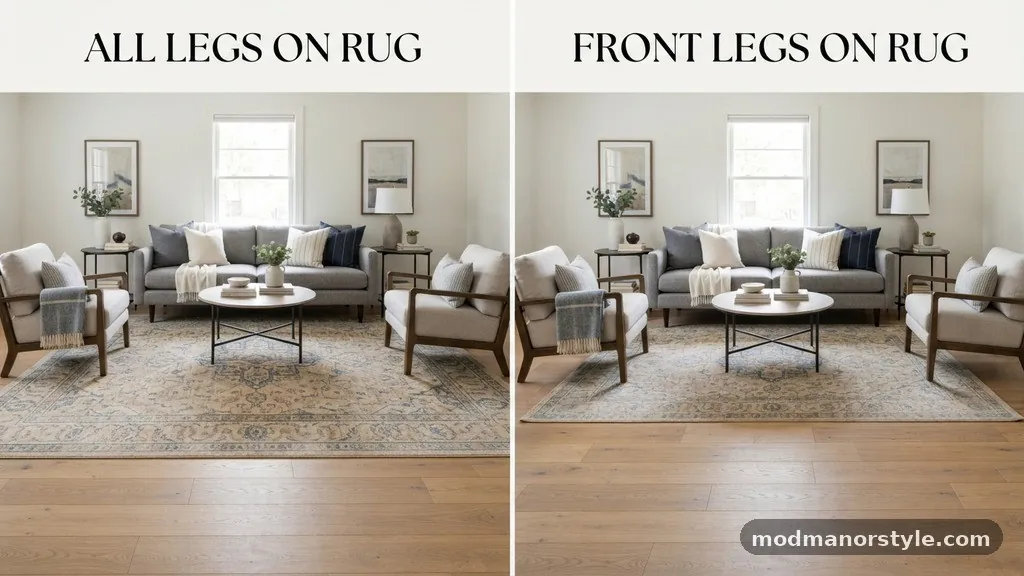
Choosing between all legs on the rug vs front legs only is a foundational decision that dictates the visual flow of your living area. While many homeowners agonize over these rug placement rules, the choice often comes down to the scale of your room and the specific footprint of your seating. If you want a cohesive look, all legs on the rug typically ground a space, while front legs only offer a lighter, more budget-conscious alternative.
Understanding how these proportions interact with your furniture legs helps you avoid common design pitfalls. This guide breaks down the practical application of these methods to help you achieve a balanced, professional aesthetic in any room.
The Core Difference in Rug Placement
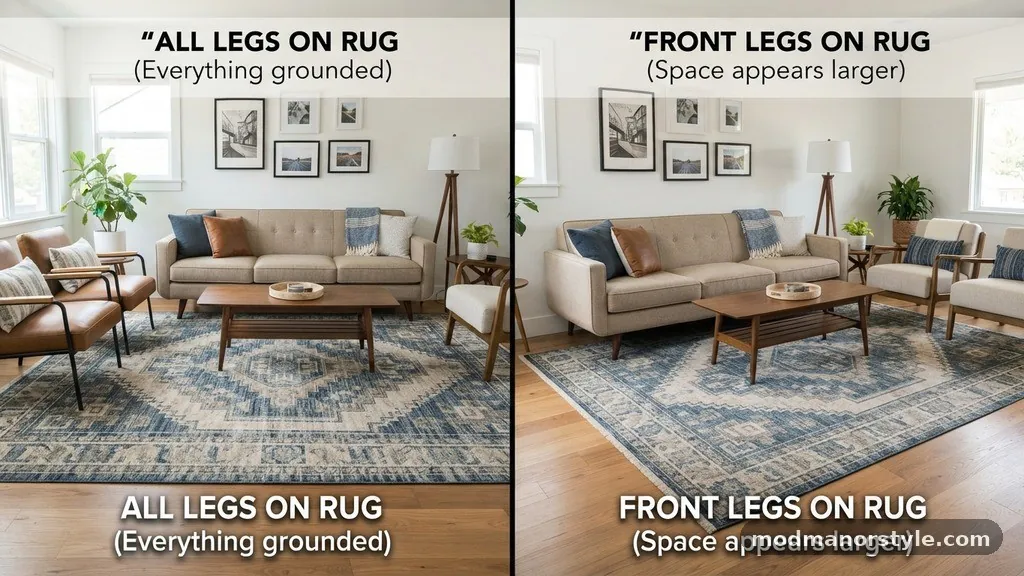
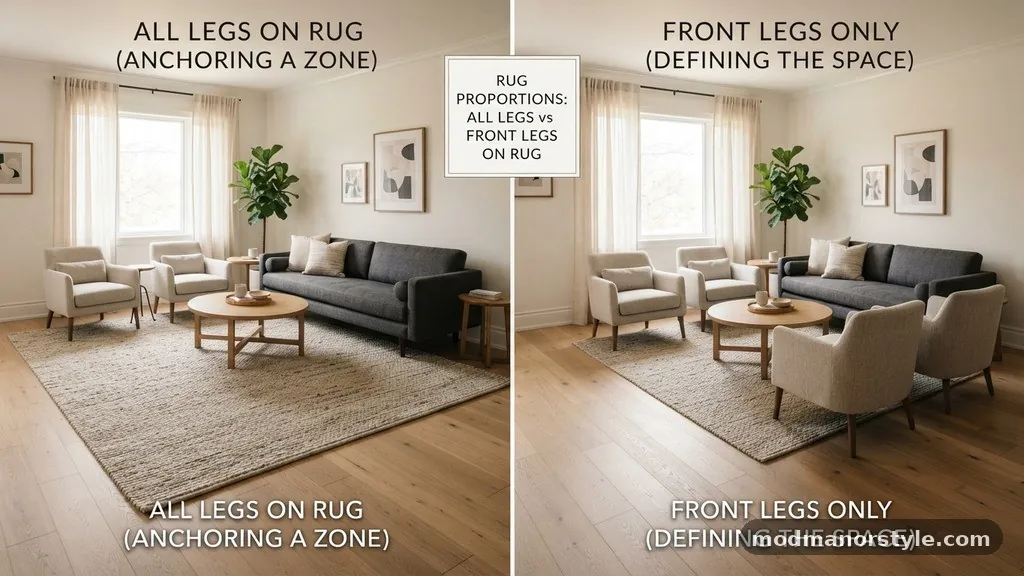
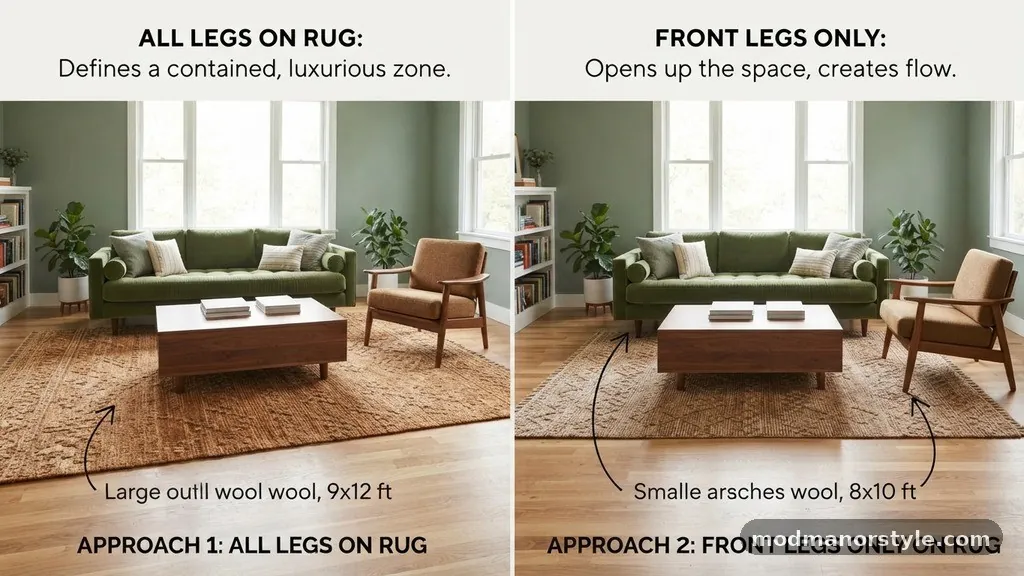
The debate between all legs on the rug vs front legs only is essentially a question of how you want to define your seating zone. Placing all furniture legs on the rug creates a unified, anchored island that makes a room feel intentional and finished.
This approach works exceptionally well in large, open-concept living rooms where you need to delineate a specific conversation area from the rest of the floor. When every piece of furniture—sofa, chairs, and side tables—sits entirely on the rug, it creates a sense of luxury and completeness.
Conversely, the front legs only approach is a classic interior design strategy that prioritizes an airy, spacious feel. By placing only the front feet of your sofa and chairs on the rug, you allow more of the flooring to show, which can make a small room appear significantly larger.
This method is often the go-to solution when you have a rug that is slightly too small for the space but you want to keep the area feeling light. It connects the furniture to the rug without overwhelming the visual field with too much pattern or texture.
When to Choose All Legs on the Rug
You should lean toward the all-legs-on-the-rug configuration when your furniture layout is centered in the middle of a room rather than pushed against a wall. This setup works best when you have a spacious living room where the seating area needs a strong visual boundary to keep it from floating aimlessly. If your sofa and chairs are grouped together in a way that creates a clear perimeter, a larger rug that accommodates every foot keeps the arrangement tight.
This configuration is also highly recommended if you have hardwood or tile floors that you want to protect from heavy traffic. By having all legs on the rug, you ensure that anyone sitting on the sofa or chairs is fully supported by the rug’s surface, which provides better acoustics and warmth.
It is particularly effective in high-traffic homes where you want to minimize the wear and tear on your flooring. A rug that spans the entire seating group acts as a protective layer for the underlying material.
The Practicality of Front Legs Only
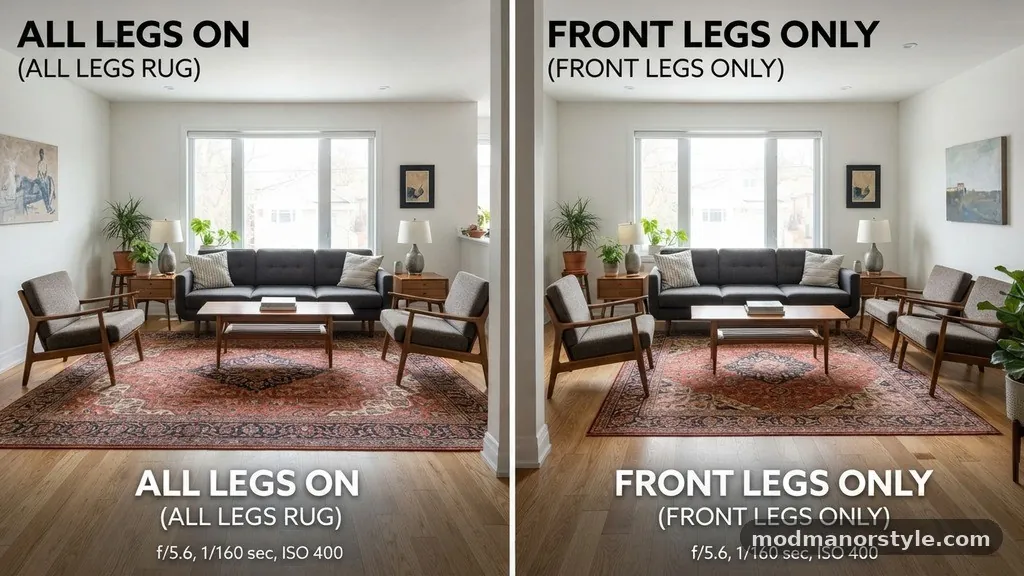
The front legs only rule is arguably the most versatile choice for standard residential floor plans. It strikes a balance between defining your seating area and maintaining the visual continuity of your flooring.
If you are working with a limited budget, this method is a life-saver because it allows you to use a smaller, less expensive rug while still achieving a polished look. You aren’t forced to hunt for an oversized, custom-cut piece just to satisfy a rigid design requirement.
This approach is especially effective for smaller living rooms where a massive rug might make the space feel cramped or cluttered. By showing more of the floor, you create a sense of depth that tricks the eye into perceiving the room as more expansive than it actually is.
It also prevents the “floating island” look that can sometimes feel too formal or disconnected from the architecture of a room. Most professional designers use this technique to bridge the gap between a sofa and a coffee table.
Measuring Your Space for Proportion
Before you commit to a specific layout, you must measure your floor space accurately. A common mistake is buying a rug that is too small for the furniture, which makes the room look disjointed regardless of whether you choose all legs on the rug vs front legs only.
For the front legs only approach, ensure the rug extends at least 6 to 12 inches beyond the sides of your sofa. This prevents the rug from looking like a tiny postage stamp under your furniture.
When planning for all legs on the rug, you need to account for the total footprint of your entire seating group. This includes the space behind the sofa and the area under the side tables.
A good rule of thumb is to leave at least 12 to 18 inches of exposed floor between the edge of the rug and the walls of the room. This negative space is crucial, as it prevents the rug from looking like wall-to-wall carpeting, which can feel dated or overwhelming.
Comparing Layout Strategies
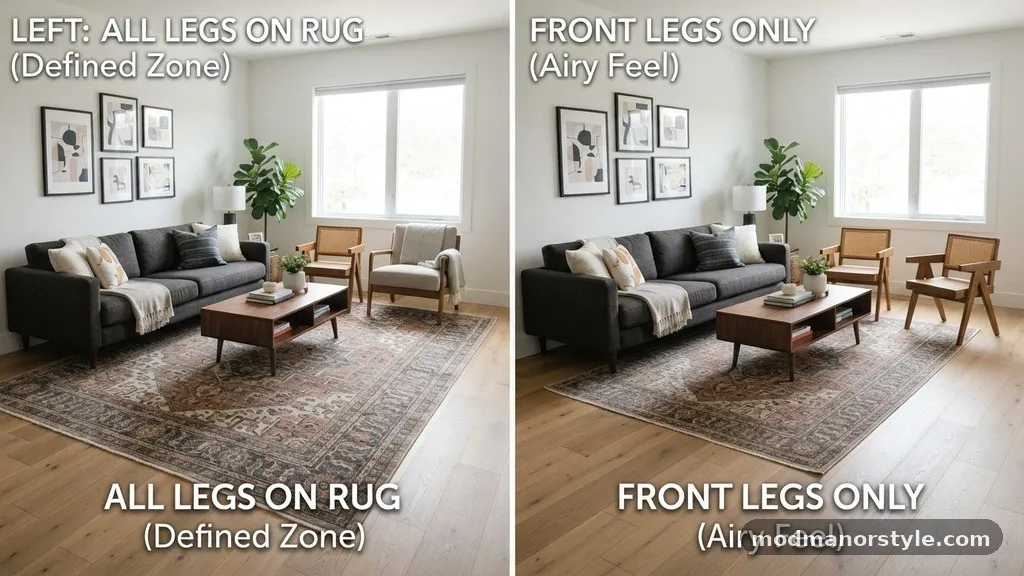
Understanding the visual impact of your choices helps in making an informed decision. The following table provides a breakdown of how these two primary methods impact your room’s aesthetic and practical requirements.
| Factor | All Legs on Rug | Front Legs Only |
|---|---|---|
| Room Size | Best for Large/Open | Best for Small/Standard |
| Cost | Higher (Larger Rug) | Lower (Standard Size) |
| Visual Feel | Anchored/Cozy | Spacious/Light |
| Floor Exposure | Minimal | Moderate |
As shown in the table, your budget and the physical dimensions of your room are the primary drivers of this decision. If you have a massive, open-plan loft, a small rug will get lost, making the all-legs-on-the-rug approach almost mandatory for visual weight. Conversely, in a tight apartment, the front legs only method preserves your square footage.
Common Mistakes to Avoid
One of the most frequent errors is placing a rug so that it sits right at the edge of the furniture’s legs without any overlap. This creates a wobbly surface and looks unfinished, as if the rug is just barely touching the furniture.
Ensure your rug is large enough that the front legs of the sofa sit firmly on the rug surface by at least a few inches. If the leg is right on the edge, the rug will likely curl or slip, which is both a trip hazard and an eyesore.
Another mistake is mixing too many different rug sizes in one open-plan room. If you have a dining area and a living area in the same space, ensure your rug choices are consistent. If you use the front legs only method in the living room, try to maintain a similar proportion in the dining area.
This consistency helps unify the space and prevents the room from feeling like a random collection of furniture pieces. You can find more detailed advice on spatial planning at the Architectural Digest design resources.
Selecting the Right Rug Material
The material of your rug plays a significant role in how well it holds up under your furniture legs. If you choose the all legs on the rug approach, you are effectively putting the entire weight of your sofa and chairs on the rug fibers.
Over time, this can lead to deep indentations in delicate materials like silk or high-pile wool. Consider using furniture coasters under the legs to distribute the weight and prevent permanent damage to the rug’s backing.
For high-traffic areas, synthetic blends or durable wool are better choices for the all legs on the rug configuration. These materials resist crushing and are easier to clean when the furniture is sitting directly on top of them.
If you prefer the front legs only style, you have more flexibility with materials because the weight is distributed between the rug and the floor. This allows you to use more delicate, decorative rugs that might not survive the constant pressure of heavy furniture.
The Role of Rug Pads
Regardless of whether you choose all legs on the rug vs front legs only, a high-quality rug pad is non-negotiable. A pad prevents the rug from sliding, which is especially important when only the front legs of your furniture are anchoring it.
Without a pad, the rug will shift every time someone sits down or stands up. This movement not only looks messy but can also damage the underside of your rug over time.
A good pad adds a layer of cushioning that makes the floor feel more luxurious underfoot. It also acts as a barrier between the furniture legs and the floor surface, preventing scratches and scuffs.
When using the front legs only method, ensure the pad is trimmed to be slightly smaller than the rug so it doesn’t peek out at the edges. This creates a clean, professional finish that hides the mechanics of your layout.
Styling Around Different Furniture Shapes
The shape of your furniture can complicate the all legs on the rug vs front legs only decision. Sectionals, for example, often require a very large rug to accommodate even the front legs properly.
If you have a curved sofa, you might find that the front legs only approach is difficult to execute because the legs don’t align in a straight line. In these cases, a round or oval rug can be a stylish alternative that follows the curve of the furniture.
For square or rectangular rooms, rectangular rugs are the standard choice. However, if you have a square living room, a square rug can sometimes make the space feel boxy.
Experimenting with different rug shapes can help break up the rigid lines of the furniture. If you are struggling with a difficult layout, start by placing your largest piece—usually the sofa—and see how the rug interacts with its specific leg configuration.
Essential Considerations for Your Layout
When planning your room, keep a list of factors that influence your final decision. These elements help you justify your choice of rug placement and ensure it serves the function of your home.
- Traffic flow: Ensure the rug doesn’t create a tripping hazard in high-traffic paths.
- Furniture weight: Heavier, solid wood furniture needs a sturdier rug than lightweight metal or rattan pieces.
- Room purpose: A formal living room may benefit from the all-legs-on-the-rug look, while a family room might prefer the casual front legs only style.
- Cleaning access: Consider how easy it will be to vacuum under the furniture if all legs are on the rug.
- Visual balance: Use the rug to pull together disparate furniture pieces into a cohesive group.
These considerations ensure that your choice isn’t just about following rules but about making your home more functional. Always prioritize how you actually use the room over rigid design dogma.
Frequently Asked Questions
Does the front legs only rule apply to every chair in the room?
Not necessarily. While it is the standard for sofas, you can mix and match. Sometimes it makes sense for the sofa to have front legs on the rug while accent chairs sit entirely off or entirely on the rug, depending on their size and position.
What if my rug is too small to fit the front legs of my sofa?
If your rug is too small to reach the front legs, it will look like it is floating in the middle of the room. You should either move the rug closer to the sofa or consider layering it over a larger, neutral carpet to gain the necessary surface area.
Is it ever okay to have no furniture legs on the rug?
Yes, especially in very large rooms where the rug is intended to be a piece of art rather than a foundation for seating. However, this is a risky design choice that requires a very large, high-quality rug to avoid looking like a small mat.
How do I handle a sectional sofa with the front legs only rule?
With a sectional, you should ensure the rug reaches under the front edge of every section. If the rug is too small, the sectional will look disconnected. Aim for a rug that extends at least a foot past the front of the sofa on all sides.
Does the 18-inch rule for rugs still matter?
The 18-inch rule suggests leaving 18 inches of floor exposed between the rug and the walls. It is a great guideline for maintaining balance, but it is flexible. In very small rooms, 10 to 12 inches is often perfectly acceptable to keep the space from feeling cluttered.
Final Thoughts on Rug Proportions
Mastering the balance between all legs on the rug vs front legs only is a journey of trial and error that ultimately defines the comfort of your home. You should always prioritize the scale of your room and the specific needs of your furniture. If you want a grounded, formal feel, go for the all-legs-on-the-rug layout, but don’t be afraid to embrace the front legs only approach for a breezier, more expansive atmosphere.
Remember that these guidelines are meant to serve you, not restrict your creativity. By measuring your floor, choosing the right materials, and using a high-quality rug pad, you can create a space that feels both professionally designed and personal.
Start with your largest furniture pieces and adjust until the proportions feel right for your lifestyle. Your home is the best laboratory for testing these design principles, so enjoy the process of refining your space.