The 18-Inch Bare Floor Border Rule: How Much Hardwood Should Show?
When you place an area rug in a room, the amount of exposed hardwood around the edges significantly impacts the perceived scale and luxury of your space. Designers often refer to the 18-inch bare floor border rule as a standard benchmark for achieving a balanced, custom-fitted aesthetic. This guideline suggests that for a large living room or open-plan area, leaving roughly 18 inches of flooring visible between the rug’s edge and the wall creates the ideal visual frame.
Following this approach ensures that your rug acts as a grounding anchor rather than a wall-to-wall carpet replacement. Understanding these proportions helps you choose the right size for your home.
Defining the 18-Inch Bare Floor Border Rule
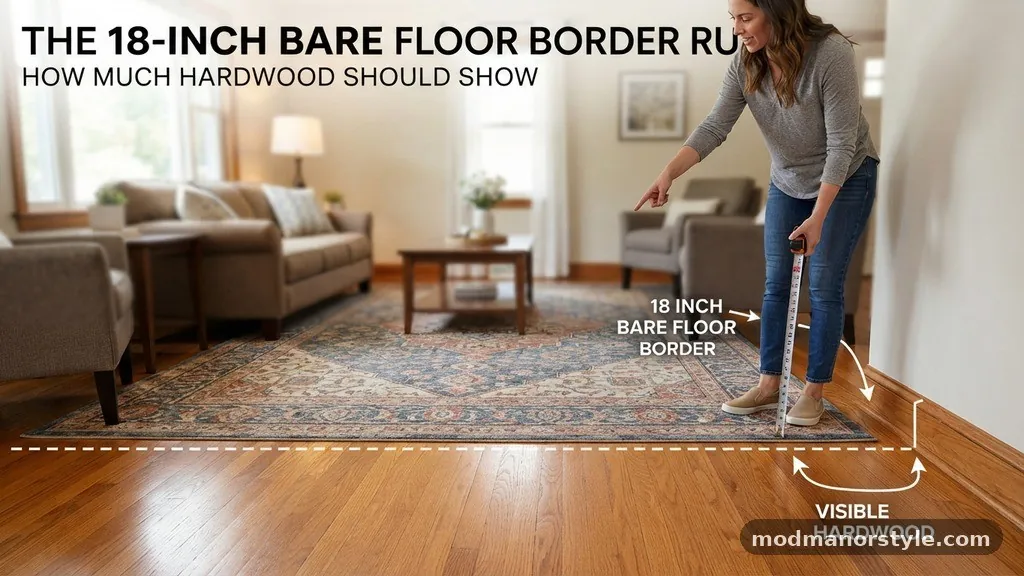
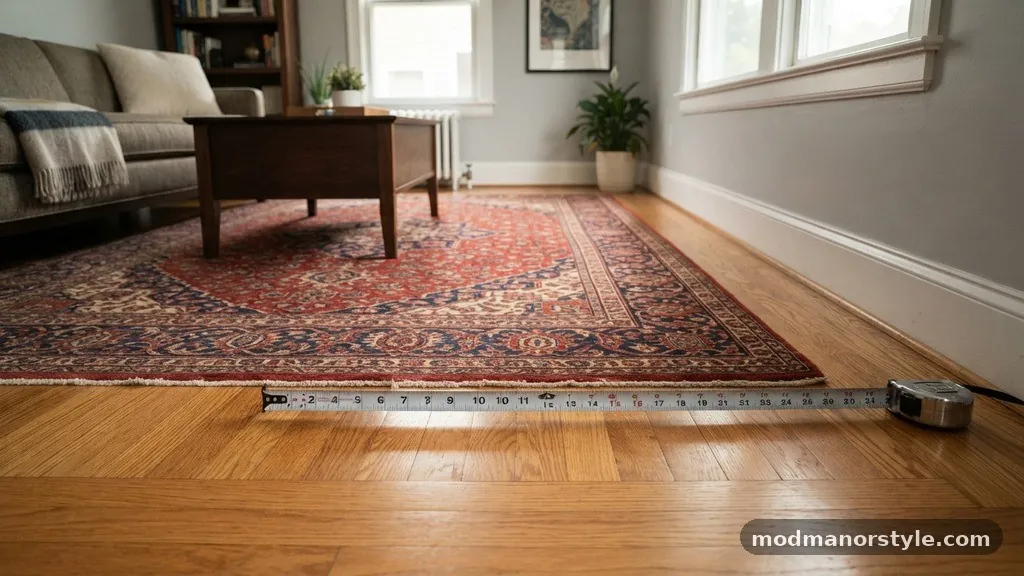
The 18-inch bare floor border rule functions as a primary guideline for sizing rugs in large, open spaces. It suggests that you should maintain an 18-inch gap of exposed flooring between the edge of your rug and the surrounding walls. This measurement is not a strict law of physics, but rather a design convention meant to provide a balanced, intentional look.
By keeping this distance, you allow the natural beauty of the hardwood to serve as a high-quality frame for your furniture arrangement. If the rug gets too close to the wall, the room can feel cramped or cluttered. Conversely, if the border is too wide, the rug may appear as a small, disconnected island in the middle of a vast floor.
This standard is particularly effective in spacious living rooms where you want to define a seating area without hiding the quality of your flooring. When you maintain this consistent border, the architecture of the room feels unified. It creates a clear transition between the hard surface of the floor and the soft texture of the rug.
Why Proportional Space Matters for Hardwood Floors
Exposed hardwood is a premium material that adds warmth and value to a home, so showing it off is usually a priority. When you cover too much of the floor with an oversized rug, you lose the character that makes wood flooring desirable. The 18-inch rule acts as a safeguard against over-covering your investment.
Beyond the cost of the material, there is the matter of visual flow. A room with correctly proportioned borders feels more spacious because the eye can trace the perimeter of the floor. When the floor is completely hidden, the room boundaries become fuzzy, which can make a space feel smaller than it actually is.
Consider the contrast between the rug and the wood. A high-quality wood finish deserves to be seen, and the rug should complement it rather than compete with it. By following the 18-inch guideline, you ensure that the rug acts as a secondary design element that highlights the primary floor structure.
Applying the Rule in Different Room Sizes
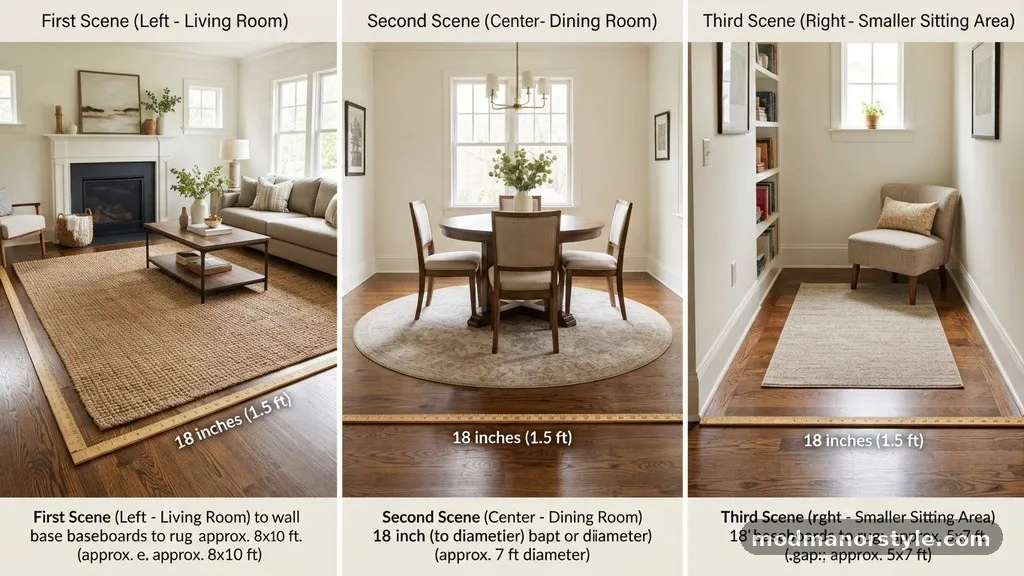
While 18 inches is the gold standard for large rooms, it is not always practical in smaller spaces. In a cozy den or a narrow bedroom, an 18-inch border might be physically impossible. In those cases, you should scale the measurement down to maintain the same visual ratio.
For smaller rooms, a 6-inch to 12-inch border is often more appropriate. The goal is to avoid the “postage stamp” look, where the rug is so small it looks like a doormat in the center of the room. You want the rug to feel substantial enough to hold the furniture but not so large that it touches the baseboards.
When working with these proportions, keep in mind that the furniture arrangement often dictates the rug size more than the wall distance. If your sofa and chairs require a massive rug to keep them grounded, you might have to sacrifice some of that 18-inch border. Prioritize the seating area first, then let the border be whatever is left over.
The Role of Furniture in Rug Placement
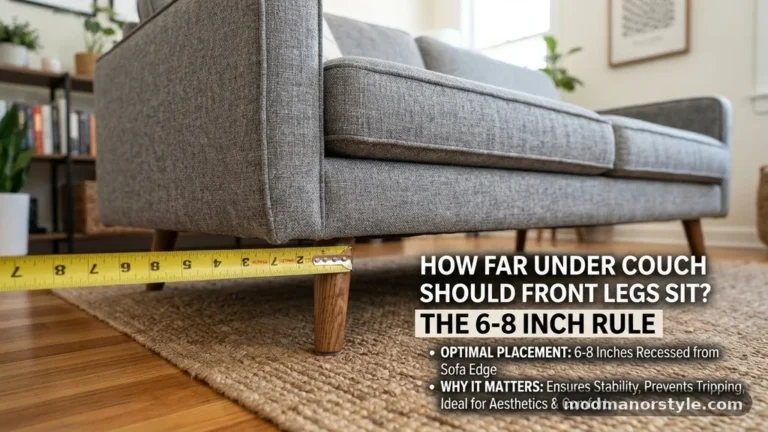
Your furniture placement is the most important factor in determining the final rug size. A common mistake is choosing a rug that is too small for the seating arrangement. Ideally, you want at least the front legs of all major furniture pieces to rest on the rug.
When the front legs of a sofa or chair are on the rug, it creates a cohesive “island” of comfort. If the furniture is completely off the rug, it tends to look like it is floating aimlessly. If you find that your rug is large enough to touch the walls while keeping the front legs of your furniture on it, you have reached the perfect balance.
If your room is exceptionally large, you might need a custom-sized rug to satisfy both the furniture placement and the 18-inch border. Avoid the temptation to buy two smaller rugs to fill the space. A single, large rug is almost always better for maintaining a clean and orderly aesthetic.
Comparing Standard Rug Sizes and Borders
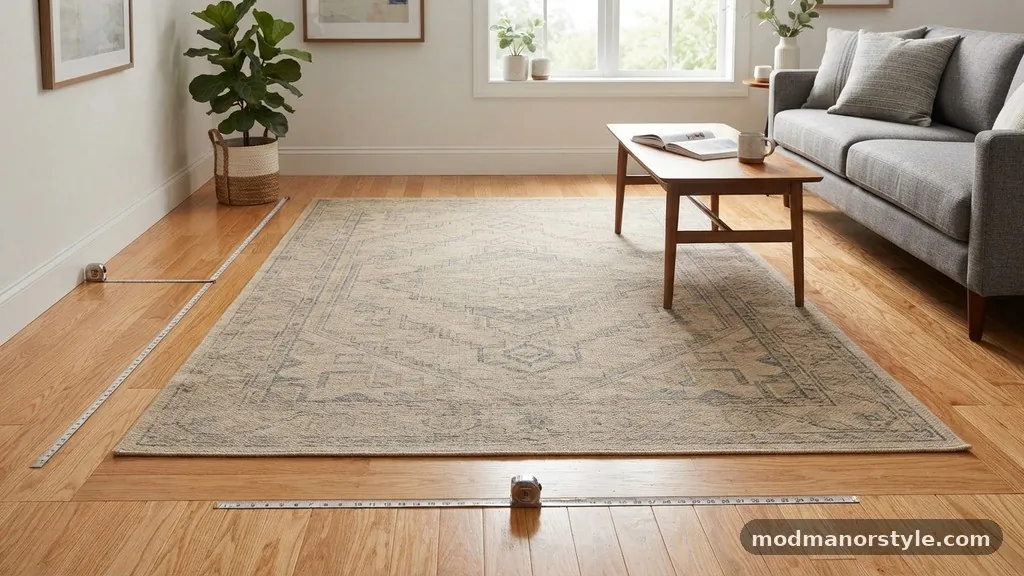
To visualize how this works in practice, consider the typical dimensions of common area rugs. The following table provides a quick reference for how much floor is likely to remain exposed based on standard room sizes.
| Room Size | Common Rug Size | Estimated Border |
|---|---|---|
| 12′ x 15′ | 9′ x 12′ | 18 inches |
| 10′ x 12′ | 8′ x 10′ | 12 inches |
| 14′ x 18′ | 10′ x 14′ | 24 inches |
| 8′ x 10′ | 5′ x 8′ | 12-18 inches |
As shown in the table, the 18-inch rule is quite achievable in standard room dimensions. However, custom spaces often require adjusting the rug size to ensure the borders are uniform on all sides. Consistency is key to a polished look.
Common Mistakes When Sizing Area Rugs
Many homeowners fall into the trap of buying a rug based on what they see in a store showroom. A rug that looks massive in a store often shrinks significantly when placed in a large, open-concept living area. Always measure your space before you shop.
Another frequent error is ignoring the shape of the room. A square rug in a rectangular room rarely adheres well to the 18-inch border rule.
You will likely end up with a wide border on two sides and no border on the others. Match the shape of the rug to the shape of the floor plan.
Finally, do not forget about the clearance required for doors. If you have a door that swings across the rug area, ensure the rug is thin enough or placed far enough away to avoid bunching. Safety is just as important as aesthetics.
Adapting the Rule for Dining Rooms
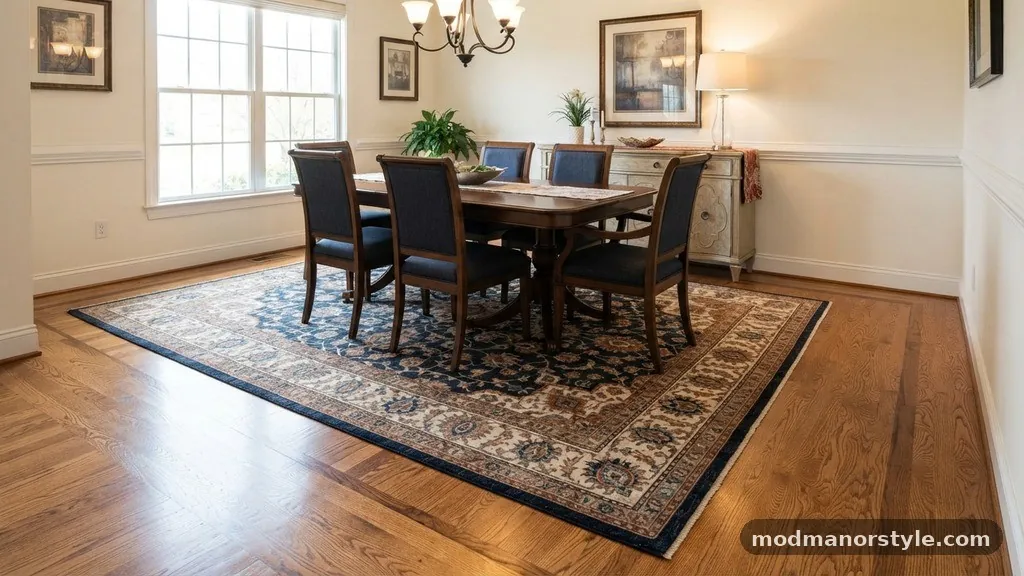
Dining rooms present a different set of challenges for the 18-inch rule. In a dining area, the rug needs to be large enough for the chairs to stay on the rug even when they are pulled out for sitting. This often means the rug will be much closer to the wall than 18 inches.
If you try to maintain an 18-inch border in a standard dining room, you might find that the back legs of the chairs fall off the rug when guests sit down. This creates a tripping hazard and looks awkward. In this specific setting, prioritize the functionality of the chair movement over the border width.
Aim for at least 24 to 30 inches of rug extending beyond the table on all sides. If that leaves only 6 or 10 inches of exposed floor, that is perfectly acceptable. The dining room rug serves a functional purpose, and its size should reflect that.
The Visual Impact of Border Color and Texture
The appearance of your border is influenced by the color and texture of the rug you choose. A rug with a high-contrast pattern will draw the eye inward, making the border seem more pronounced. A solid, neutral rug will blend more easily with the wood, making the border feel less significant.
If you have light-colored hardwood, a dark rug will create a sharp, defined frame. This can make the 18-inch border look very intentional and crisp. If you have dark wood, a lighter rug provides a softer look that feels more open and airy.
Consider the texture of the rug as well. A thick, shaggy rug will look much “heavier” than a flat-weave option. If you are worried about the rug making the room feel smaller, opt for a lower pile to keep the visual weight light, even if the rug is large.
Using Rug Pads for Longevity and Safety
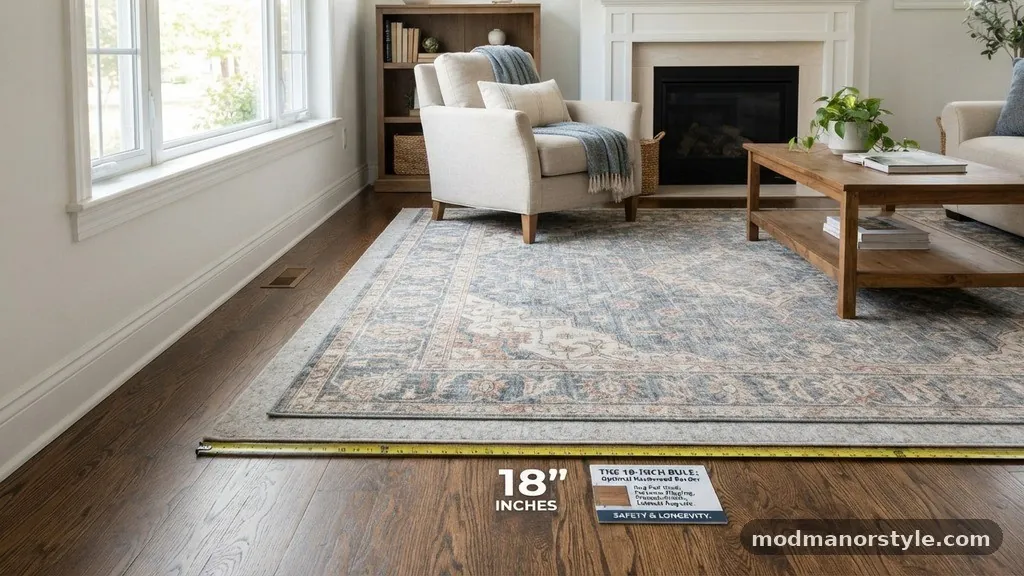
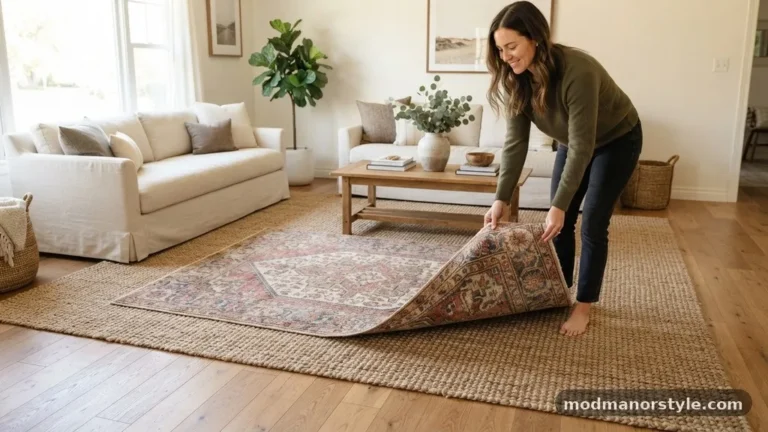
Regardless of the size you choose, always use a high-quality rug pad underneath your area rug. A pad prevents the rug from sliding, which protects your hardwood floor from scratches and scuffs. It also adds a layer of cushioning that makes the room feel more luxurious.
When you install a rug pad, cut it about 1 to 2 inches smaller than the rug itself. This ensures the pad is completely hidden from view. If the pad peeks out from under the rug, it disrupts the clean look of the border you worked so hard to establish.
For more information on selecting the right materials for your home, you can refer to the National Park Service guidelines on historic floor coverings, which offer technical advice on protecting wood surfaces. Proper care of the hardwood beneath your rug is just as important as the rug itself.
When to Break the Rules
Design rules are meant to be broken when the architecture of the house demands it. If you have an odd-shaped room, a fireplace hearth that protrudes, or built-in cabinets, the 18-inch border might be impossible to achieve symmetrically. In these instances, prioritize visual balance over a strict measurement.
You might also choose to cover more of the floor if the hardwood is in poor condition. If the floor has deep scratches or stains that you want to hide, a larger rug is a practical solution. The goal is to create a space that feels comfortable and intentional.
Trust your eye. If the room feels balanced and the furniture is properly anchored, you have succeeded.
The 18-inch rule is a starting point, not a final destination. Adjust based on the specific flow of your home and your personal style preferences.
Frequently Asked Questions
Is the 18-inch rule mandatory for all rooms?
No, the 18-inch rule is a guideline primarily for large living spaces. In smaller rooms, such as home offices or bedrooms, a smaller border of 6 to 12 inches is often more appropriate and visually pleasing.
What if I have an open-concept floor plan?
In open-concept homes, rugs are essential for defining zones. You should use the 18-inch rule to define the living area, but be mindful of how the rug edges align with other zones. You may need to adjust the borders to ensure the transition between different rugs feels natural and not crowded.
How do I measure for a rug if I have an irregular room shape?
Measure the main seating area rather than the walls themselves. Place your furniture in its final position and use painter’s tape to outline where the rug should go. Once you have a rectangle or shape that works with your furniture, check if the distance to the walls is at least 6-12 inches to ensure it doesn’t look like wall-to-wall carpet.
Should the rug border be exactly the same on all four sides?
Ideally, yes. Symmetry creates a sense of order and calm in a room. However, if your room has an asymmetrical layout, prioritize an even border on the sides that are most visible when entering the room.
Does the 18-inch rule apply to runner rugs?
Runners are a different category entirely. For hallways, you generally want to leave 4 to 6 inches of floor visible on both sides of the runner. The 18-inch rule is specifically intended for large area rugs in main living spaces.
Summary of Rug Placement Success
Mastering the 18-inch bare floor border rule allows you to transform a room from a collection of furniture into a cohesive, well-designed space. By leaving this consistent gap, you highlight the quality of your hardwood floors while providing a soft, comfortable anchor for your living area. Remember that these measurements are flexible and should always be adapted to fit the specific proportions of your home and the requirements of your furniture.
Start by measuring your space and testing your layout with painter’s tape to visualize the final look before committing to a rug purchase. Once you have the right size, ensure you use a quality rug pad to protect your floors and keep your rug in place.
If you ever feel uncertain, trust your eye for balance over a rigid number. Experimenting with these proportions will help you create a room that feels intentional, inviting, and perfectly scaled to your lifestyle.