8×10 vs 9×12 Rug: The Most Common Mistake Homeowners Make
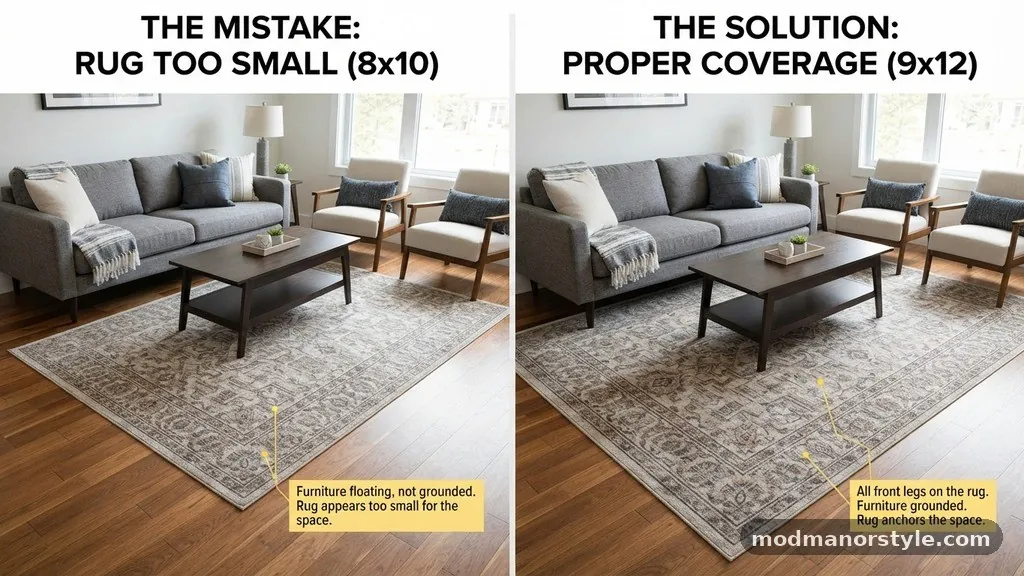
Choosing between an 8×10 vs 9×12 rug is the most common mistake homeowners make when furnishing a living room. Many people default to the smaller size, hoping to save money or prevent the room from feeling crowded, but this often results in a disconnected seating area. A rug that is too small leaves furniture floating on the floor, making the space feel disjointed and smaller than it actually is.
Understanding how these dimensions interact with your furniture layout is the key to achieving a professional, pulled-together look. This article details exactly how to measure your space and select the right dimensions to avoid the pitfalls of buying a rug that does not fit.
The Core Difference in Coverage
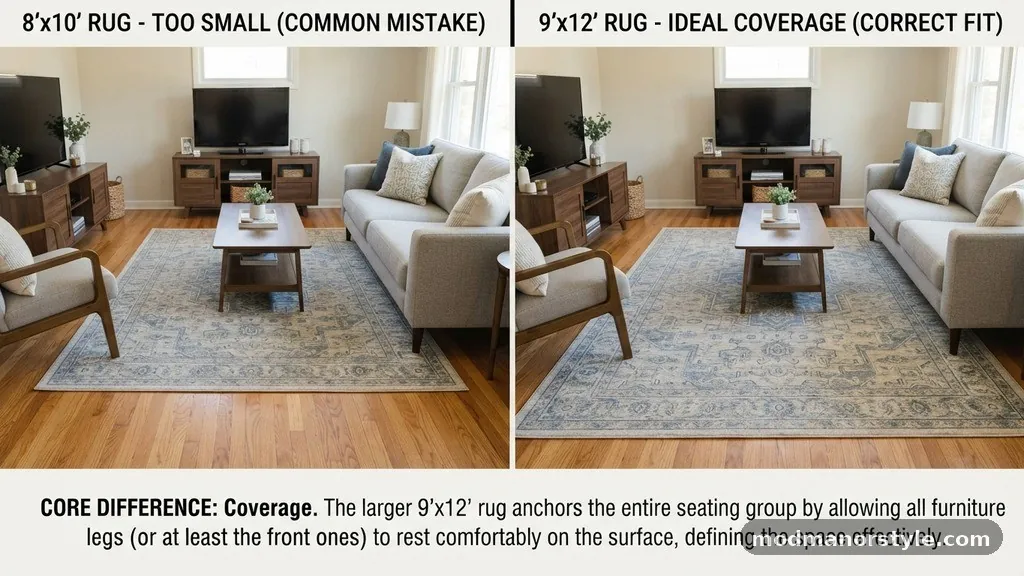
The primary difference between an 8×10 and a 9×12 rug comes down to total square footage and how that space interacts with your furniture. An 8×10 rug provides 80 square feet of coverage, while a 9×12 rug jumps significantly to 108 square feet.
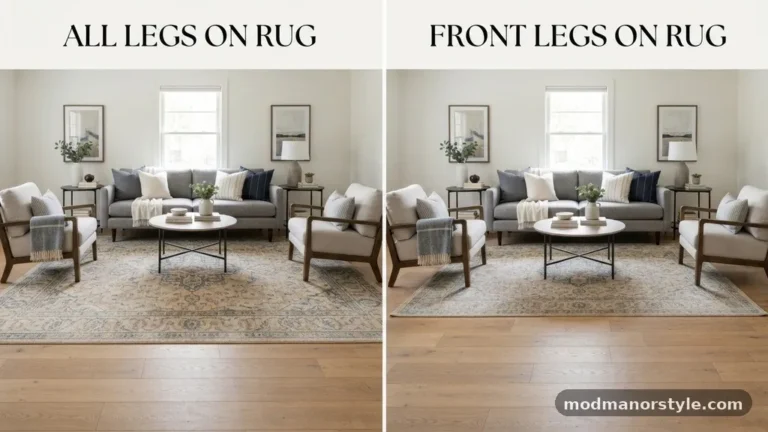
That extra 28 square feet might sound modest on paper, but it fundamentally changes the geometry of a room. When you place a sofa and two chairs on an 8×10, you are often forced to keep all furniture legs off the rug or settle for only the front legs touching the edge.
A 9×12 rug provides the necessary depth to pull furniture away from the walls and toward the center of the room. This placement creates a defined “island” for your seating area, which is a hallmark of high-end interior design. When a rug is too small, the eye immediately notices the gap between the furniture and the rug’s border.
This gap creates a visual break that makes the room feel choppy rather than cohesive. In most standard living rooms, the 9×12 size allows for a more generous arrangement where the entire sofa and all chairs can sit comfortably on the surface.
Why the 8×10 Is Often a Compromise
The 8×10 rug is a popular industry standard because it fits easily into shipping containers and retail showrooms. Because it is the “default” size for many manufacturers, it is often the first option shoppers see online or in stores.
However, just because it is common does not mean it is the best fit for your specific floor plan. Many homeowners select the 8×10 because they are worried a larger rug will overwhelm their space.
This fear is usually misplaced, as a larger rug actually makes a room feel more expansive. By covering more of the floor, the 9×12 rug minimizes the appearance of bare floor gaps, which can make a small room feel boxed in. If you have a standard sofa and a coffee table, the 8×10 often leaves the back legs of your sofa sitting on the bare floor.
This creates a tilting effect where the furniture is not level with the rug surface. You end up with a wobbly coffee table or a sofa that feels disconnected from the rest of the room’s aesthetic.
Measuring Your Seating Area
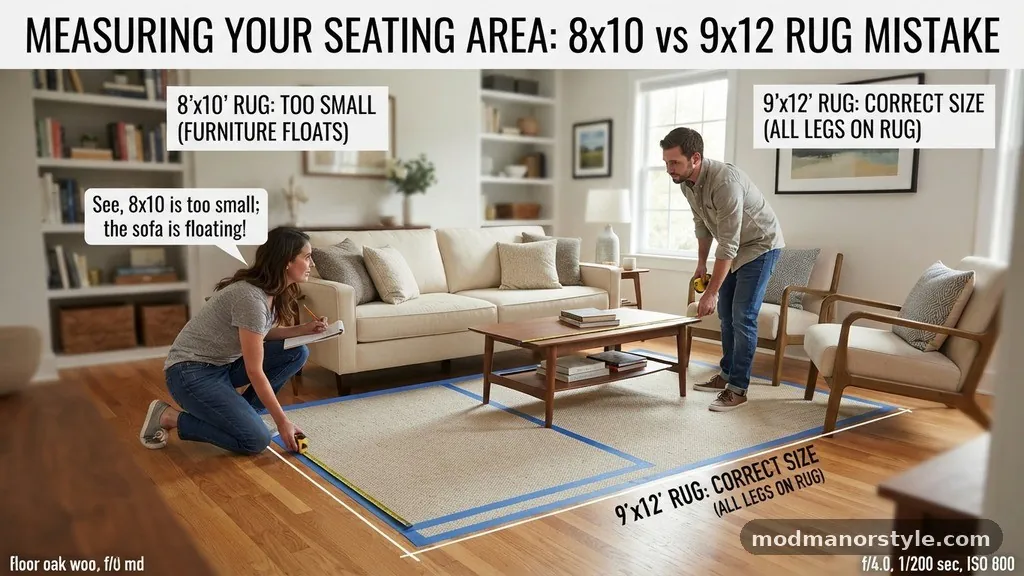
Before you commit to a purchase, you must map out your furniture arrangement with painter’s tape on your floor. Measure the entire seating area, including the space where your sofa and chairs sit. You want the rug to extend at least 6 to 12 inches beyond the sides of your sofa.
If you have a standard 84-inch sofa, an 8-foot wide rug barely clears the edges. A 9-foot wide rug provides that necessary breathing room on both sides.
Consider the depth of your coffee table and how much clearance you need for foot traffic. If you have a large sectional, an 8×10 rug is almost never sufficient to anchor the piece. A sectional requires a much larger footprint to ensure that the rug doesn’t look like a tiny postage stamp in the middle of a vast room.
You can find more detailed advice on measuring floor space through the Architectural Digest design archives, which often emphasize that larger rugs ground a space more effectively. By laying out the dimensions in your actual room, you remove the guesswork and see exactly where the edges will land.
The Impact of Furniture Placement
Furniture placement is the single most important factor when deciding between these two sizes. The “front legs” rule is a common guideline, suggesting that at least the front legs of all seating should sit on the rug.
If you use an 8×10 rug, you might achieve this rule with a small sofa and two narrow chairs. However, if your chairs are deep or your sofa is oversized, the rug will likely be swallowed by the furniture.
Using a 9×12 rug allows you to pull your furniture away from the wall entirely. This technique creates a “floating” seating area that feels intentional and luxurious. When your furniture is pushed against the wall, the room feels like a waiting area rather than a home.
The extra two feet in length and one foot in width offered by the 9×12 size allow for a more circular or conversational arrangement. You gain the ability to place side tables or floor lamps on the rug as well, which prevents them from wobbling on uneven floor transitions.
Comparing Rug Dimensions and Coverage

To visualize the difference, consider the actual measurements in feet and the resulting surface area. The following table illustrates why the jump from 8×10 to 9×12 is more significant than it appears at first glance.
| Rug Size | Total Square Feet | Best Use Case |
|---|---|---|
| 8×10 Feet | 80 sq. ft. | Small apartments or tight seating areas |
| 9×12 Feet | 108 sq. ft. | Spacious living rooms and large sectionals |
As shown in the table, the 9×12 rug offers a 35% increase in surface area over the 8×10. This extra space is the difference between a rug that holds a coffee table and a rug that anchors an entire room. When you increase the size, you aren’t just adding more material; you are changing the scale of the room.
A 9×12 rug can make a room look more expensive simply because it covers more ground. It signals that you didn’t skimp on the foundation of your design.
Common Mistakes to Avoid
The most frequent mistake is buying a rug based on the dimensions of the room rather than the dimensions of the furniture. Many people measure their walls and think they need a rug that fits perfectly with a 12-inch border of floor showing all around. This creates a “carpeted room” look that is dated and difficult to clean.
Instead, prioritize the furniture arrangement first. If your furniture group is 7×9, an 8×10 rug will work well.
If your furniture group is 9×11, an 8×10 rug will look like a mistake. Another mistake is ignoring the clearance required for doors to swing. In some rooms, a 9×12 rug might interfere with a door’s path, forcing you to choose the smaller size.
Always check the swing of your doors and the placement of low-profile furniture before finalizing your purchase. You should also consider the orientation of your room; a long, narrow room might actually prefer a different shape entirely, but between these two, the 9×12 is almost always the safer bet for a balanced aesthetic.
Benefits of Going Larger

Choosing a larger rug provides several practical and aesthetic benefits beyond just visual appeal. A 9×12 rug protects more of your floor from wear and tear, especially in high-traffic areas.
It also provides better sound absorption, which is particularly useful in rooms with hardwood or tile floors. A larger rug acts as a giant acoustic panel, softening the echoes that often plague minimalist, modern living rooms.
* Creates a cohesive zone: It ties disparate furniture pieces into a single, unified group.
* Increases perceived luxury: Larger rugs are associated with high-end interior design and custom-built spaces.
* Provides comfort: You get more soft surface area for bare feet, which is ideal in family rooms.
* Protects flooring: More coverage means less sunlight fading and fewer scratches on your floor.
* Anchors the room: It prevents furniture from looking like it’s drifting toward the walls.
These benefits make the 9×12 an investment in the long-term comfort and style of your home. While the upfront cost is higher, the result is a room that feels complete rather than unfinished.
Budget Considerations for Larger Rugs
It is true that a 9×12 rug will cost more than an 8×10 rug. However, when you calculate the cost per square foot, the difference is often negligible.
If you are already spending hundreds of dollars on a rug, the incremental cost of upgrading to the next size is usually worth the investment. Think of the rug as the foundation of your room; if the foundation is undersized, the rest of the decor will struggle to look right.
Consider looking for sales or choosing a more affordable material if you are worried about the price of a 9×12. A high-quality synthetic rug in a 9×12 size will often look better than a luxury wool rug that is undersized. Prioritize size over material quality if your budget is tight.
You can always upgrade to a better material later, but you cannot fix a rug that is physically too small for your furniture. Look for clearance sections in reputable home stores to find larger sizes at reduced prices.
When an 8×10 Is Actually the Right Choice

While the 9×12 is generally superior for large spaces, there are specific scenarios where an 8×10 is the better fit. If you live in a small apartment or a studio where floor space is at a premium, a 9×12 might literally not fit.
In these cases, the 8×10 is a perfectly functional choice that helps define a small zone without taking over the room. It works well in bedrooms under a queen-sized bed, where you want just enough coverage to step onto something soft in the morning.
If your furniture is delicate or low to the ground, a massive rug might overpower the silhouettes of your pieces. An 8×10 can provide a clean, minimalist look if your furniture is arranged in a tight, symmetrical cluster. Always prioritize the proportions of the furniture rather than just the square footage of the room.
If your sofa is small and your coffee table is modest, a 9×12 could look like a carpeted island that makes your furniture look tiny by comparison. Use your best judgment based on the scale of your existing pieces.
Maintaining Your Investment
Once you have selected the right size, maintenance becomes the next priority. A 9×12 rug is harder to clean than an 8×10 simply because of its size.
You won’t be able to easily take it outside to shake it, so you will rely more on professional cleaning services or high-quality vacuuming. Use a rug pad underneath both sizes to prevent slippage and extend the life of the fibers.
A good pad also adds an extra layer of cushioning that makes the rug feel more substantial. If you have pets or children, consider a performance rug that is resistant to stains. These materials allow you to enjoy the benefits of a larger 9×12 rug without the constant stress of potential spills.
Rotate your rug every six months to ensure even wear, especially if it sits in a high-traffic area. Proper care ensures that your choice of rug size continues to look great for years.
Frequently Asked Questions
Which rug size is better for my living room, 8×10 or 9×12?
In almost all cases, a 9×12 rug is better for a standard-sized living room because it allows for a more cohesive furniture arrangement. It prevents the “floating furniture” look by providing enough space to anchor the sofa and chairs properly.
Is a 9×12 rug too big for a living room?
A 9×12 rug is rarely too big unless your room is very small or has unusual architectural constraints. As long as you have at least 12 to 18 inches of exposed floor around the edges of the rug, it will likely fit perfectly and make the room appear larger.
Is an 8×10 rug too big for a living room?
An 8×10 rug is rarely too big for any living room. It is more common for an 8×10 to be too small, which can make a room feel disjointed. If you are worried about size, it is almost always safer to go with the larger option.
Is it better for a rug to be too big or too small?
It is significantly better for a rug to be slightly too big than too small. A rug that is too small makes the furniture look cramped and the room feel disconnected, whereas a larger rug creates a unified, intentional, and luxurious seating area.
How do I know if the rug is the right size?
The rug is the right size when all the main furniture pieces in your seating area have at least their front legs on the rug. If you can fit the entire sofa and all chairs on the rug, you have achieved an ideal, professional-level layout.
Final Thoughts
Selecting the right rug size is a foundational element of interior design that is often overlooked. By understanding the functional difference between an 8×10 vs 9×12 rug, you can avoid the common trap of buying a piece that leaves your living room feeling disjointed. Remember that larger rugs act as an anchor, bringing your furniture together and creating a defined, comfortable space.
When in doubt, lean toward the larger size to ensure your room looks intentional and well-proportioned. Take the time to measure your space and test your layout with tape before you commit to a purchase. You will find that the right size makes a world of difference in how your home looks and feels every day.